
The Longest Darkest Night Dinner
A Rico Supper Club Experience2025 | Copenhagen
A bit of originSome people collect souvenirs. I collect days like spells—worth building a table for.

I’ve been living in Copenhagen for 14 years now—since I was 23, freshly out of my Fine Arts BA in Cluj, with one year of graphic/digital design work behind me and a suitcase full of certainty that I was “starting a new life”. Which I did. But I also started something else: a long, slow, hungry investigation into who I am when I’m not surrounded by the culture that made me.
It turns out the quickest way back to myself isn’t a plane ticket. It’s smell. It’s taste. It’s that sound of sizzling in a kitchen that feels like a portal. It’s the way garlic and smoke and sour brine can resurrect a whole room from childhood—the kitchens of my mother and grandmothers, the summer visits to the countryside, the stories and school plays and poems that used to feel like “just how the year works.”
I was born and raised in Constanța, by the Black Sea—my personal mythology is full of long hot summers that smelled like fried fish and garlic, tasted like sweet watermelon, and looked like the kind of sunburn you wear proudly because you spent the entire day at the beach with your brother and your friends. But our winters belonged to another Romania: the one behind the veil, where smoke and stories ruled the season—basme (Romanian folk tales—part fairy tale, part moral lesson, part magic) read out loud, superstitions folded into daily life, and rituals you followed the way you follow weather: without debate, because that’s how it goes.
And then I left.
When you leave, you don’t lose those traditions all at once. You lose them in small, quiet ways: one Christmas where you can’t taste “home,” one winter where you don’t hear the traditional carols outside your window, one year where the days pass without the old markers. Denmark has its own beauty, its own celebrations, its own way of doing things—fascinating, refined, very aesthetic, sometimes minimalist enough to make you hear your own thoughts—but they’re not mine. So the longing started behaving like curiosity. And the curiosity became research. And the research became a practice. And that practice became Rico Supper Club: dinners anchored in time, staged as rituals, designed as sensory stories, offered to a table of friends from everywhere.
On December 20th, I returned—through food—to one of the most intense winter days in Romanian tradition: Ignat, the day of the pig.
Why December 20th Matters: Ignat, Fire, and the PigIn Romania, December 20th—Ignat (St. Ignatius Day in the Orthodox calendar)—marks the beginning of the last preparations for Christmas. In rural areas, it’s traditionally the day when families slaughter a pig to feed the household through the winter and for the Christmas meals that follow. Men perform the killing; women take over the transformation: cutting, sorting, cooking, preserving. The whole family learns by watching. The whole community often shares. The pig becomes food, but also narrative, ethics, memory, and winter logic.
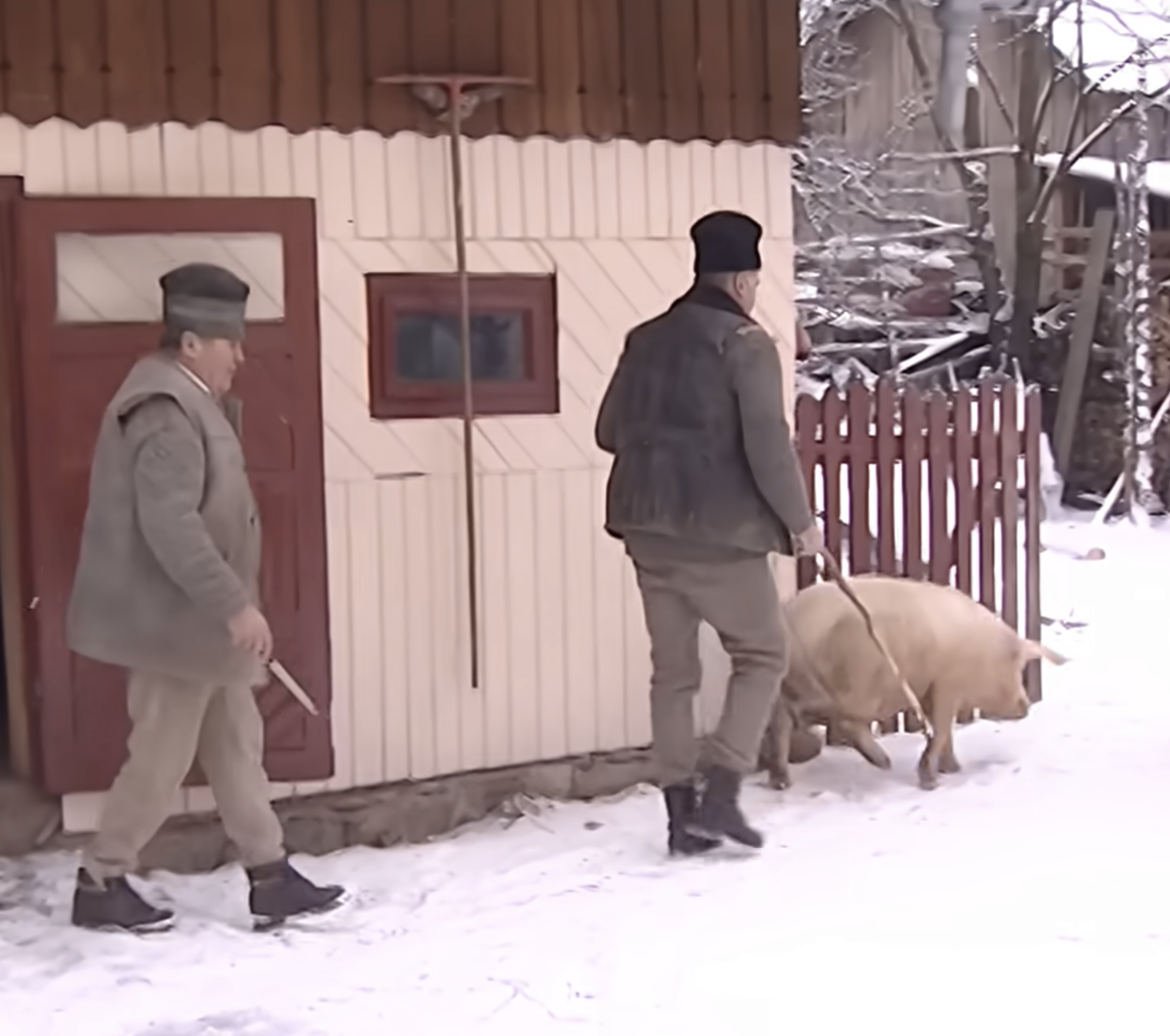
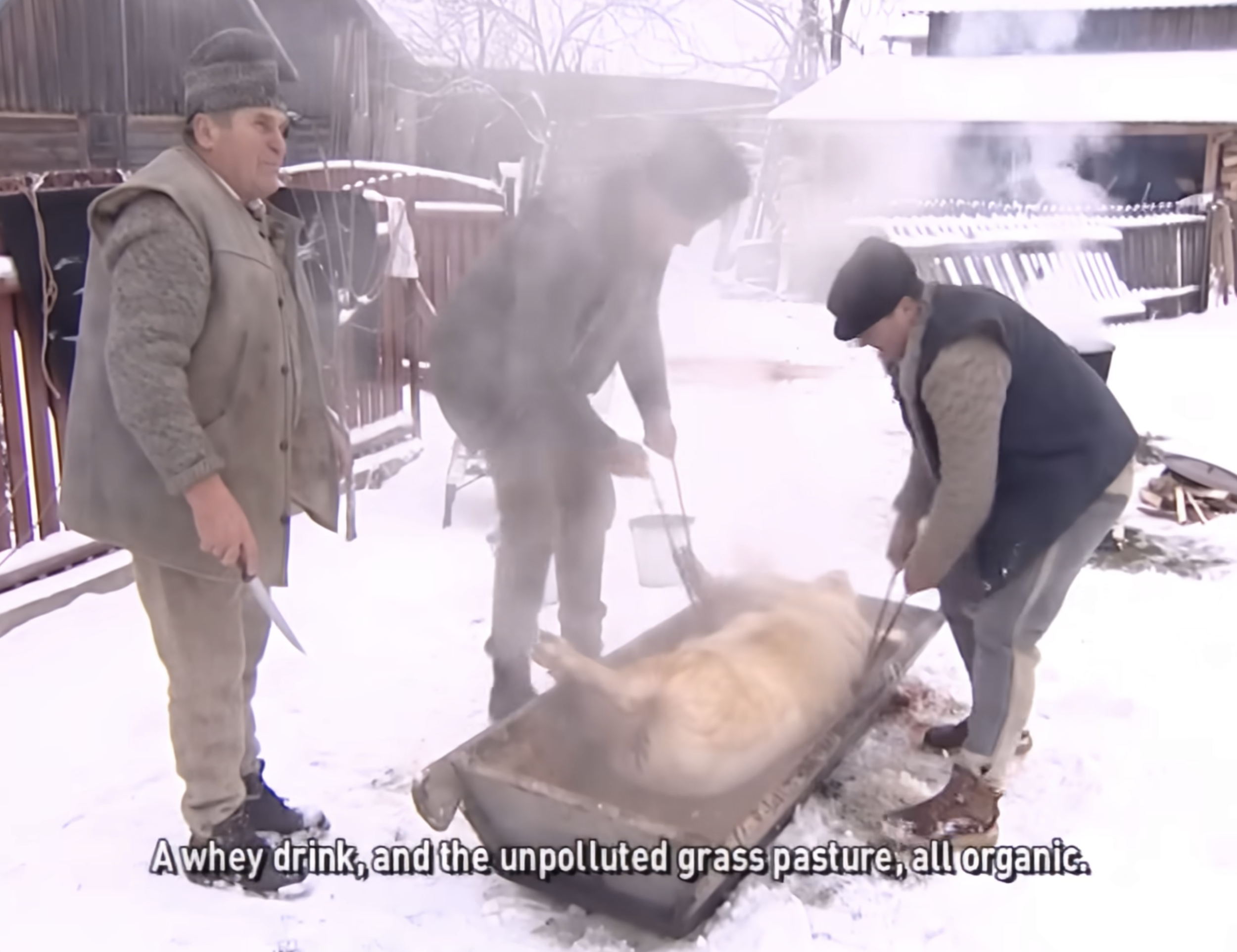
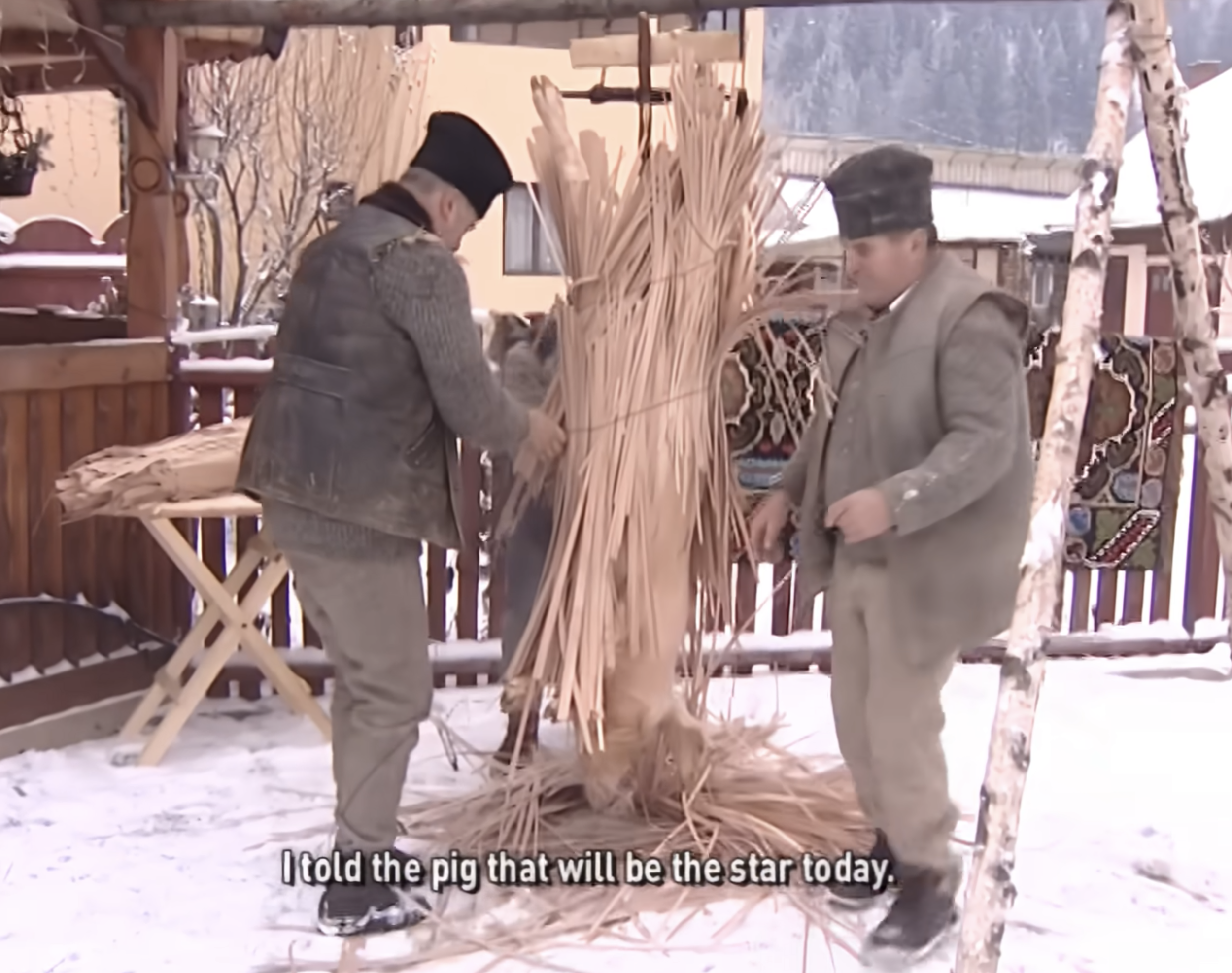
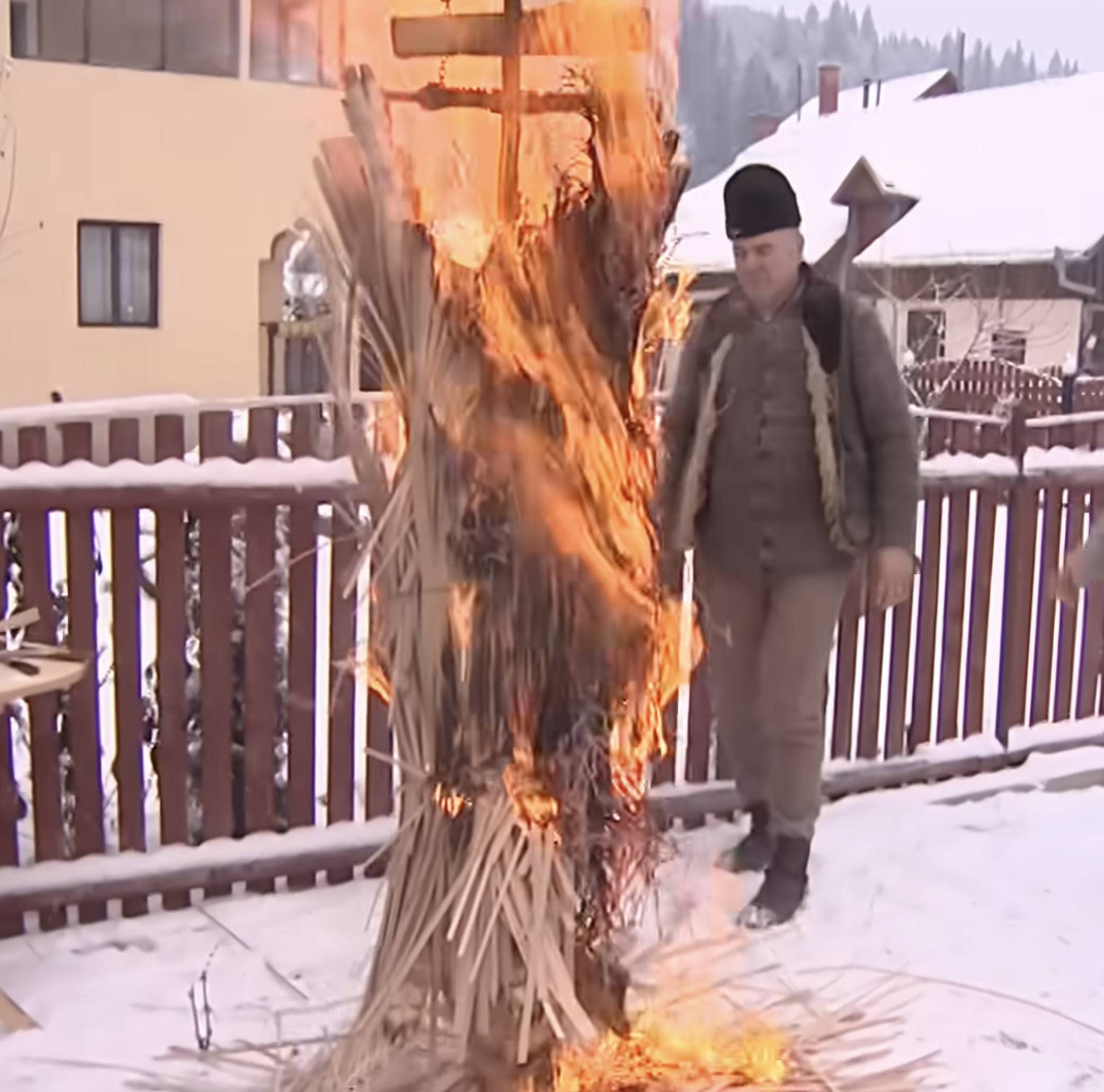
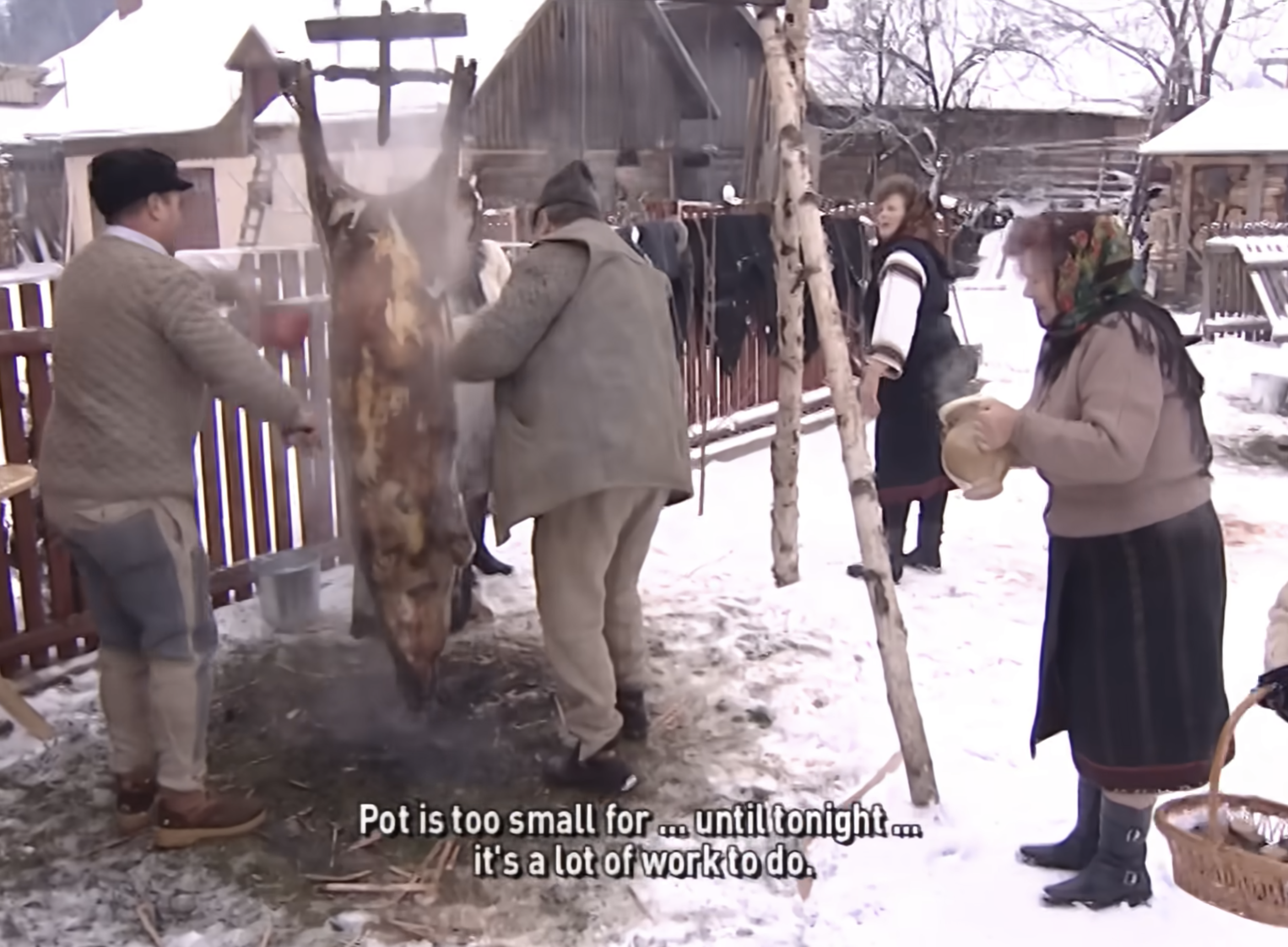
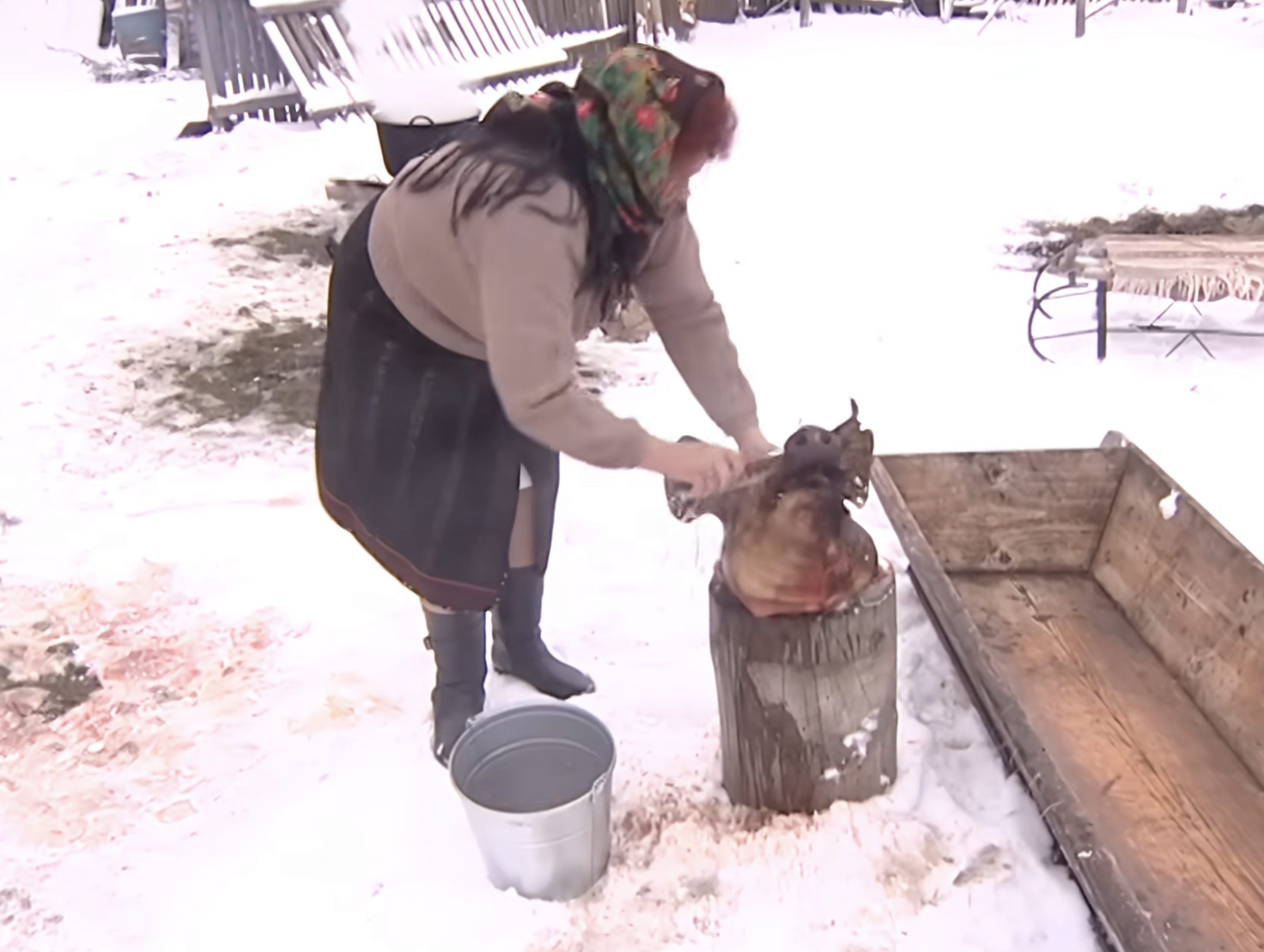
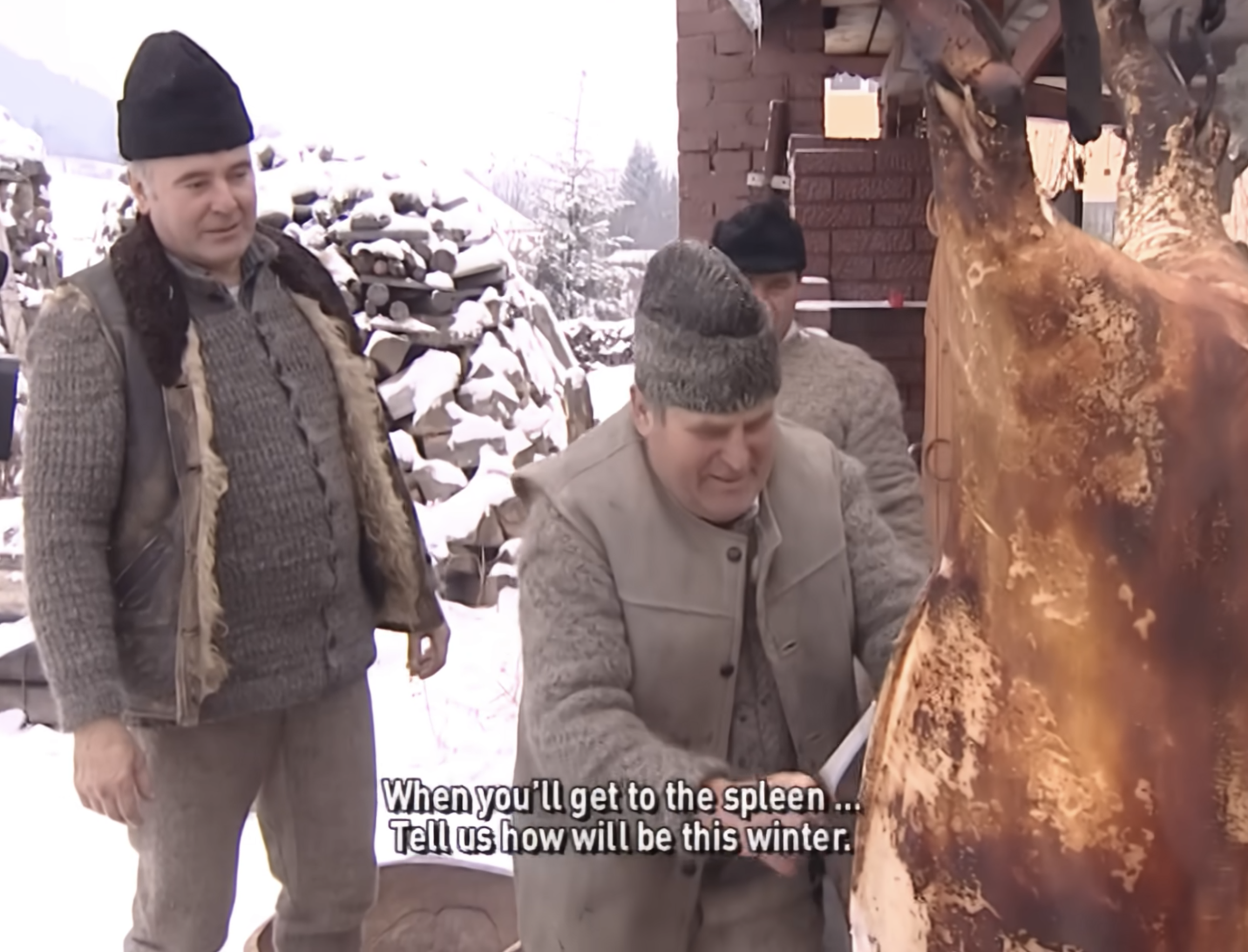
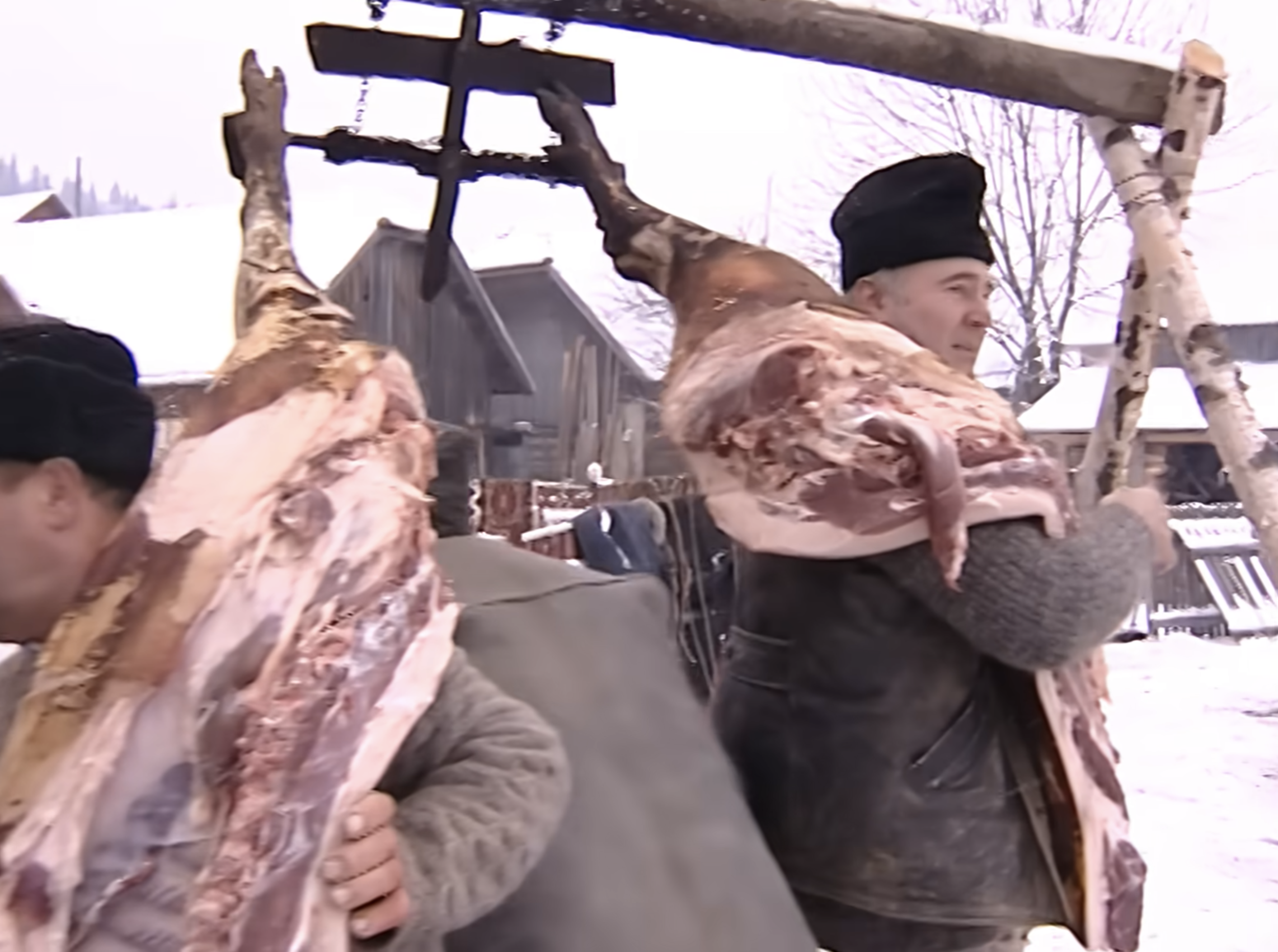
Still frames from a 15-minute documentary filmed in Bucovina (Romania), showing the Ignat ritual: fire, snow, roles, labor, and the quiet choreography of turning an animal into winter sustenance. See the full film here.
Some folkloric threads frame the act as older than Christianity—interwoven with pre-Christian agrarian rituals and solstice anxieties. One detailed account traces layers of interpretation: ancient Dacian legend (sacrifice to help the weakened sun), Roman Saturnalia echoes, later overlap with the Ignatius date, and then the living folk ritual that survived because it made life possible.
And the word itself—Ignat—gets pulled into the language of fire: “to ignite / to light,” the purification of flame, the cold season answered with heat.
I didn’t want to recreate the slaughter. I wanted to recreate the meaning: the winter intelligence, the gratitude, the discomfort, the joy, the community, the way humans have always tried to survive the dark.
The Longest. The Darkest. The Threshold.The “longest night” is a real thing: around the winter solstice, daylight shrinks into a brief, fragile glow, and then disappears early like it has better plans. The “darkest night” is also a real thing, but for me it isn’t just astronomy—it’s psychology.
Winter darkness is a pressure. It pushes you inward. It makes your body remember old animal truths: gather, preserve, warm each other, light something, eat something fatty, survive together.


In Romanian winter lore, the long dark wasn’t just “cozy season.” It was the time when the world felt thin: fire was protection, candles were guardians, and the household became a small bright defiance against everything outside. In some traditions around the pig sacrifice, the act is done after sunrise and must be finished before night; darkness is treated like a risk, a door.
So I built the dinner as a threshold: between darkness and fire, between Romania and Denmark, between childhood memory and adult awareness, between the animal and the meat, between what we hide and what we dare to look at.
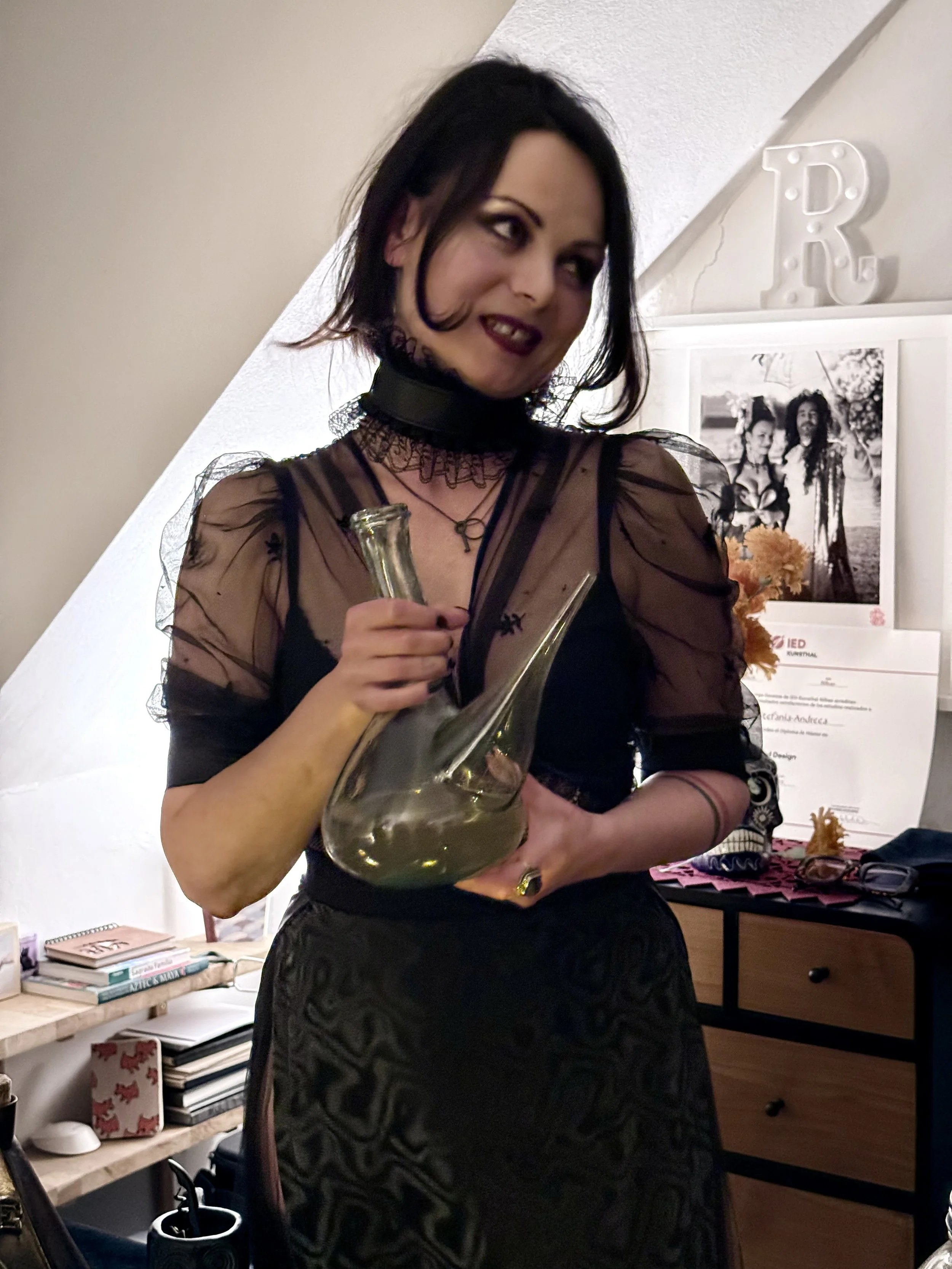
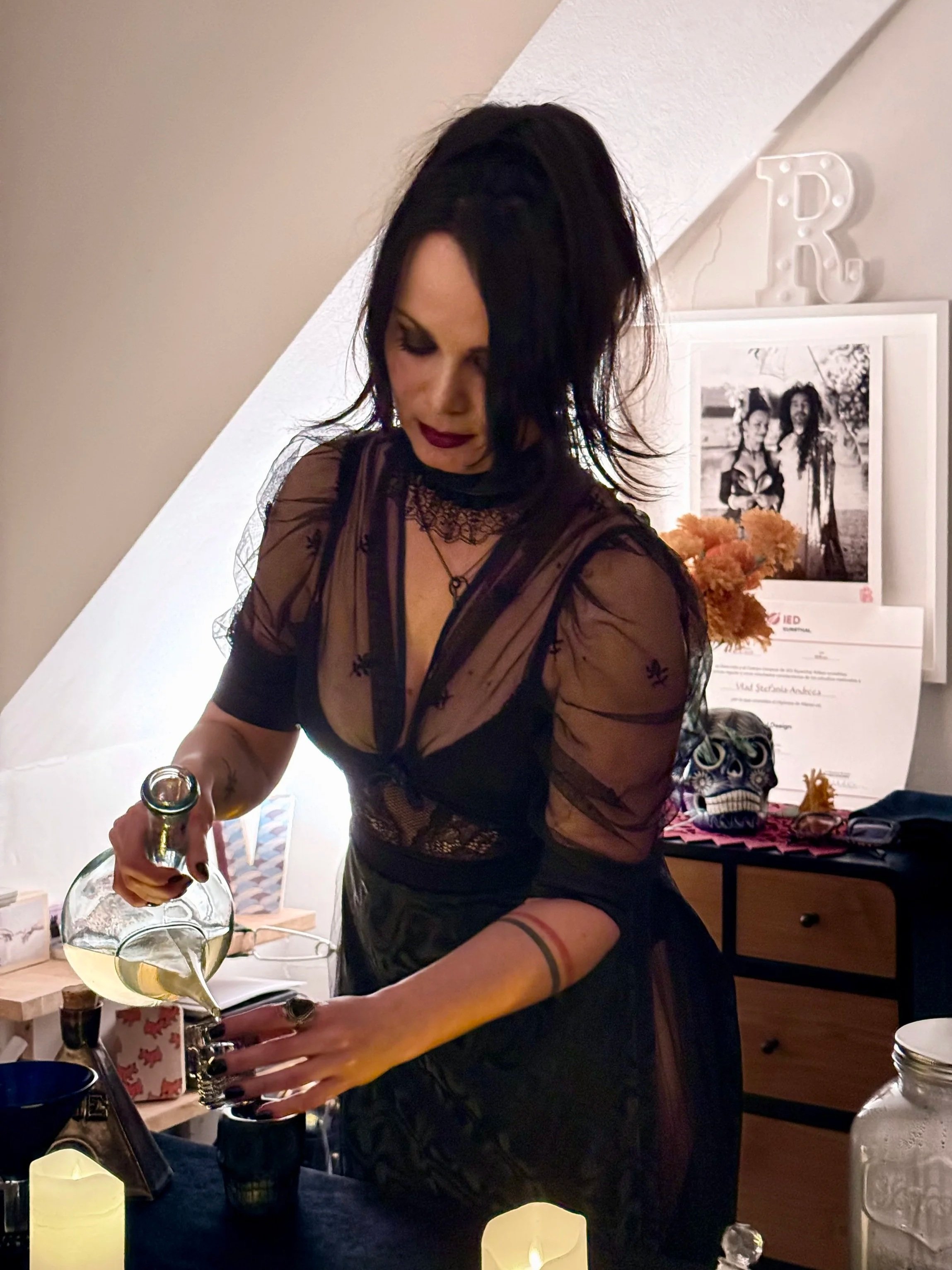
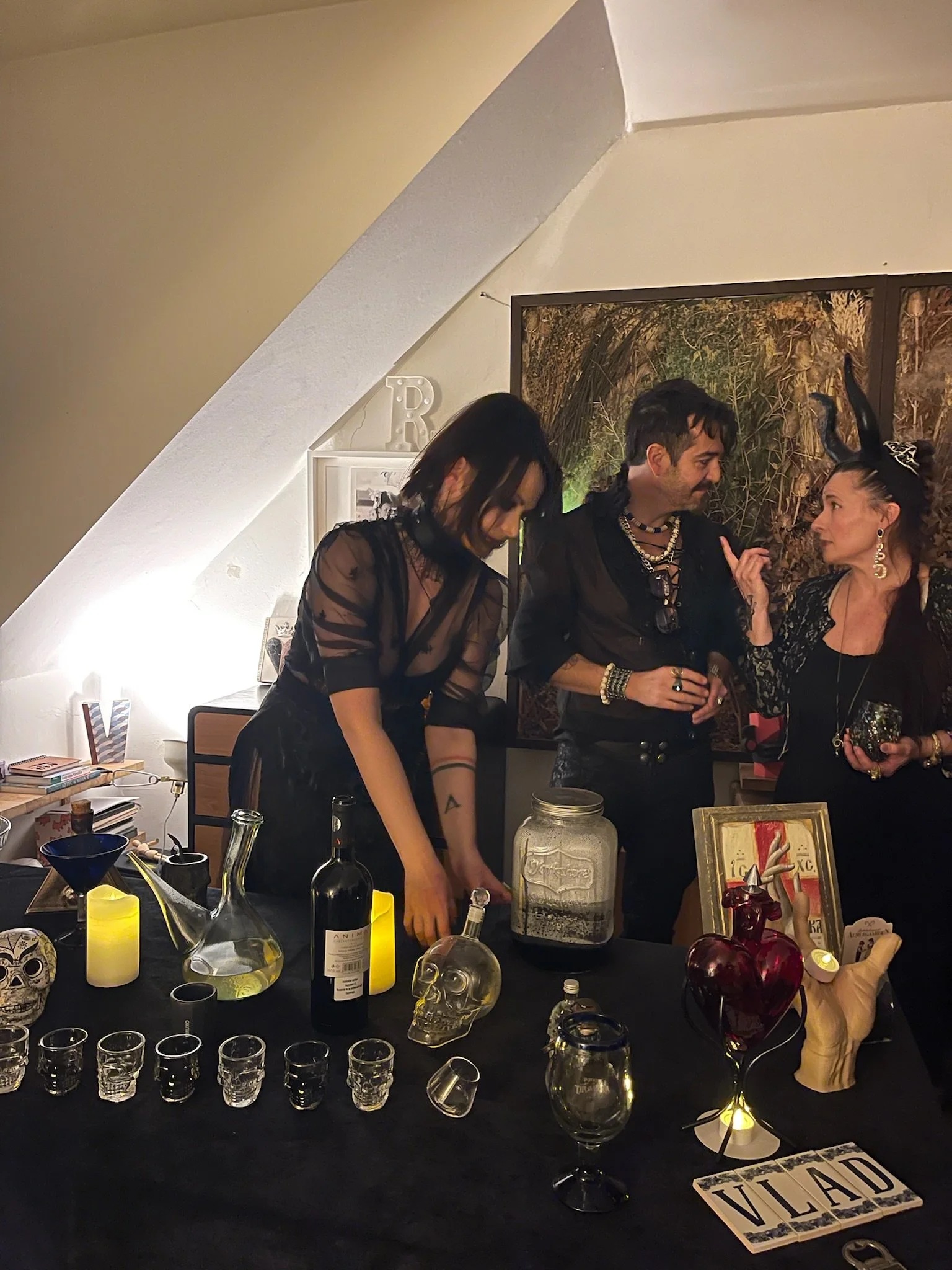
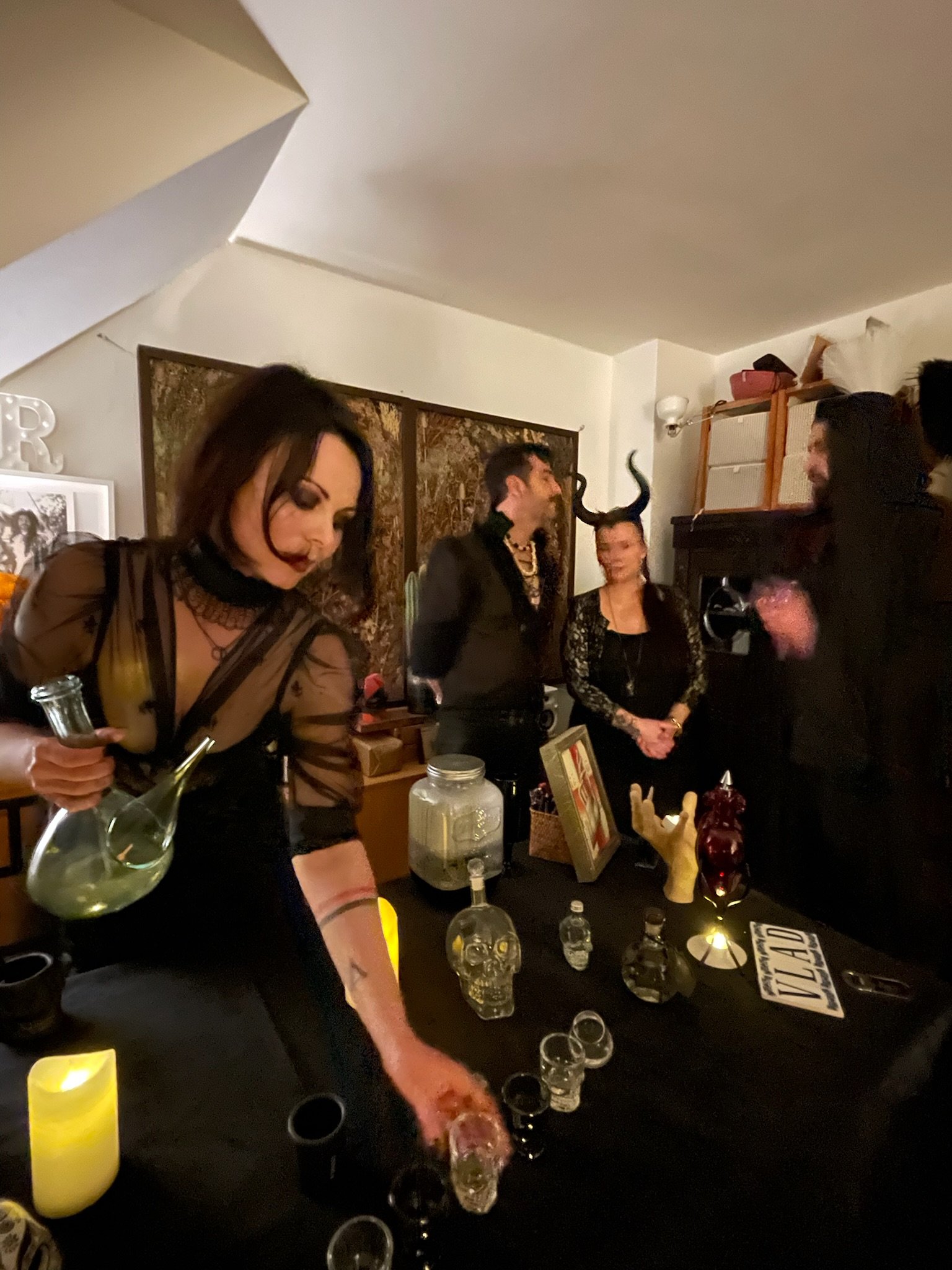
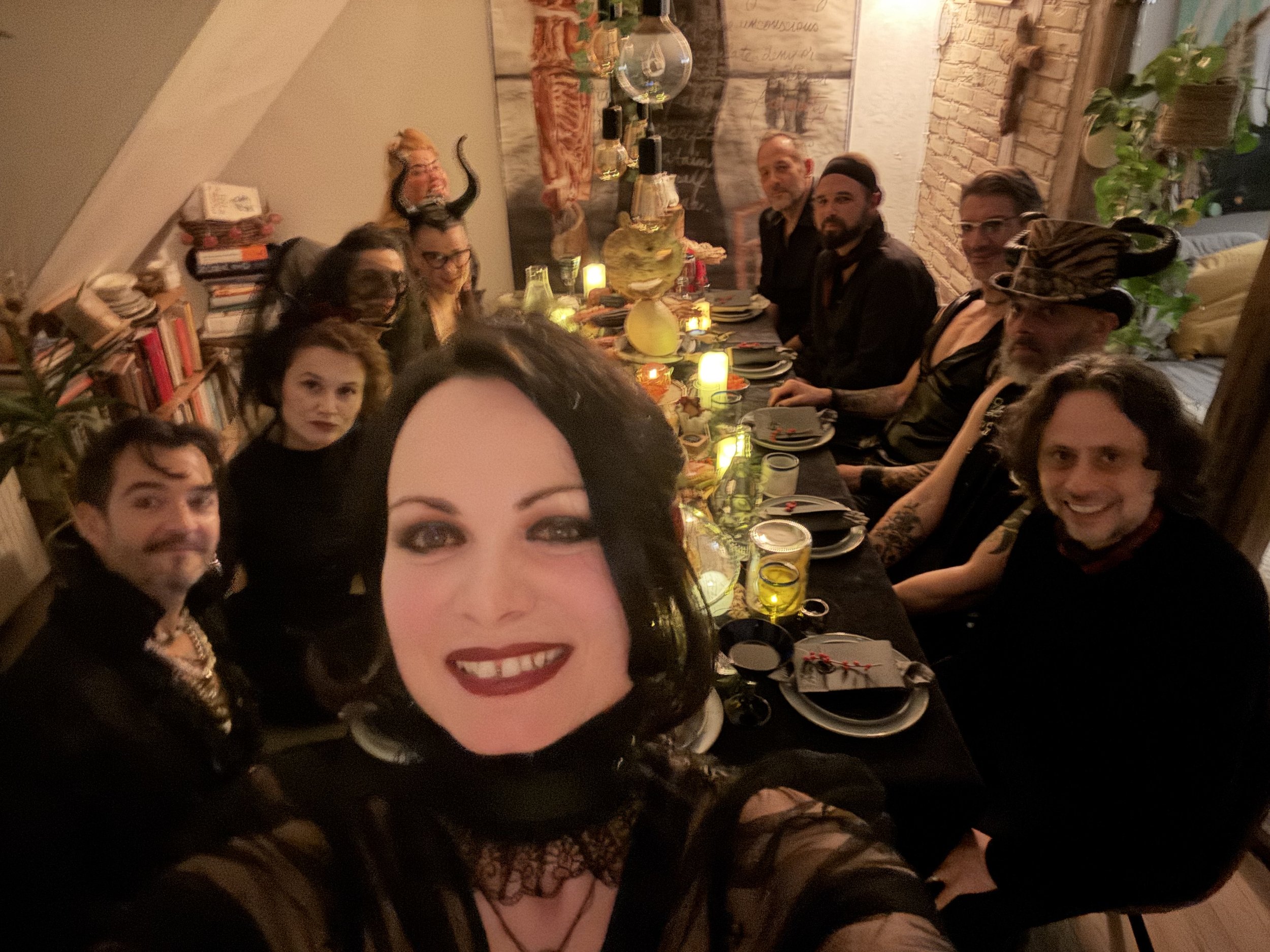
Enter the Mansion: Dresscode as TransformationThis wasn’t a “come as you are” dinner. It was a “dress as if the night itself requested your presence” dinner.
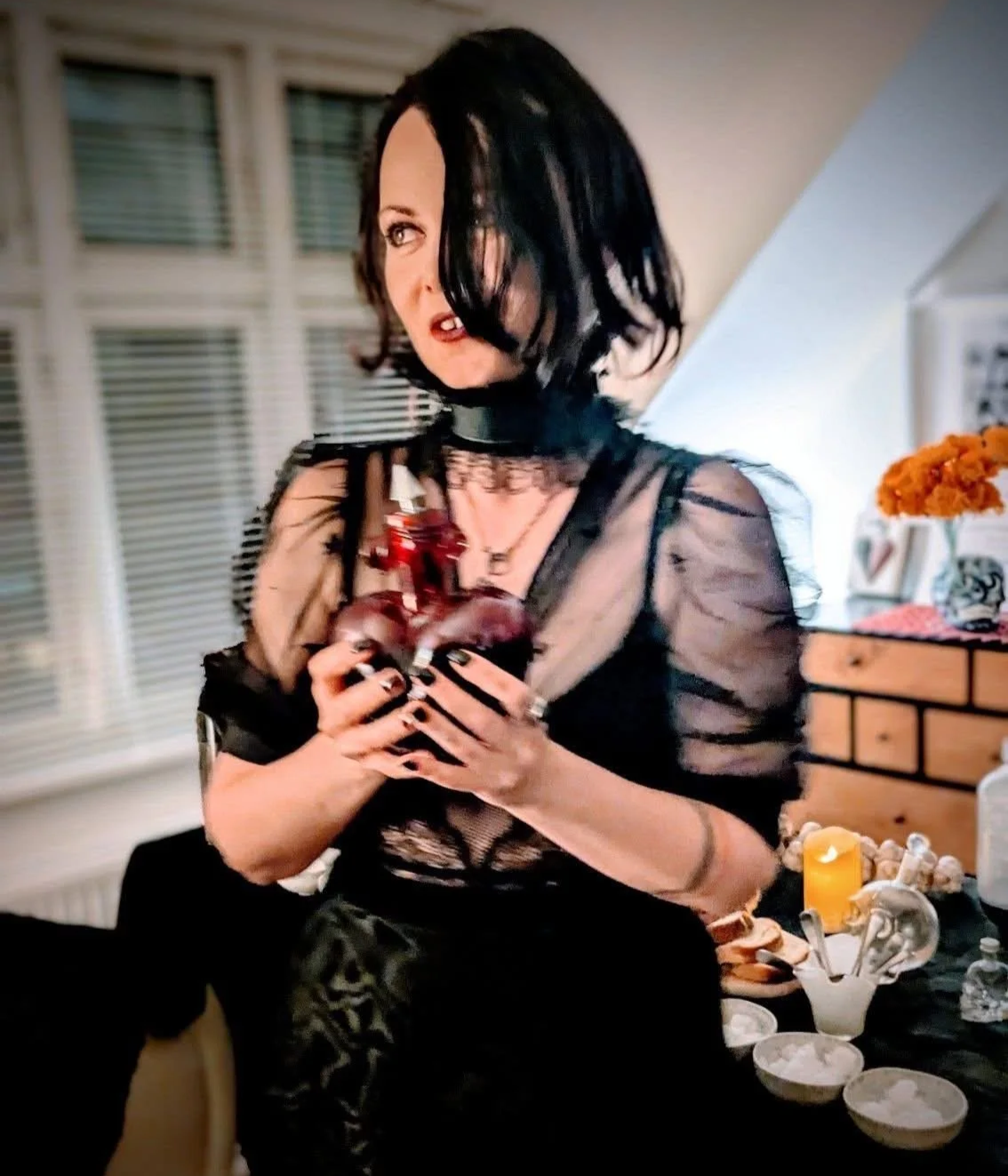
The dresscode was villainous, decadent, theatrical—dark finery, velvet, lace, horns, cloaks, midnight silk—because I wanted the guests to cross a line. Not into a costume party, but into a collective spell.
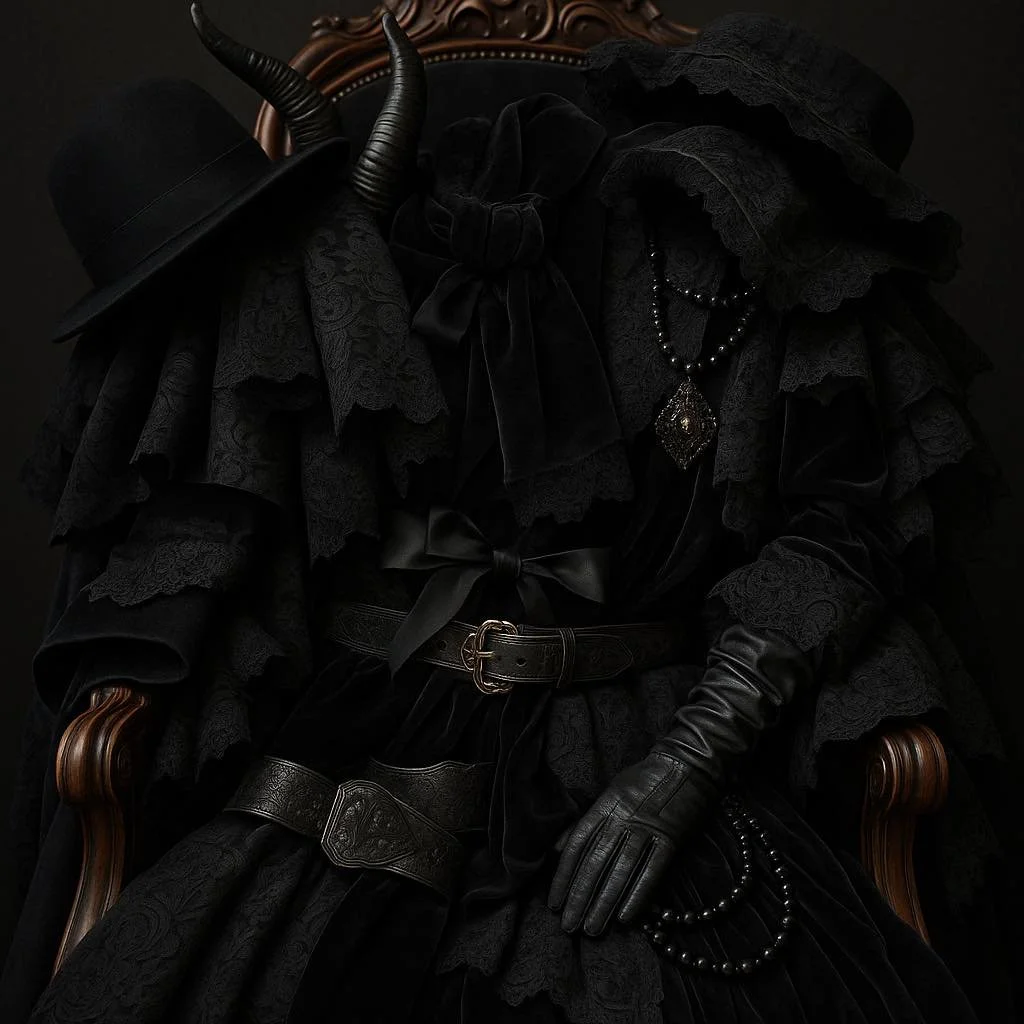
When you dress differently, you behave differently. You listen differently. You become available to experience. And this night needed availability—because Ignat is not a cute tradition, and pork is not just “a protein.” It’s a life that becomes food. It’s a reality we usually let industrial systems hide for us.
Opening the Night: Warmth First, Then WitnessingLike in Romania, we started with warmth.
Welcome drink: hot spiced wine—this time with a Danish twist (gløgg), because Denmark was the host country and I wanted it to be present, not erased.
Then: a warm shot of pălincă, the ritual ignition. The kind of gesture you offer when someone arrives from winter and you need them to thaw into the night.
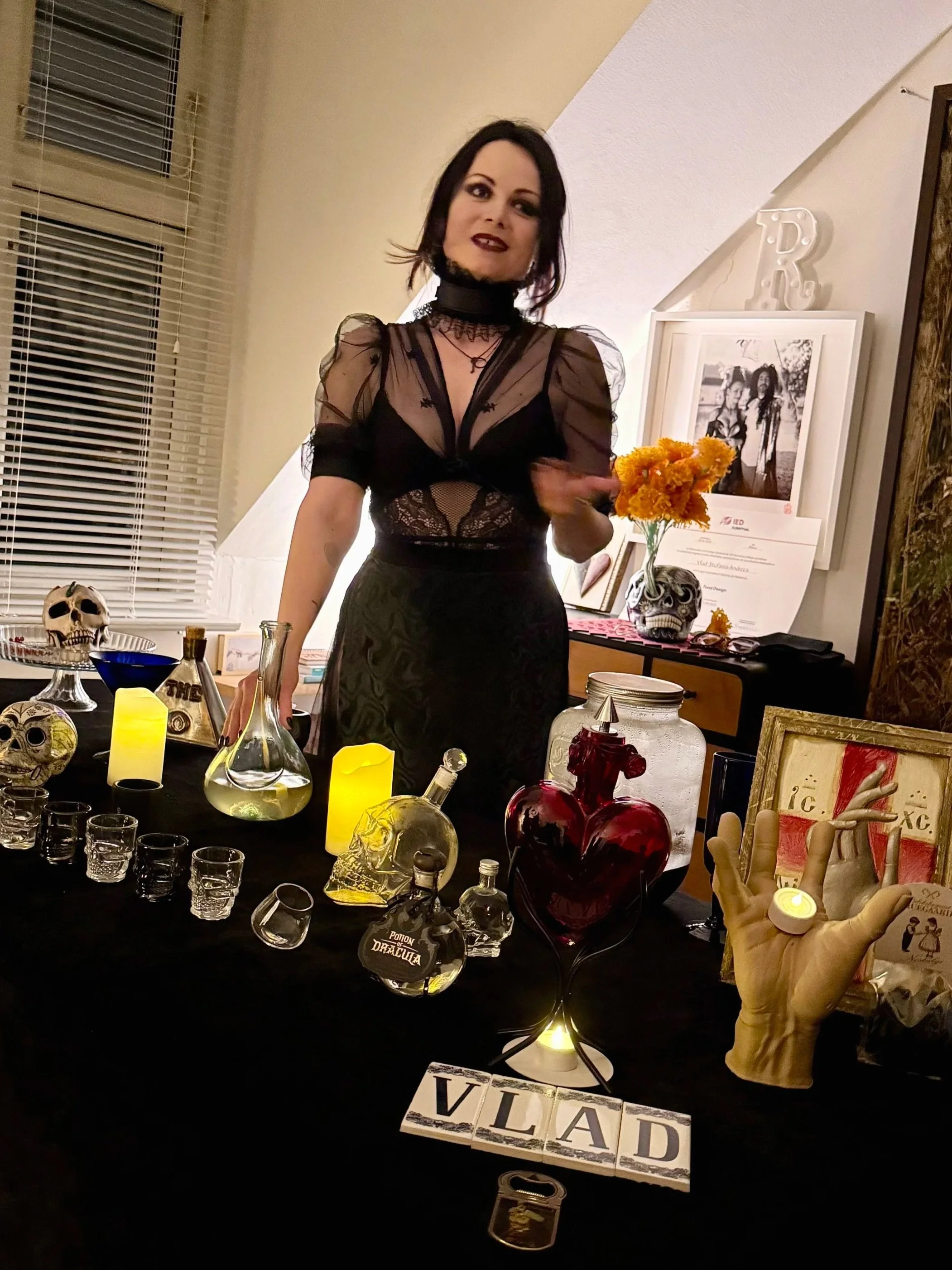
Only after that did we watch the short film—about 15 minutes—showing a pig slaughter ritual at a farm in Bucovina (a mountainous historical region in northern Romania, at the edge of the Carpathians): the sequence, the roles, the hay fire, the shaving and burning of hair, the meticulous carving, the sausages, the tobă, the brining and smoking—the whole choreography of turning an animal into winter sustenance.
I chose to show it because I don’t want tradition to be consumed (only) as aesthetic. I wanted my guests to see the world the food comes from—the archaic and the contemporary living side by side. And yes, some people will see these scenes and think “barbaric.” But if we’re going to talk honestly, I also want to hold this thought:
Industrial meat practices are often far more brutal—just quieter, cleaner-looking, and packaged so we don’t have to feel it.
I’ve researched the meat industry before in my Non-Packaging project, and I know how distance is designed into the system: the animal becomes invisible, and our responsibility becomes abstract.
This dinner wasn’t me pretending I have a simple relationship with meat. I don’t. As a child (and even now), the idea of killing to eat can feel cruel. But I grew up inside a culture where meat existed as both necessity and ritual, and I’m trying to live in a way that’s more aware: where meat comes from, how the animal lived, what it means to choose it, and what it means to not take it for granted.
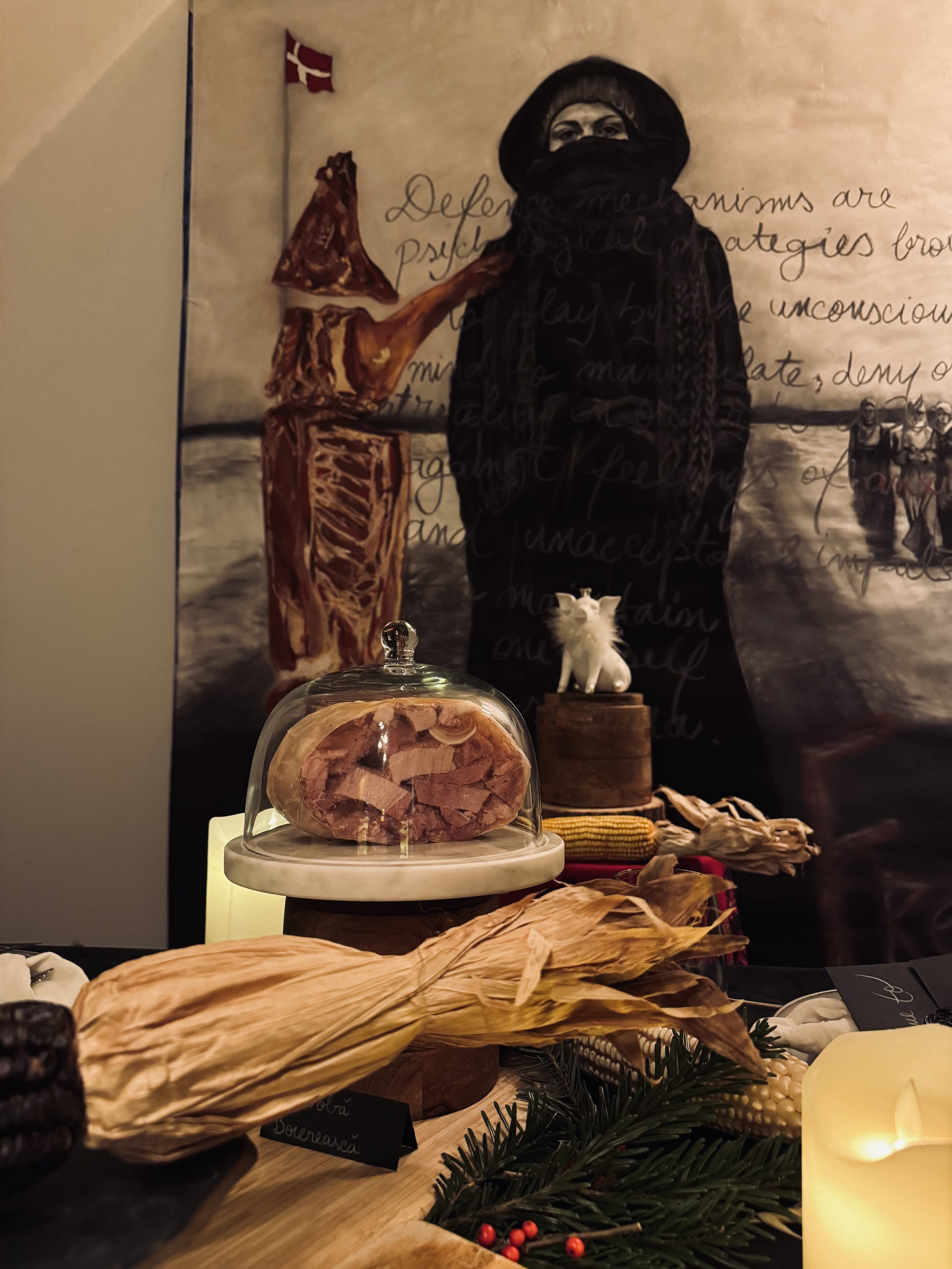
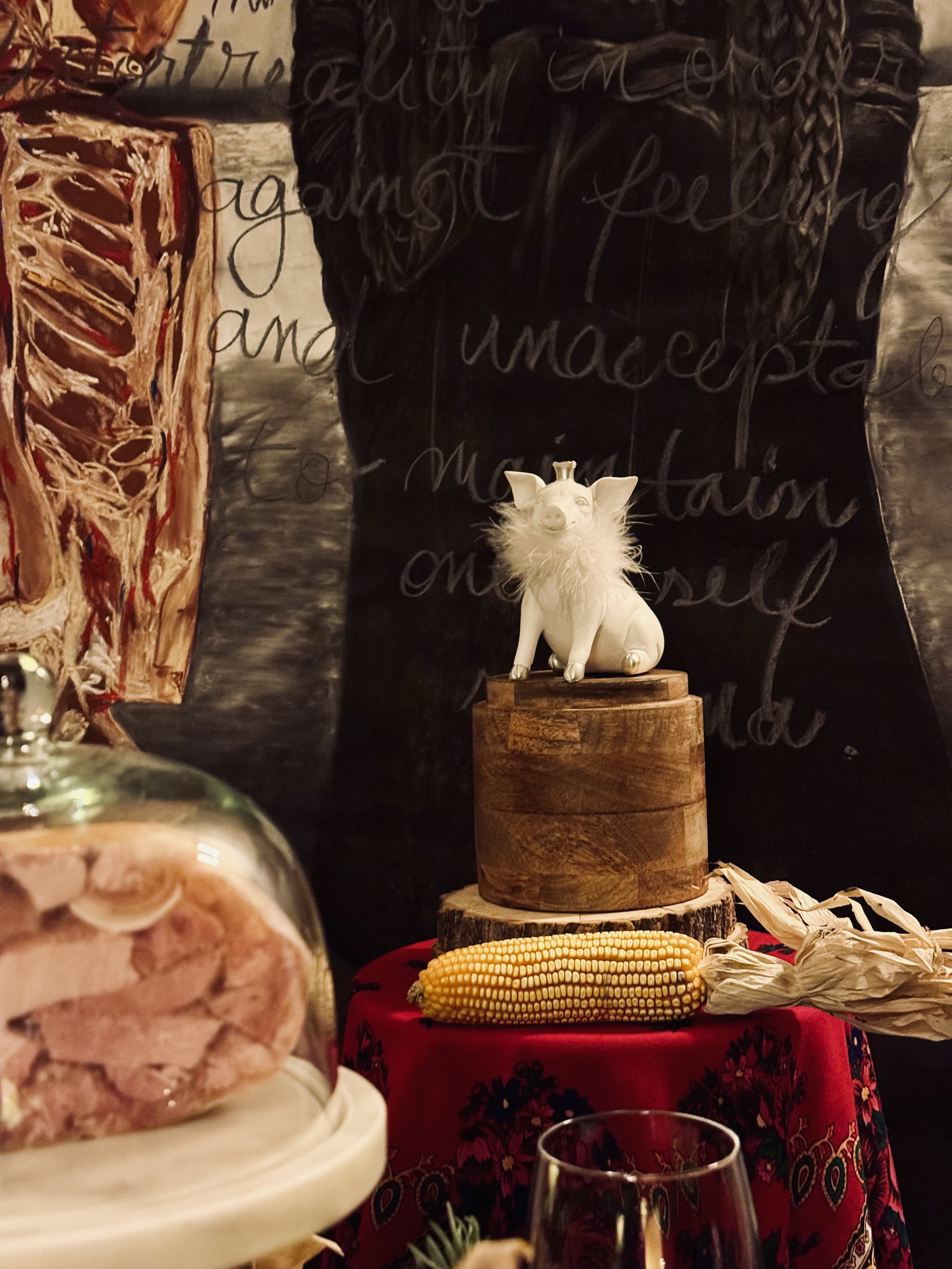
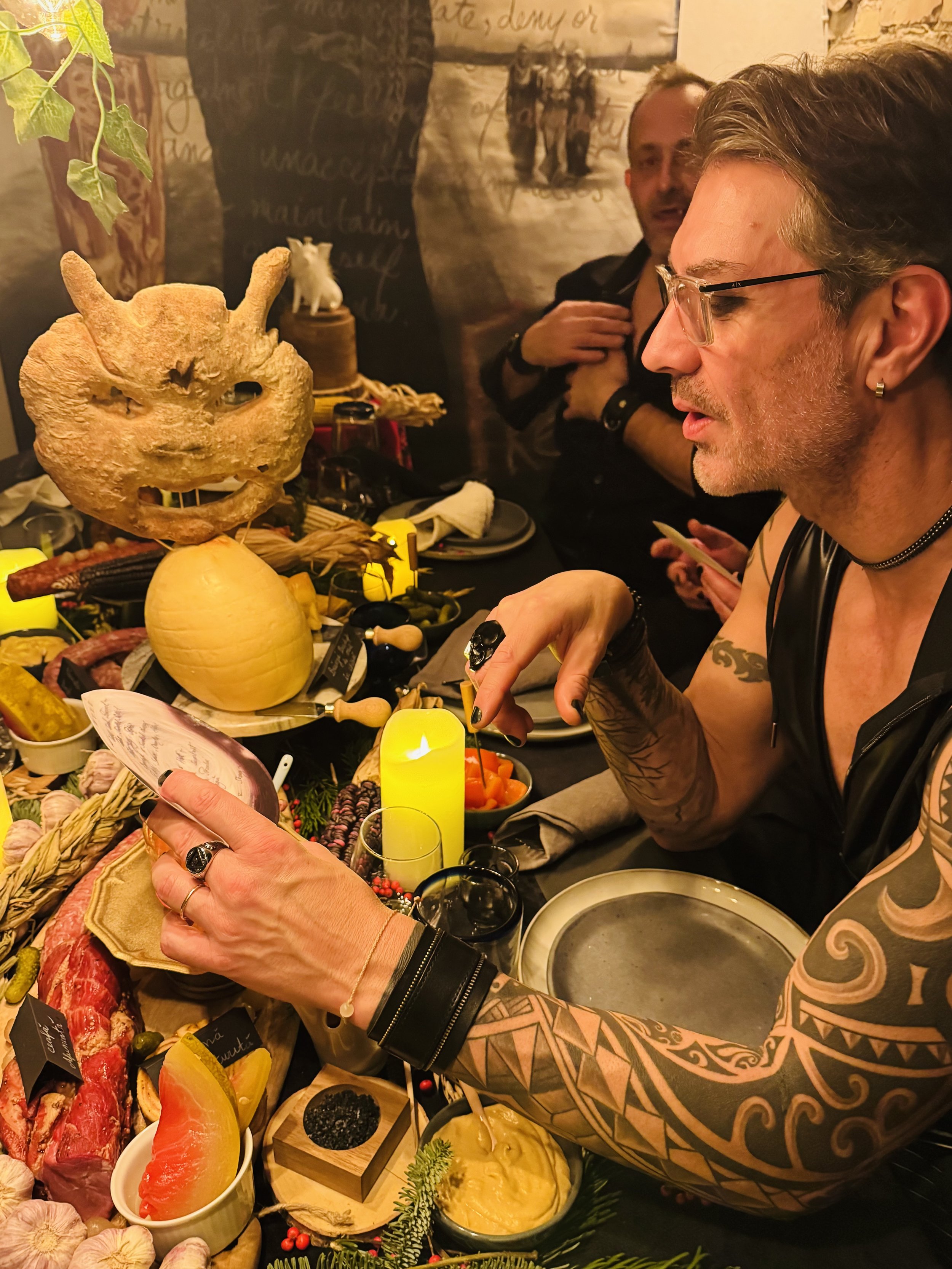
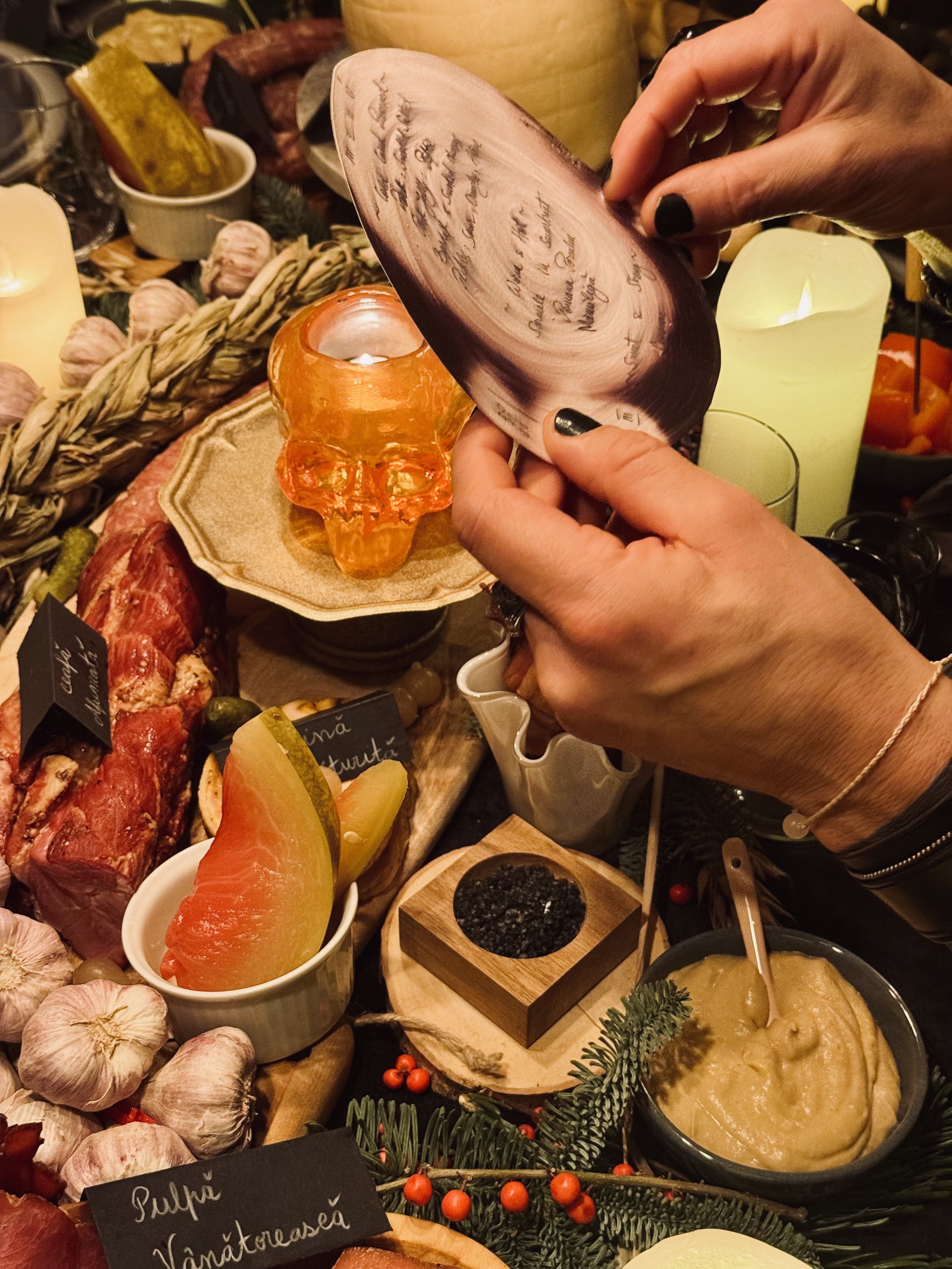
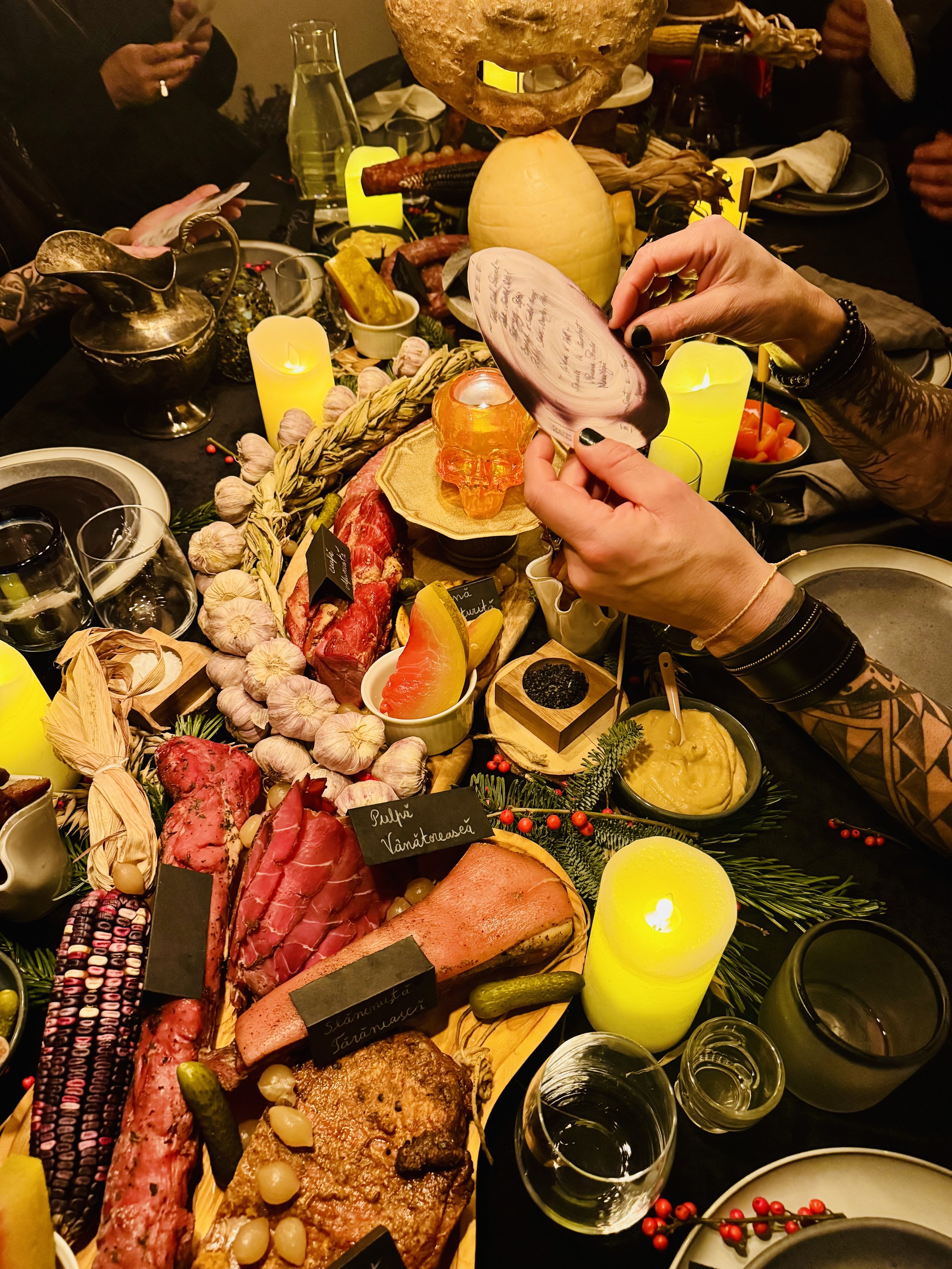
The Table as Canvas: The Animal, Made PresentBefore anyone touched a fork, I wanted the room to do what industrial systems usually don’t: make the animal present. Not in a shocking way — in a truthful one. So the table became the first story, the first argument, the first spell. I built it like a black, candlelit canvas where winter could arrange itself: evergreen and grain cutting through the darkness, clusters of garlic like protective charms, small acidic jewels and salted offerings placed with intention. And at the closest end — where you begin, where you sit down, where your eyes land first — I composed the suggestion of a body: an opened pig, laid out not as gore but as acknowledgement. A symmetrical altar that hinted at “head” and “mind” and “ears,” the kind of silent still life that says: this feast has origins. Nothing here is abstract. Nothing arrives without a story. Only after the table had spoken did I let the guests read anything else.
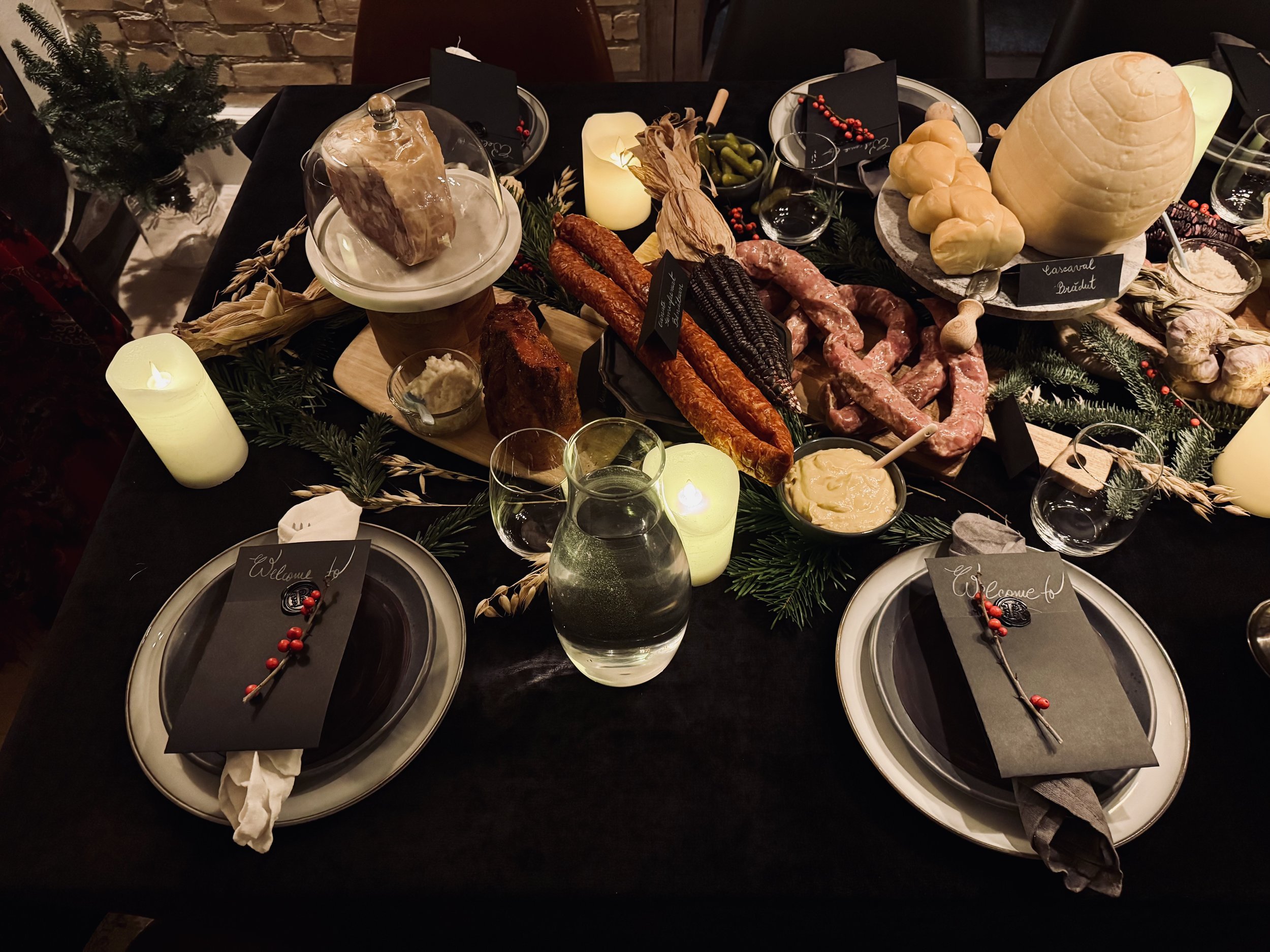
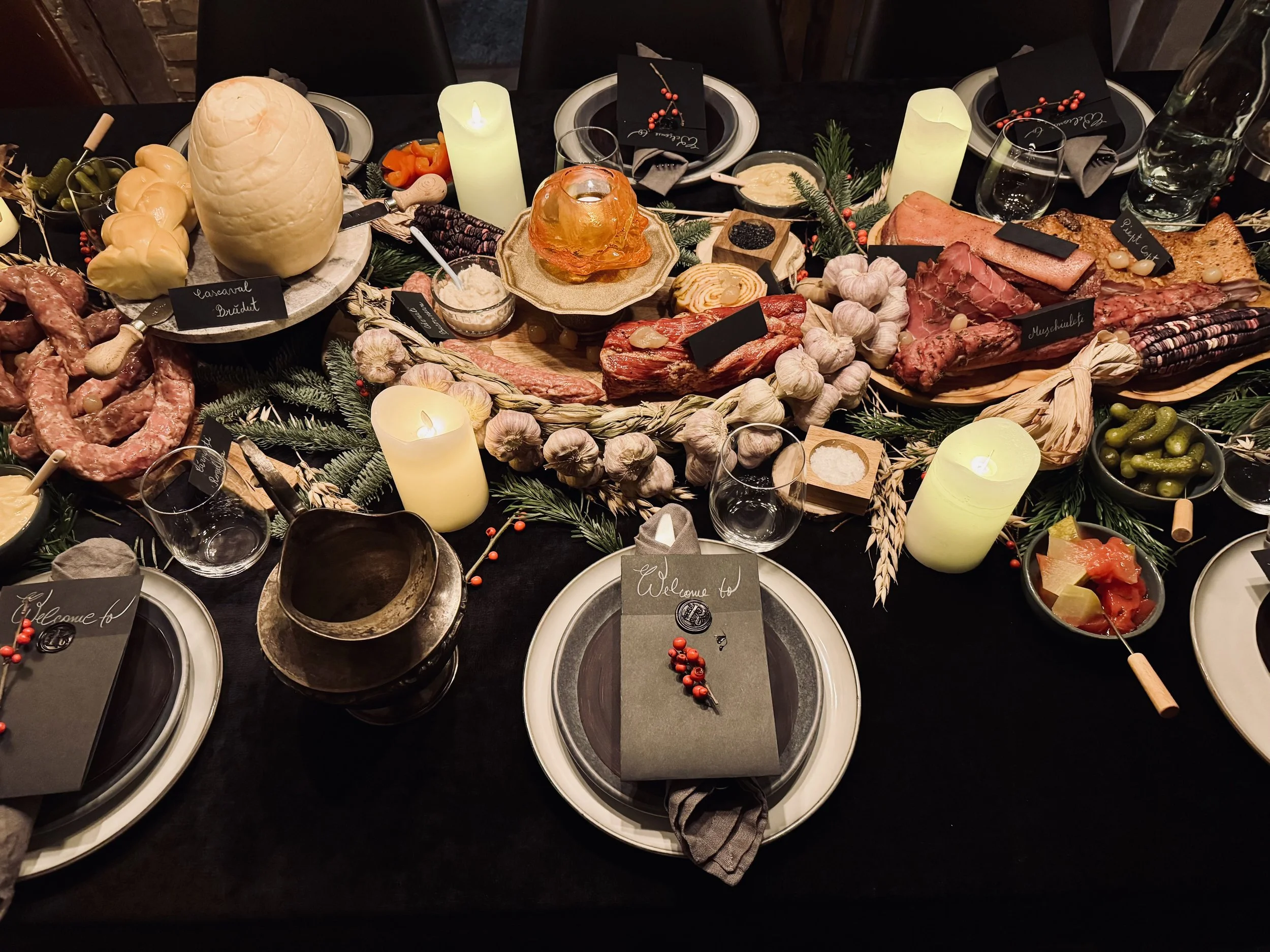
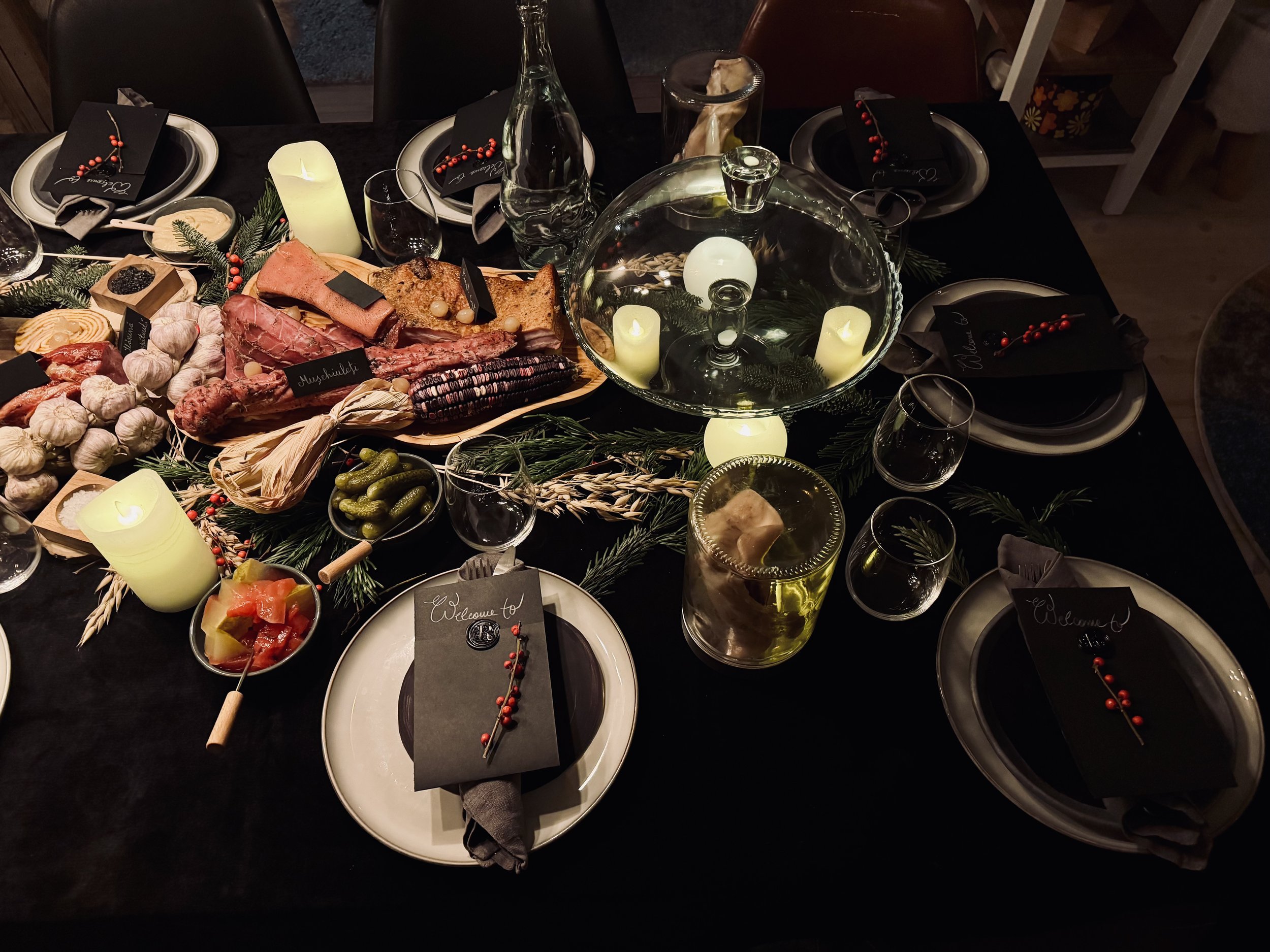
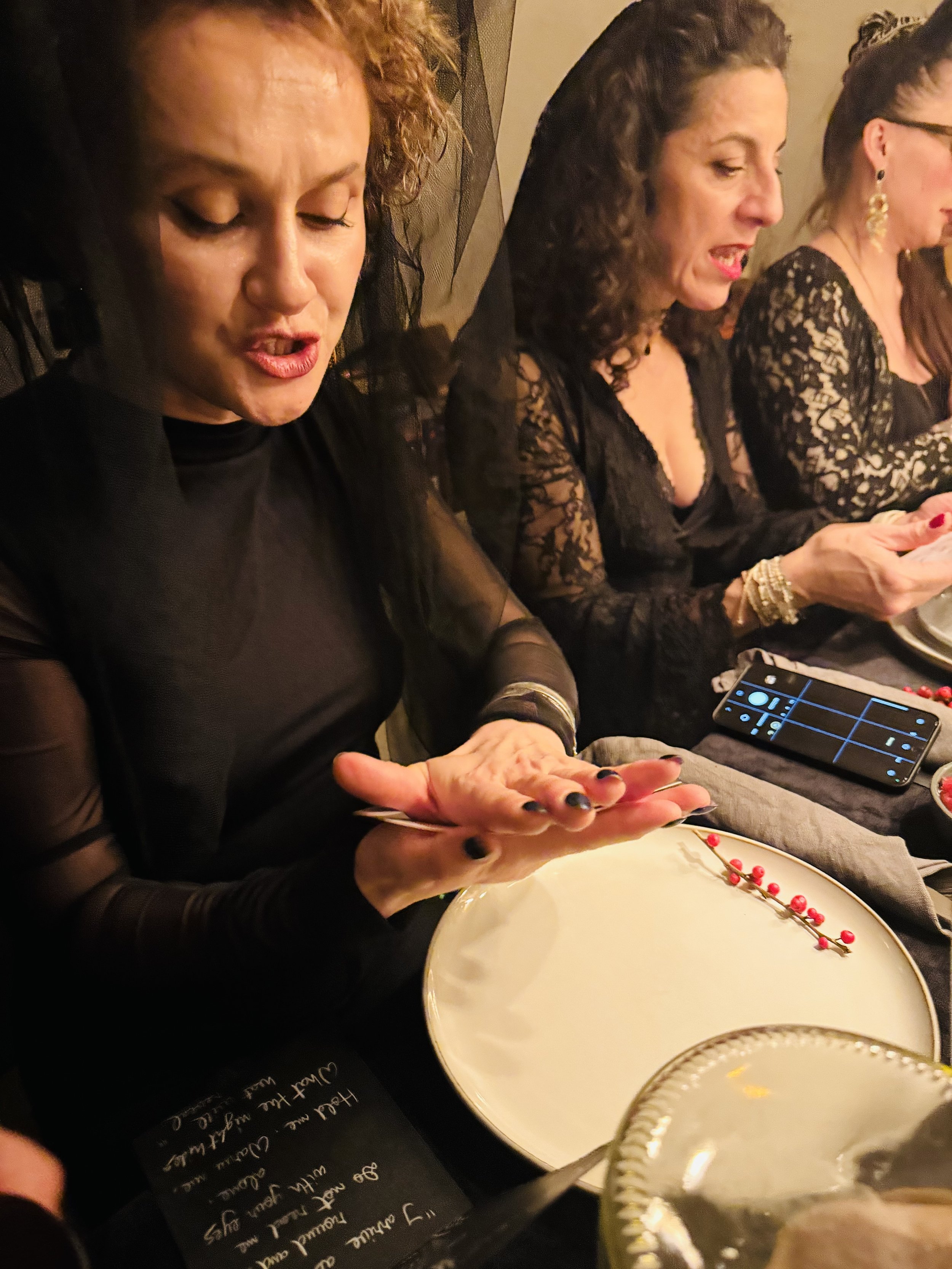
The Menu You Couldn’t Read Yet: Heat RevealsAs in all Rico dinners, every guest had a handmade card on their plate—paper chosen for mood, ink chosen for the night, sealed with wax like a little contract.
It said “Welcome to…” and then you had to open it.
Inside, instead of a normal menu, there was a riddle:
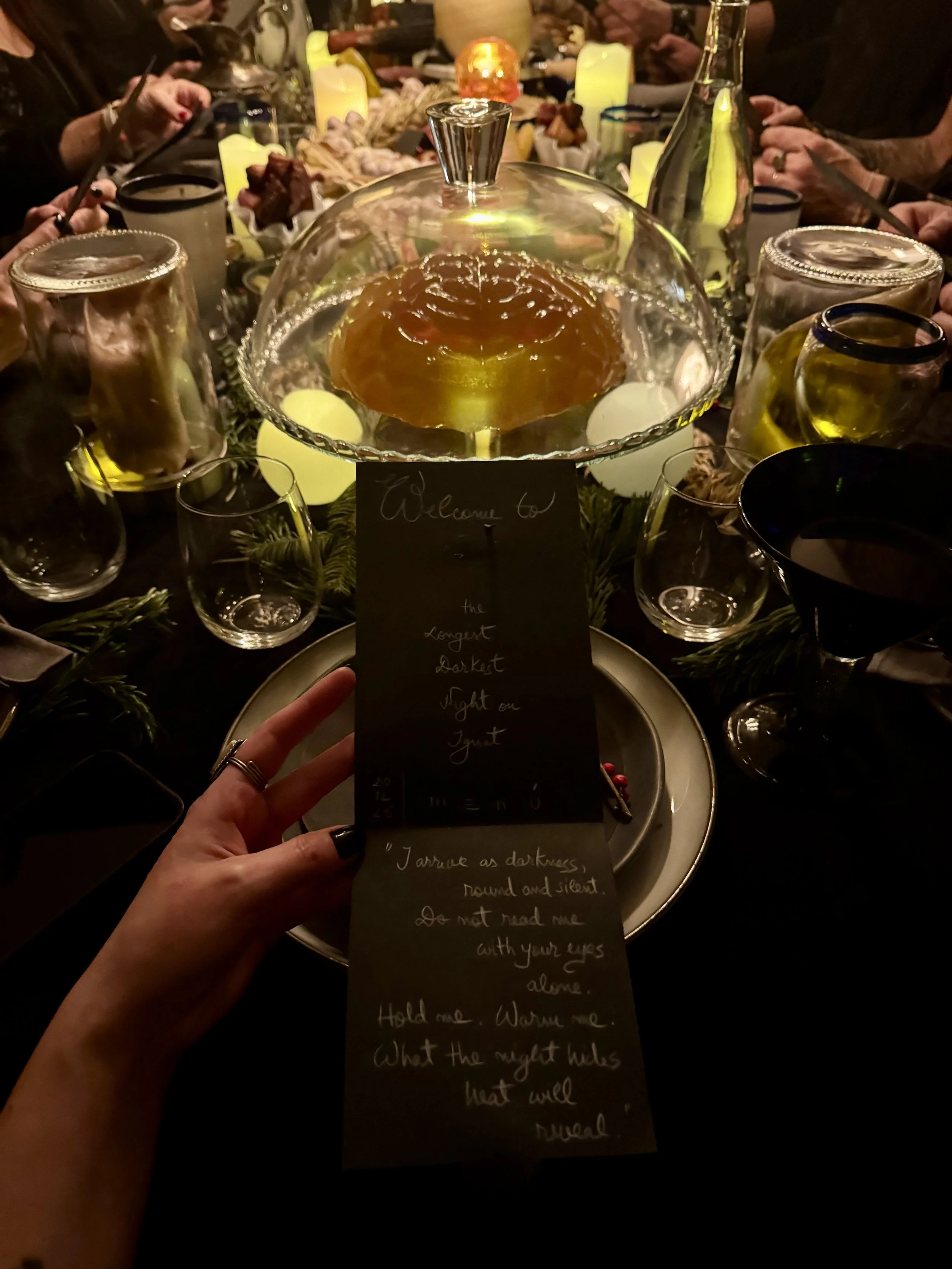
“I arrive as darkness, round and silent.
Do not read me with your eyes alone.
Hold me, warm me.
What the night hides, heat will reveal.”
On top of each plate sat a round black paper disc, a new moon.
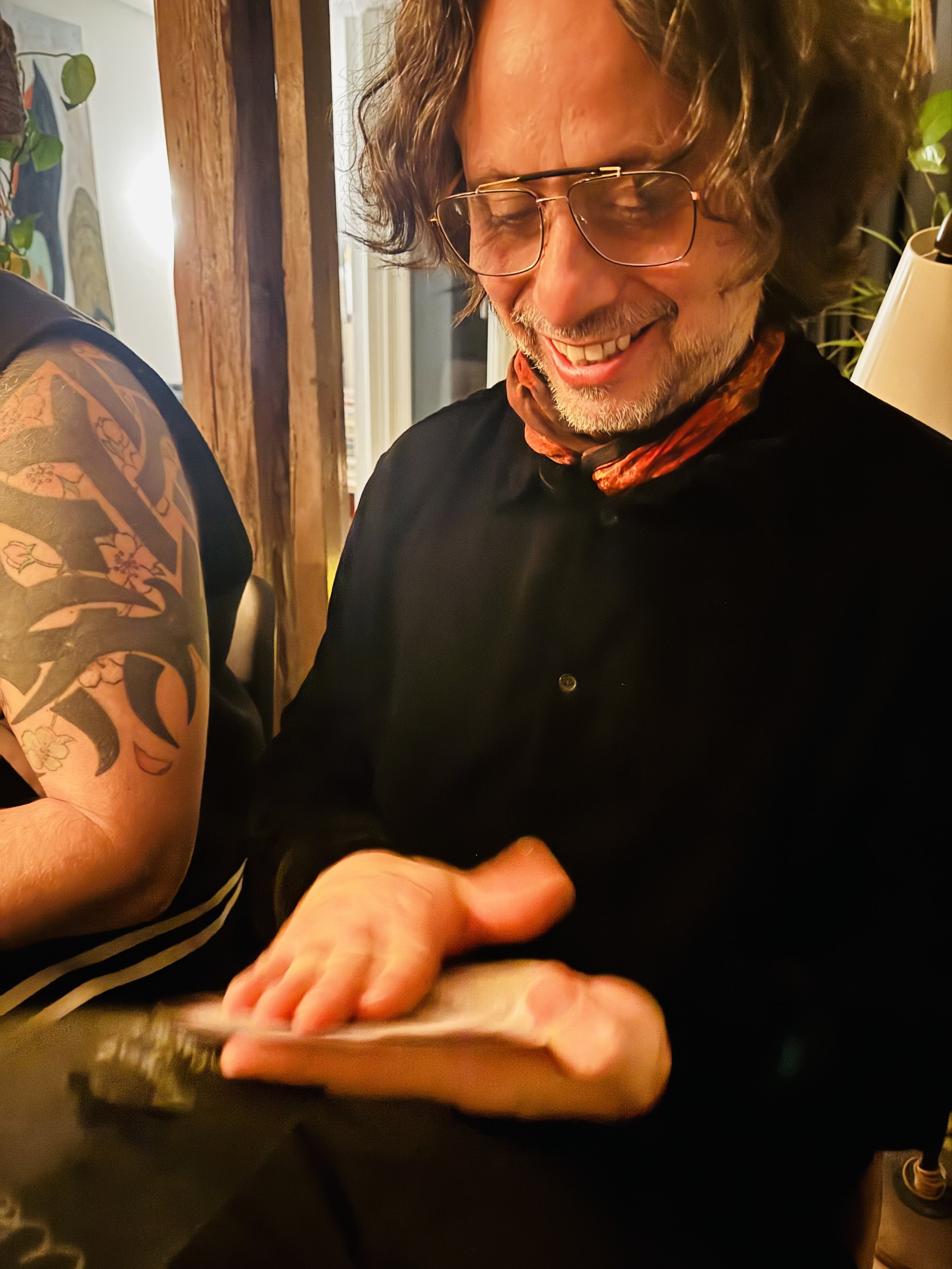
And then—magic. Or chemistry pretending to be magic (the best kind): the disc was painted with thermochromic paint, so when guests held it, the warmth of their hands began to reveal what was hidden underneath. When they moved it over the candle flame, the darkness disappeared faster. And suddenly: the menu.
A small moment of awe before appetite. A reminder that this night was about darkness, yes—but also about what we choose to illuminate.
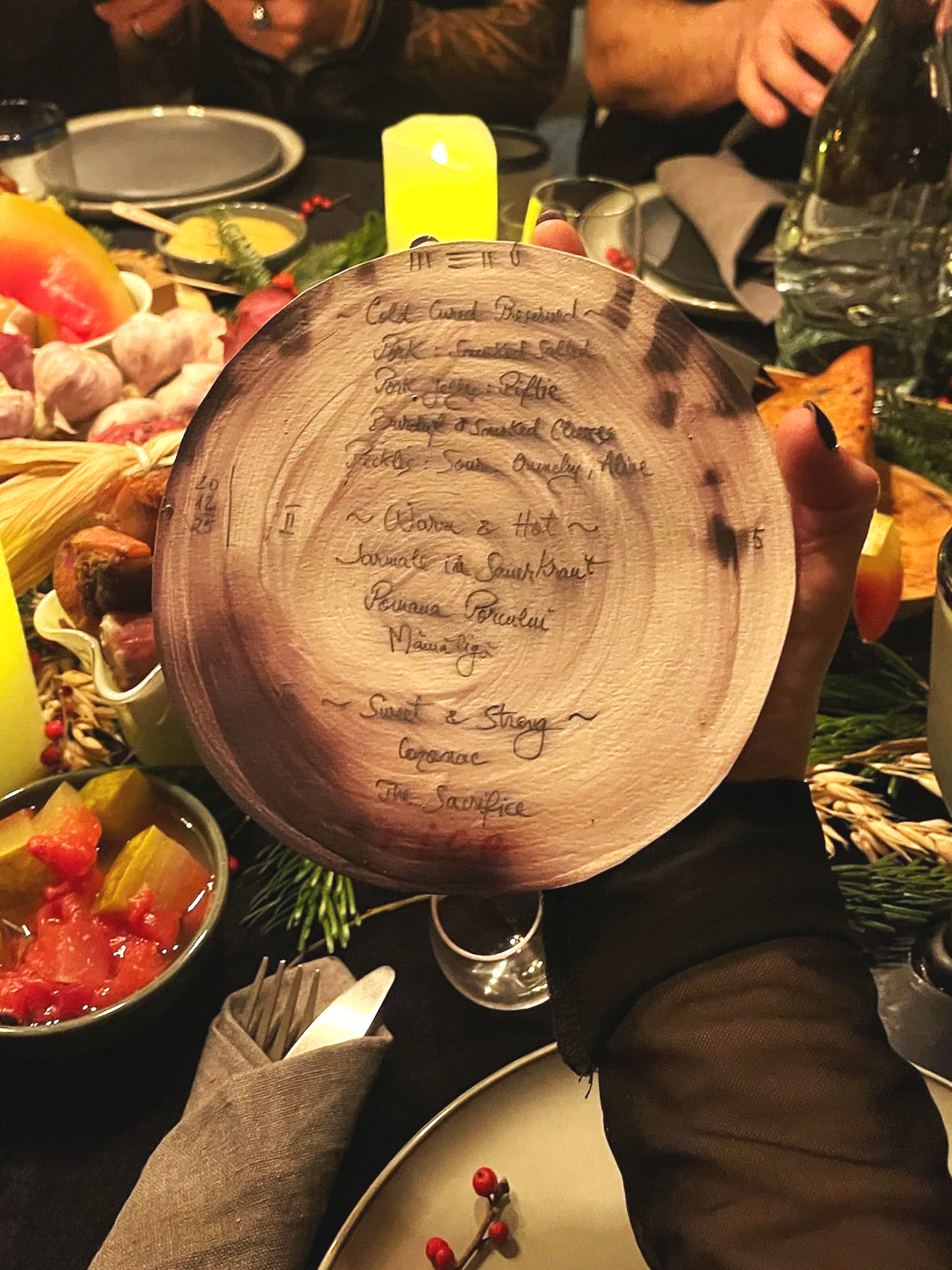
The Feast in Three Movements(A winter choreography.)
I. Cold / Cured / Preserved
“Winter’s quiet intelligence”
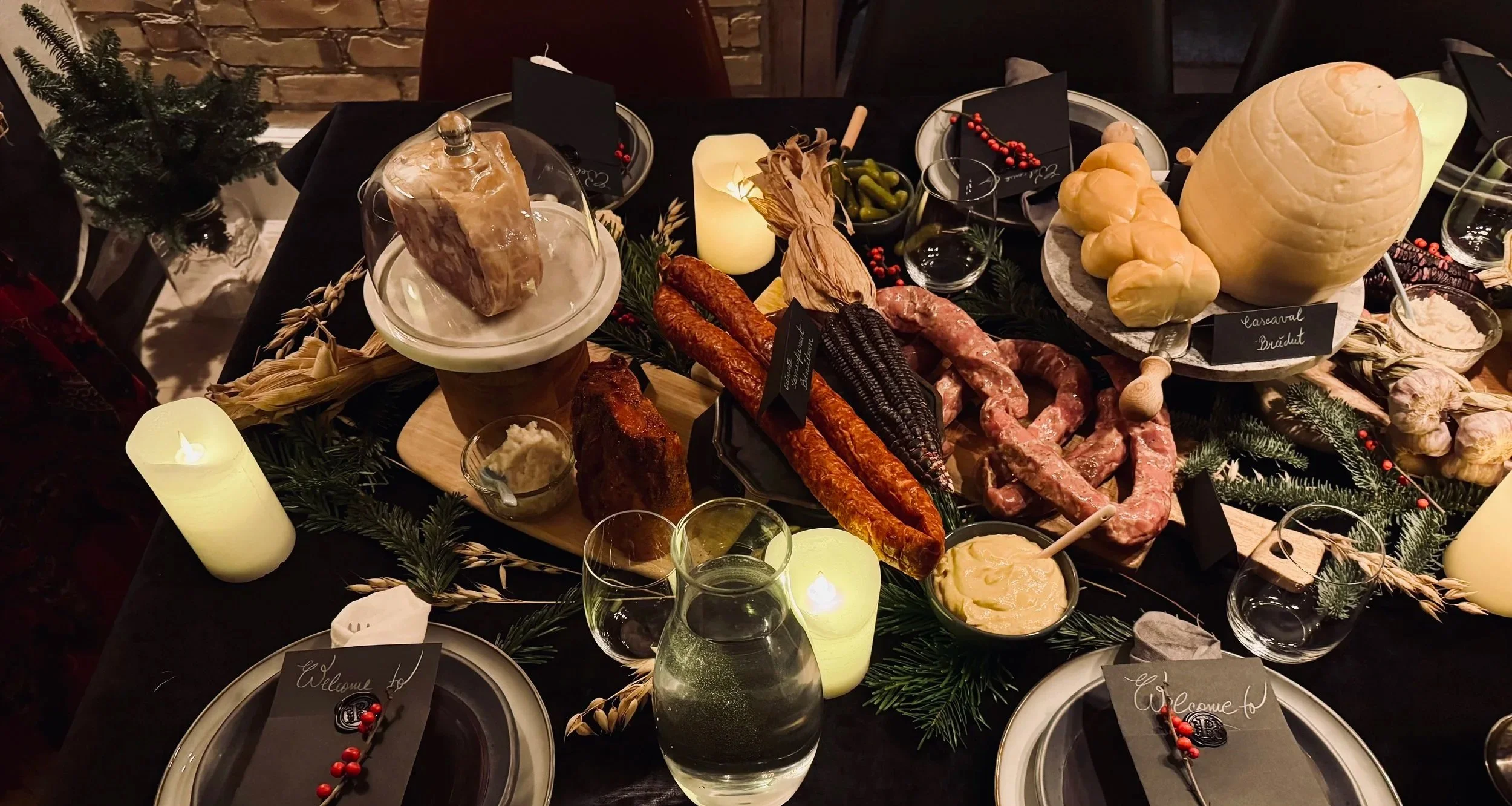
We began with the cold table: a landscape of smoke, salt, sourness, and time.
My Romanian friend from the Moldova region—Ioana Cassandra, brought a gift that made me almost emotional just opening it: a package her mother sent from Romania—meat “straight from the source”, from Romanian pigs, preserved with traditional methods, carrying that unmistakable taste of home that you can’t fake. It wasn’t just food; it was an edible care package from the country that made me.
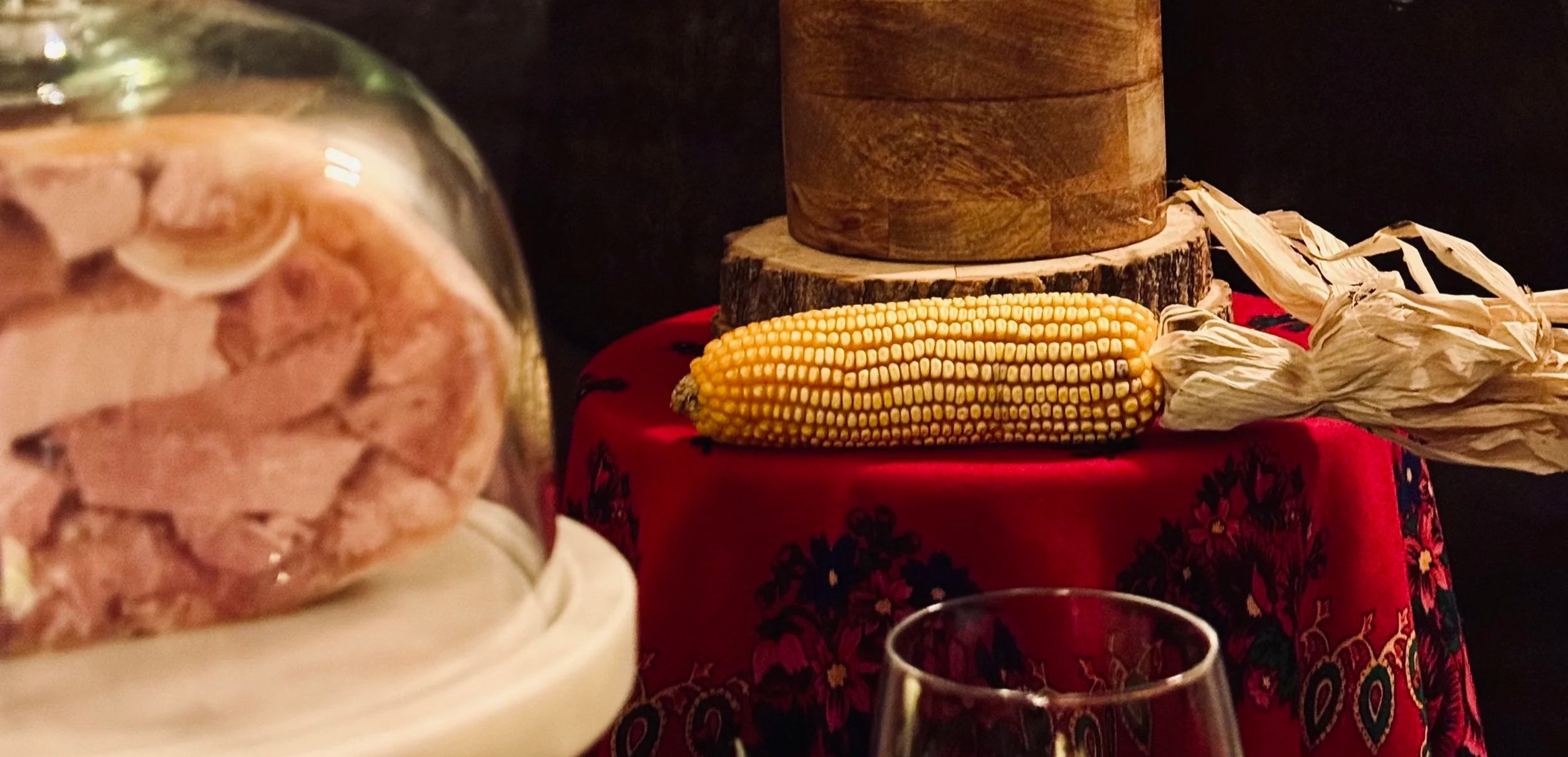
On the table: smoked and salted cuts—leg, chest, neck, belly bacon, pastrami—plus sausages, tobă (the Romanian winter terrine: pork bits suspended in savory jelly, eaten cold—the one under the glass dome), and smoked pieces preserved in lard, the way winter has always demanded: fat as storage, salt as protection, smoke as flavor and preservation.
And then my own contribution from scratch: piftie / răcituri.
When I was little, I called it “tremurici” because it shivers. It’s pork jelly, aspic, a dish that looks like a dare until it becomes an obsession.
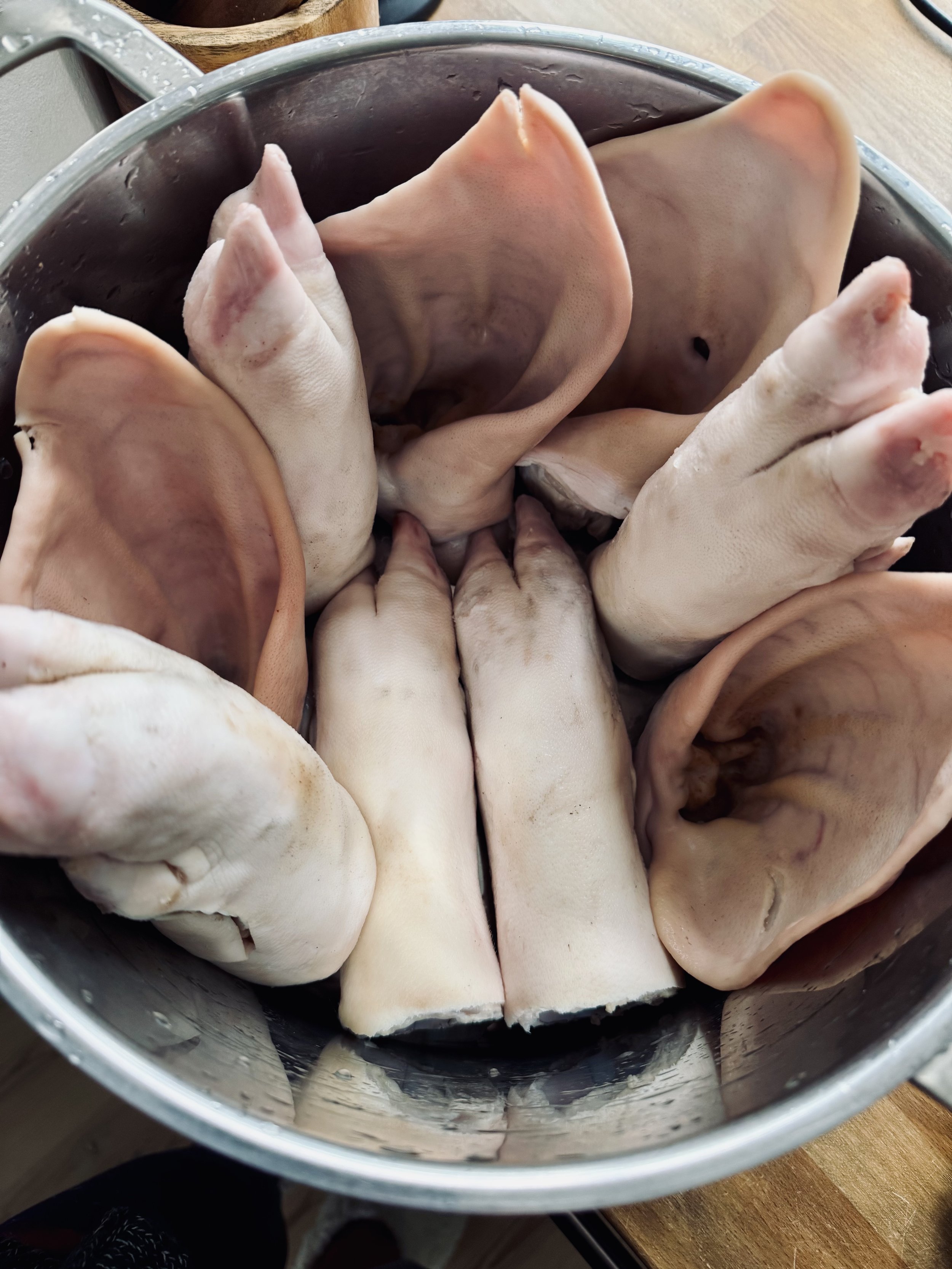
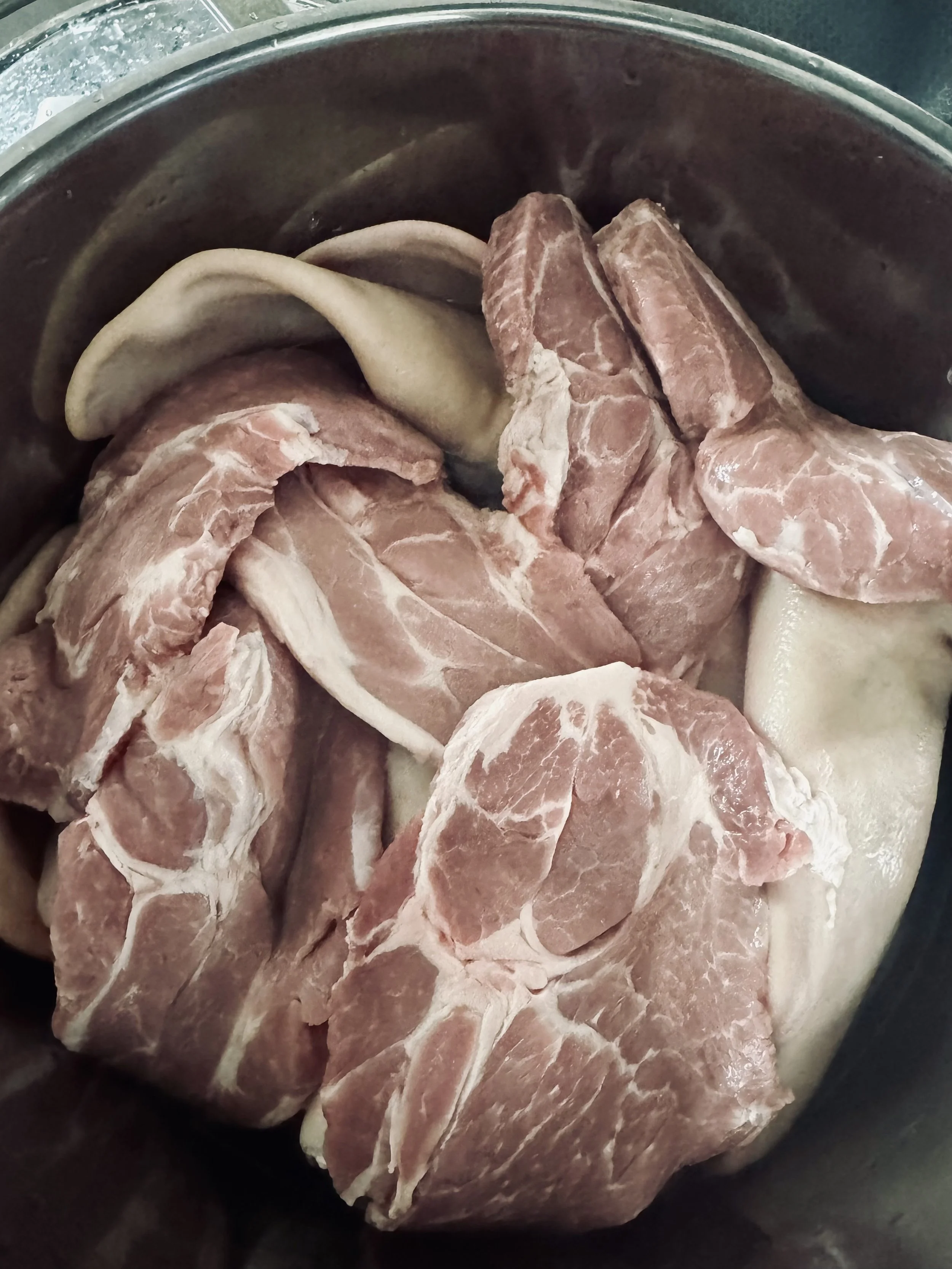
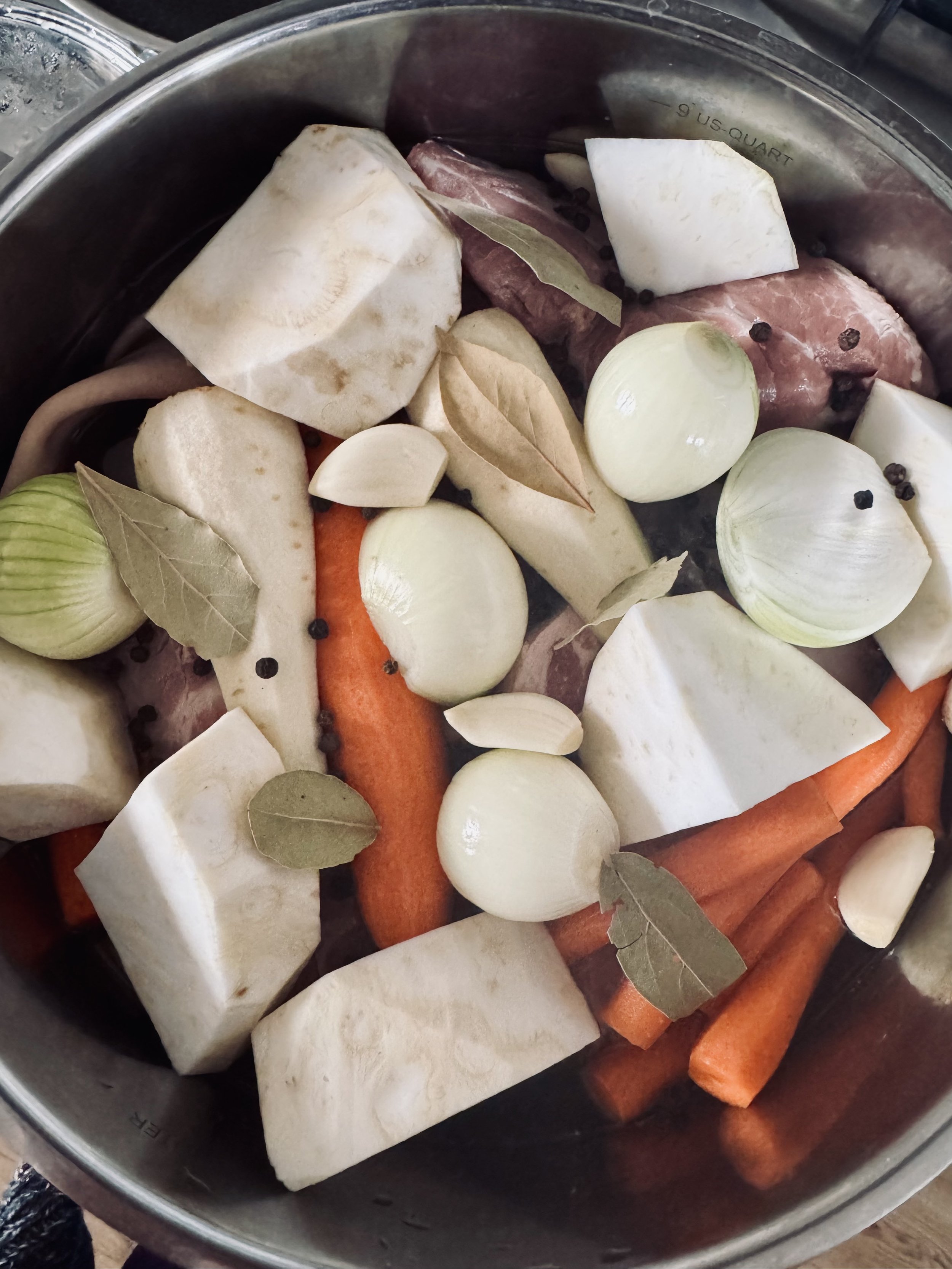
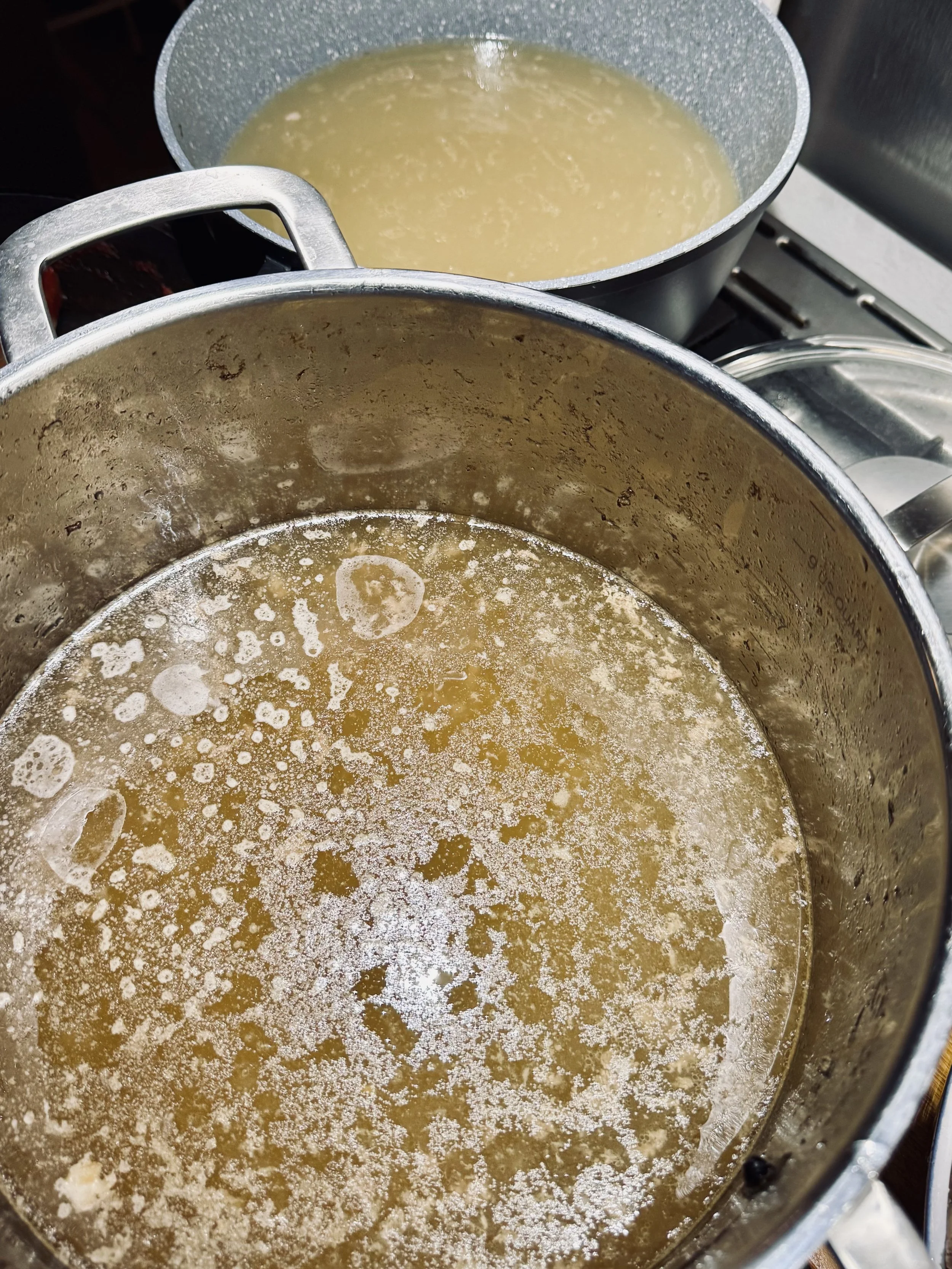
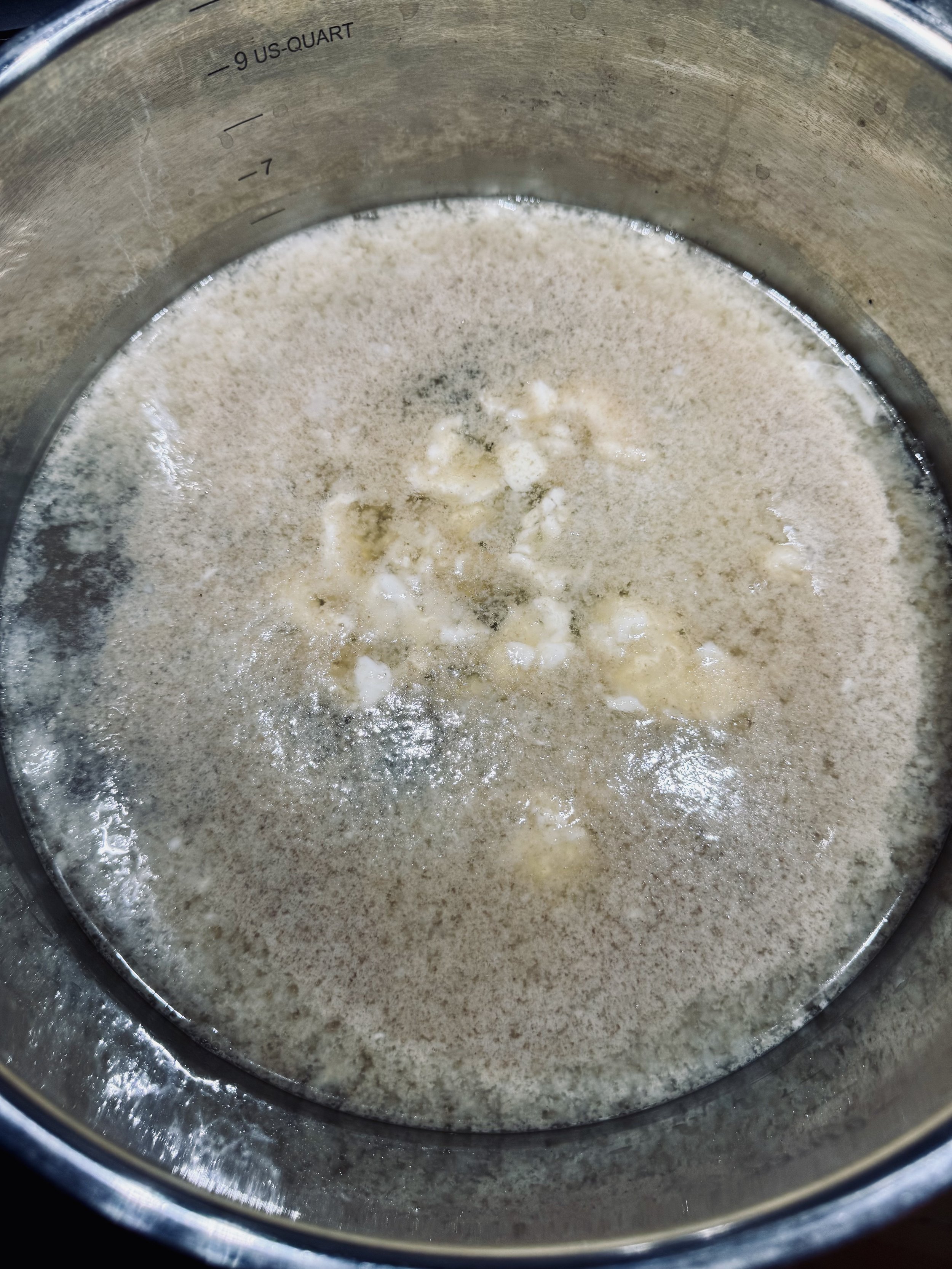
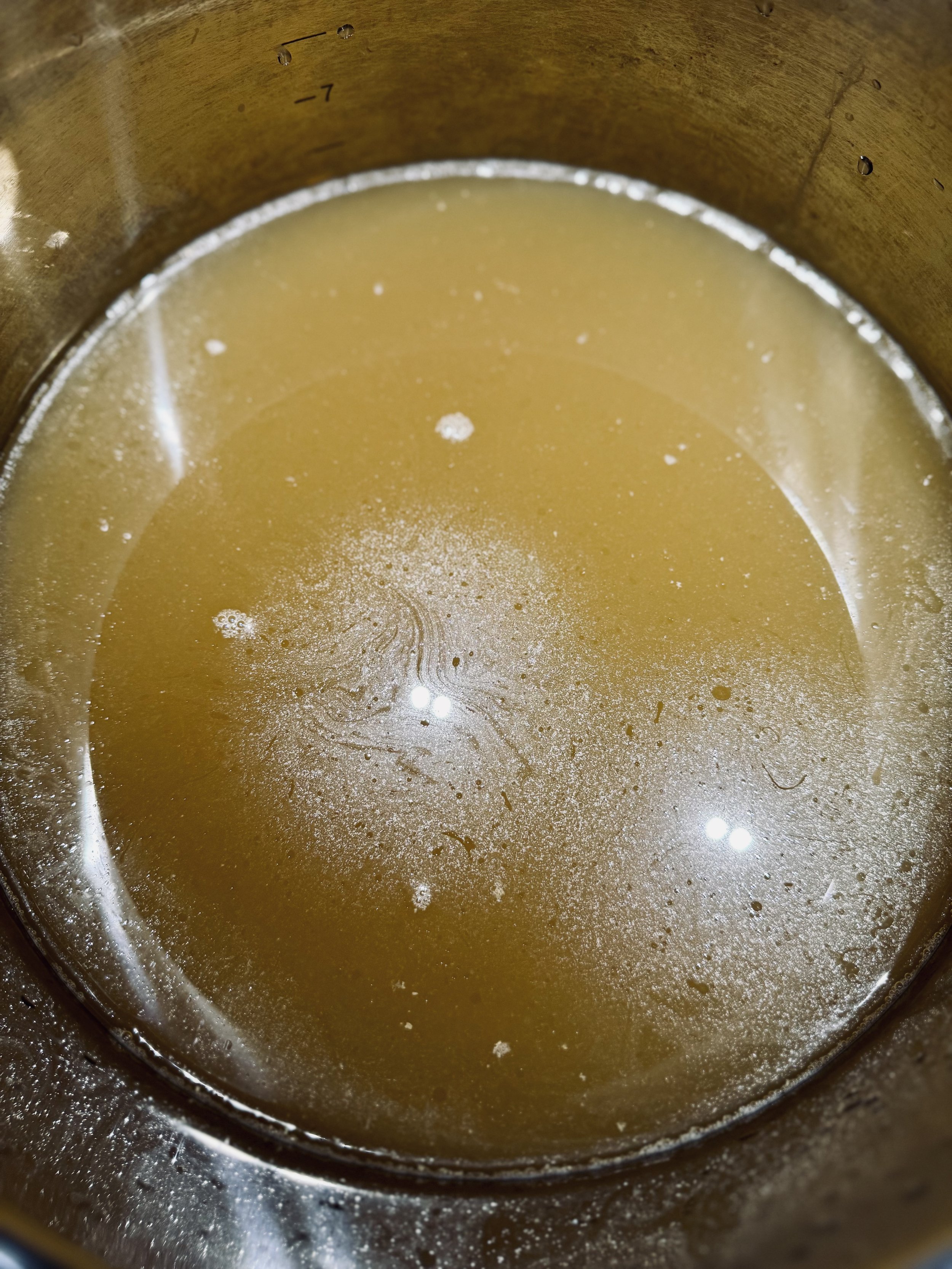
I made it by boiling pig feet and ears with root vegetables—carrots, parsnip, celery—plus peppercorns, garlic, and bay leaves for hours, extracting collagen until the liquid becomes the kind of thing that can turn solid and translucent when chilled. Every household has its own version; every region has its preferences; every family thinks their mother’s is the correct and the one and only (Romanians will know what I’m talking about).
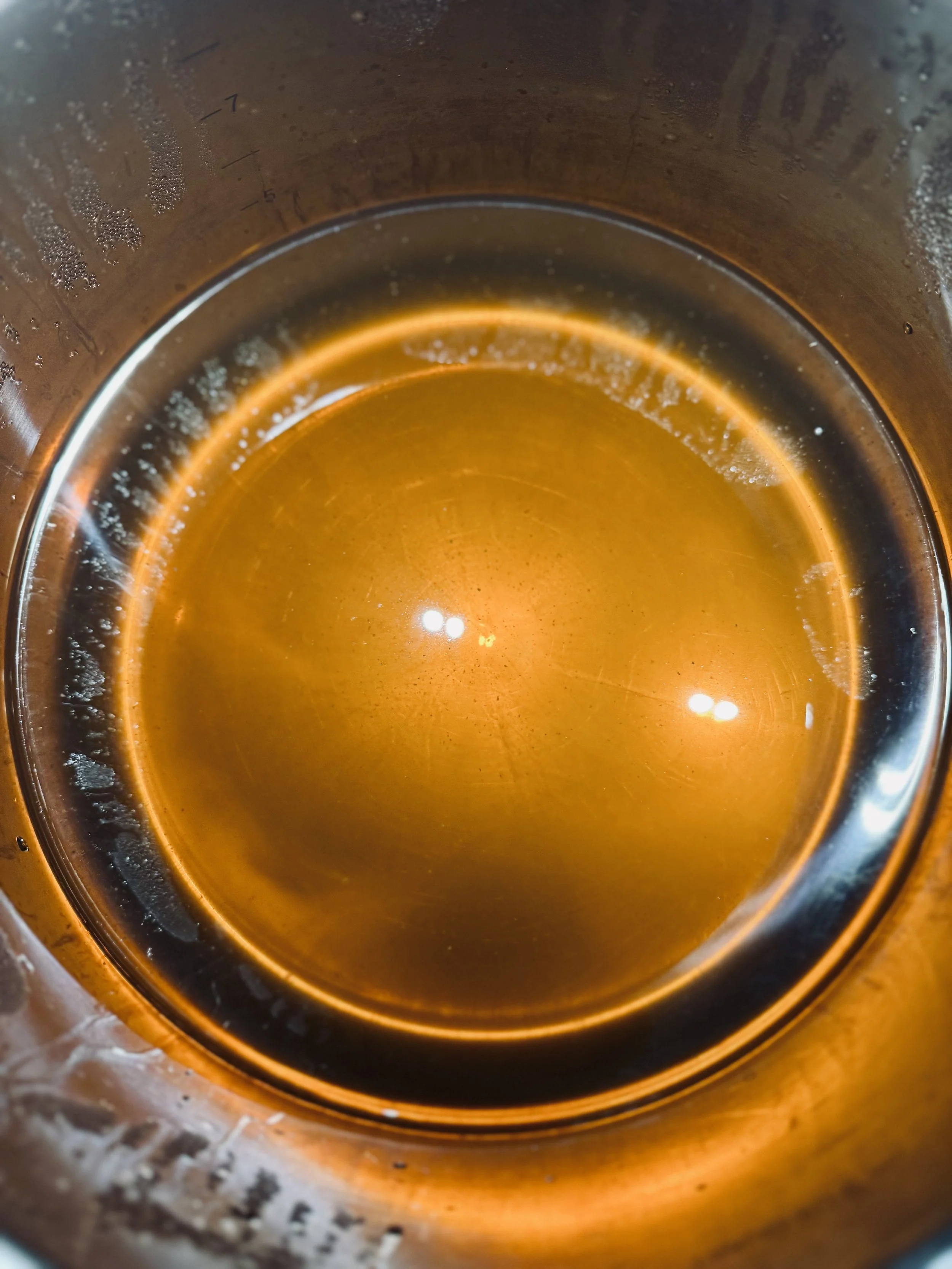
After boiling, I removed the solids, filtered the liquid multiple times, clarified it with egg whites until it became clean and see-through, then infused it with mujdei (salted garlic paste—Romanian life force). One more filter. A clear collagen-rich base, ready for transformation.
Piftie as Folklore: The Pig’s Last Dream
There’s a story told in Romanian folklore: the night before the slaughter, the pig dreams of its death—sometimes a knife, sometimes a string of bright red beads around its neck.
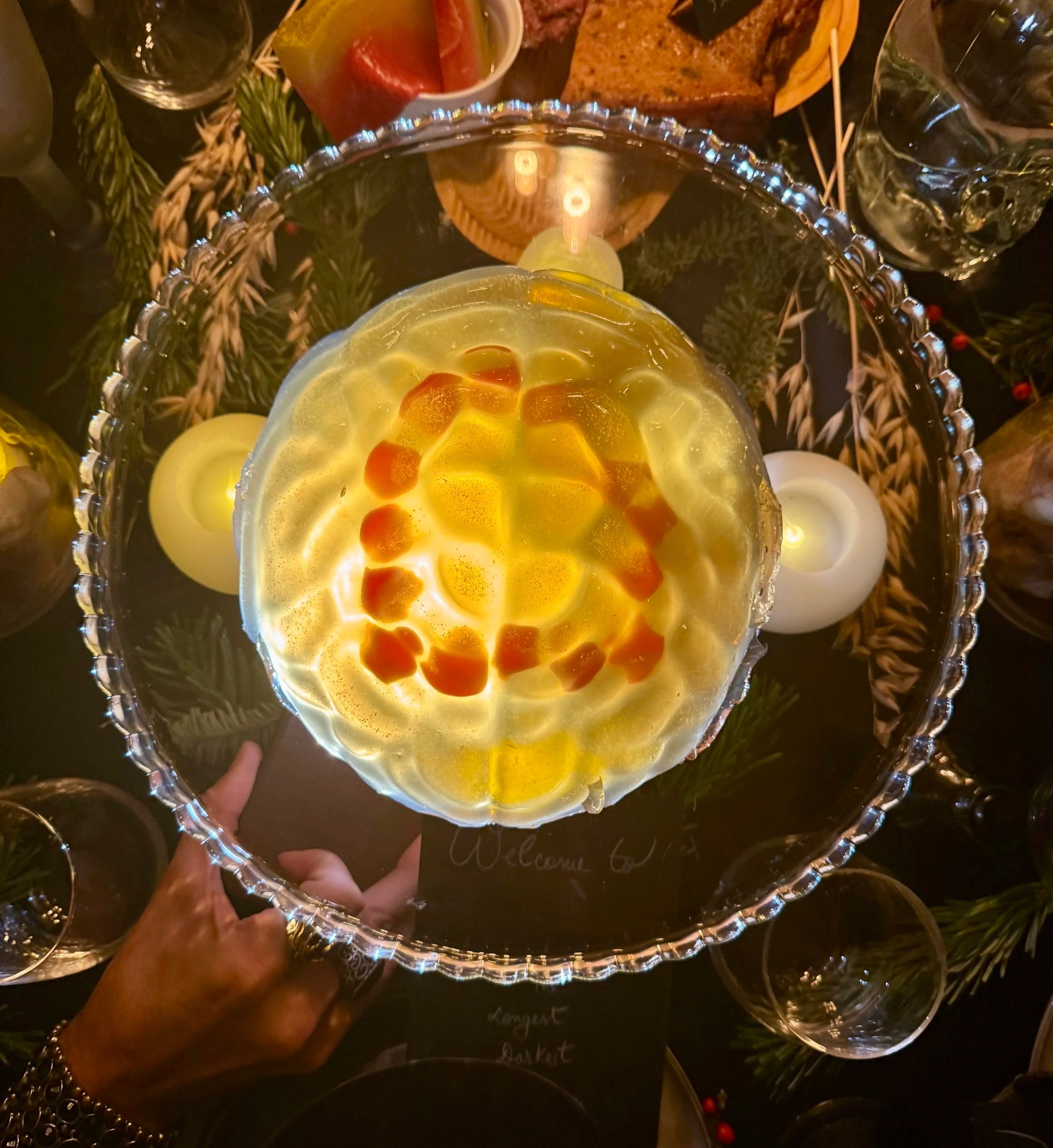
So I turned the piftie into a materialized story:
I molded the gelatin into the shape of a brain.
Inside, I arranged pickled red peppers (gogoșari) into a circular necklace: the red beads.
The brain became the pig’s mind, holding its last dream.
It was served cold, because piftie must solidify in the fridge. And it became part of the table’s anatomy: placed at the end as the “head,” flanked by jars holding pig ears.
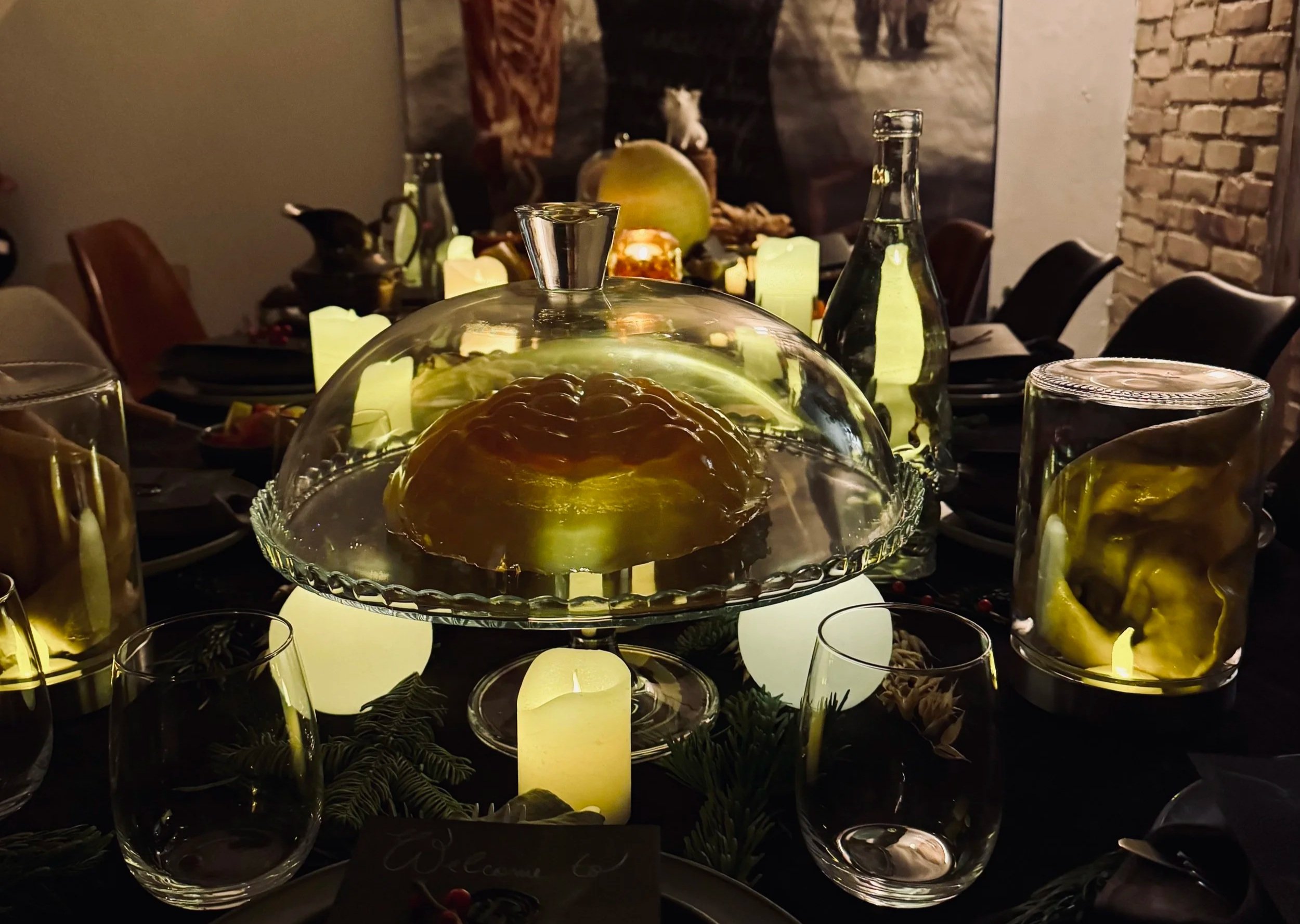
I also shaped “breasts” in gelatin spheres, adding shredded meat at the base and a small piece of red pepper as a nipple—because yes, our pig had these too.
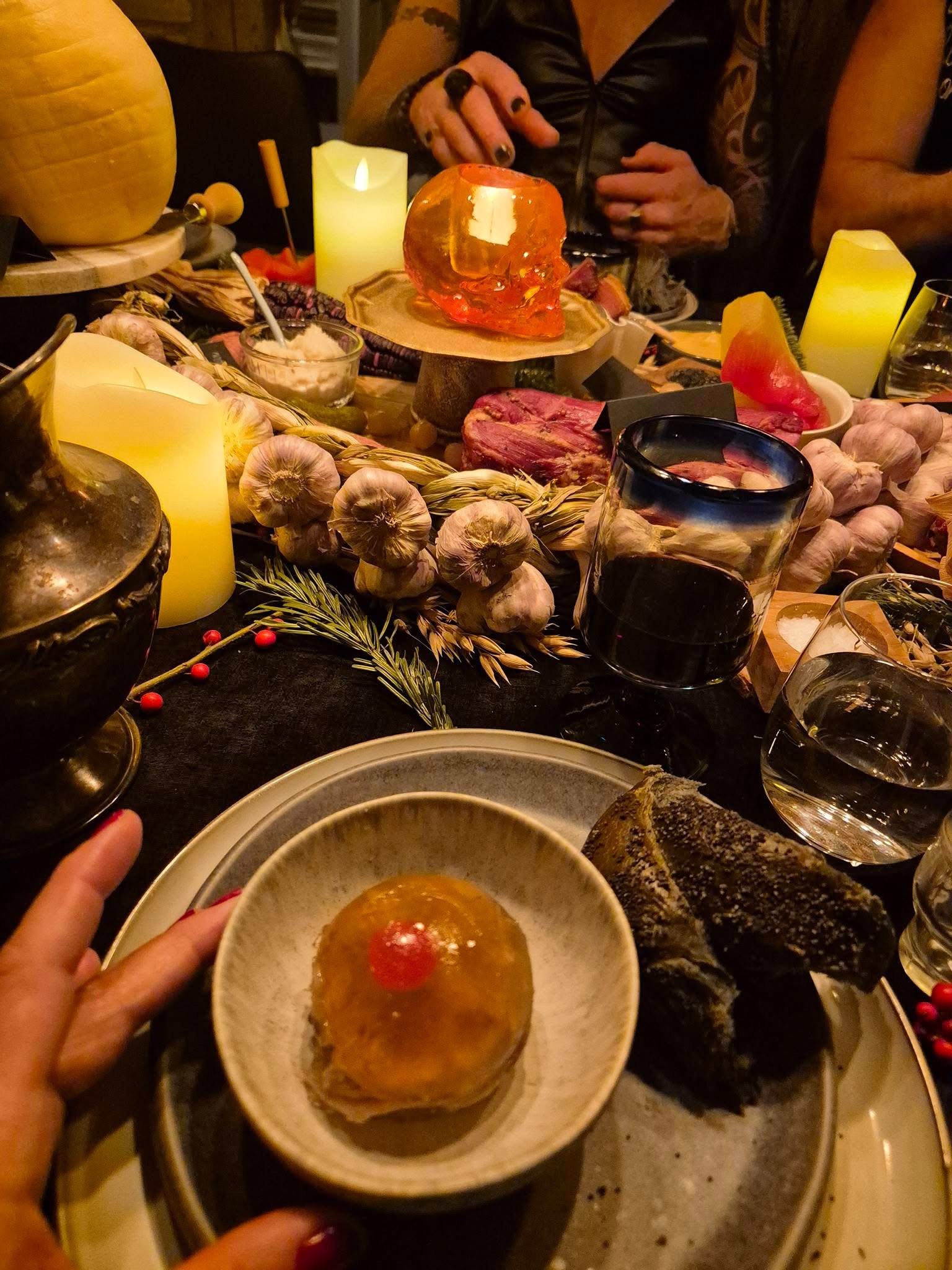
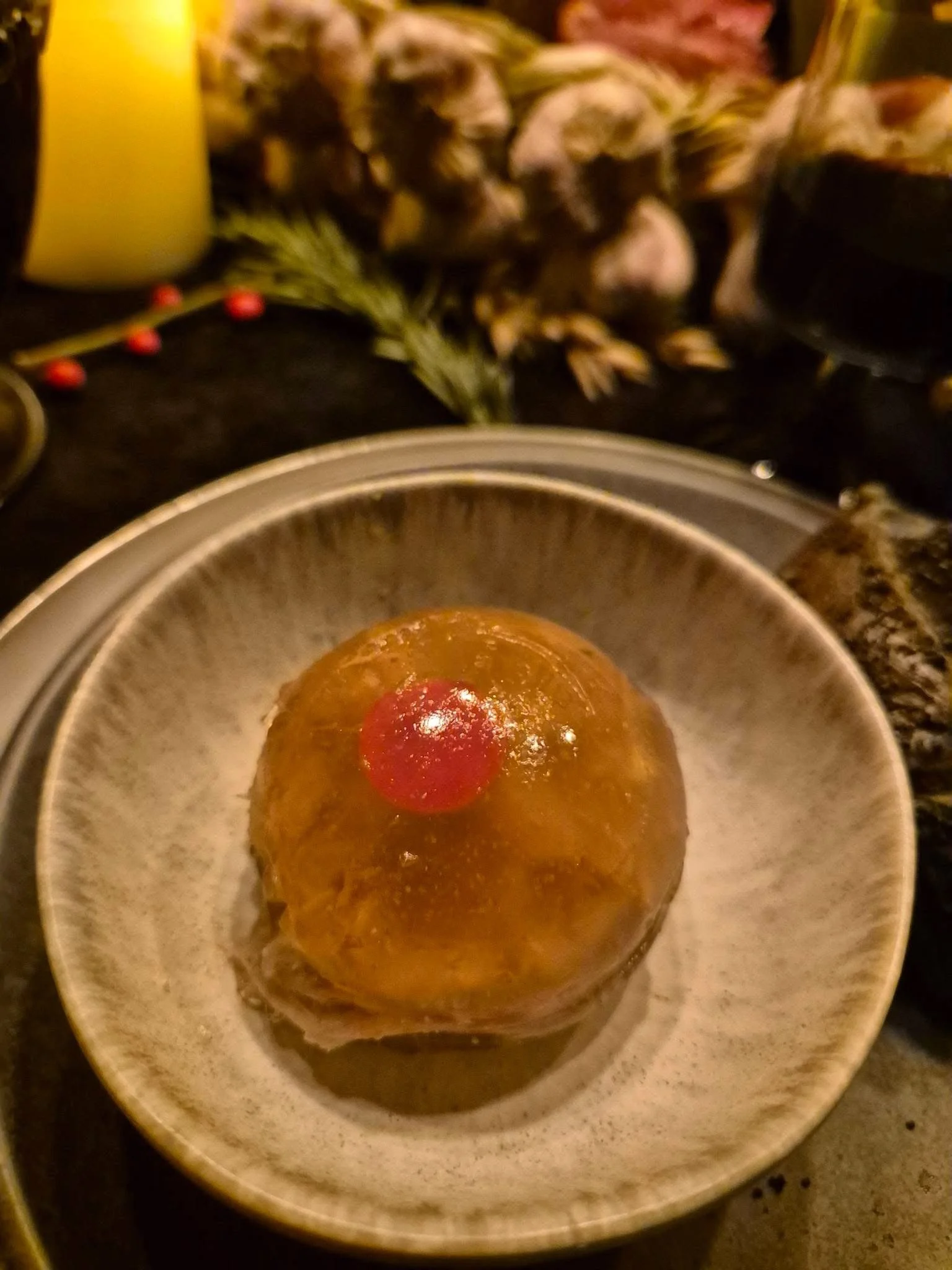
Around it all: pickles, preserves, and the sour logic that keeps winter edible.
Vinegar pickles: gogoșari, cucumbers in vinegar
Fermented brine pickles: cucumbers, green tomatoes (gogonele), cauliflower, carrots, pearl onions—even pickled watermelon
Sour, crunchy, alive. The bite that cuts fat. The bright nerve in the cold.
Bread, Masks, and the New Moon
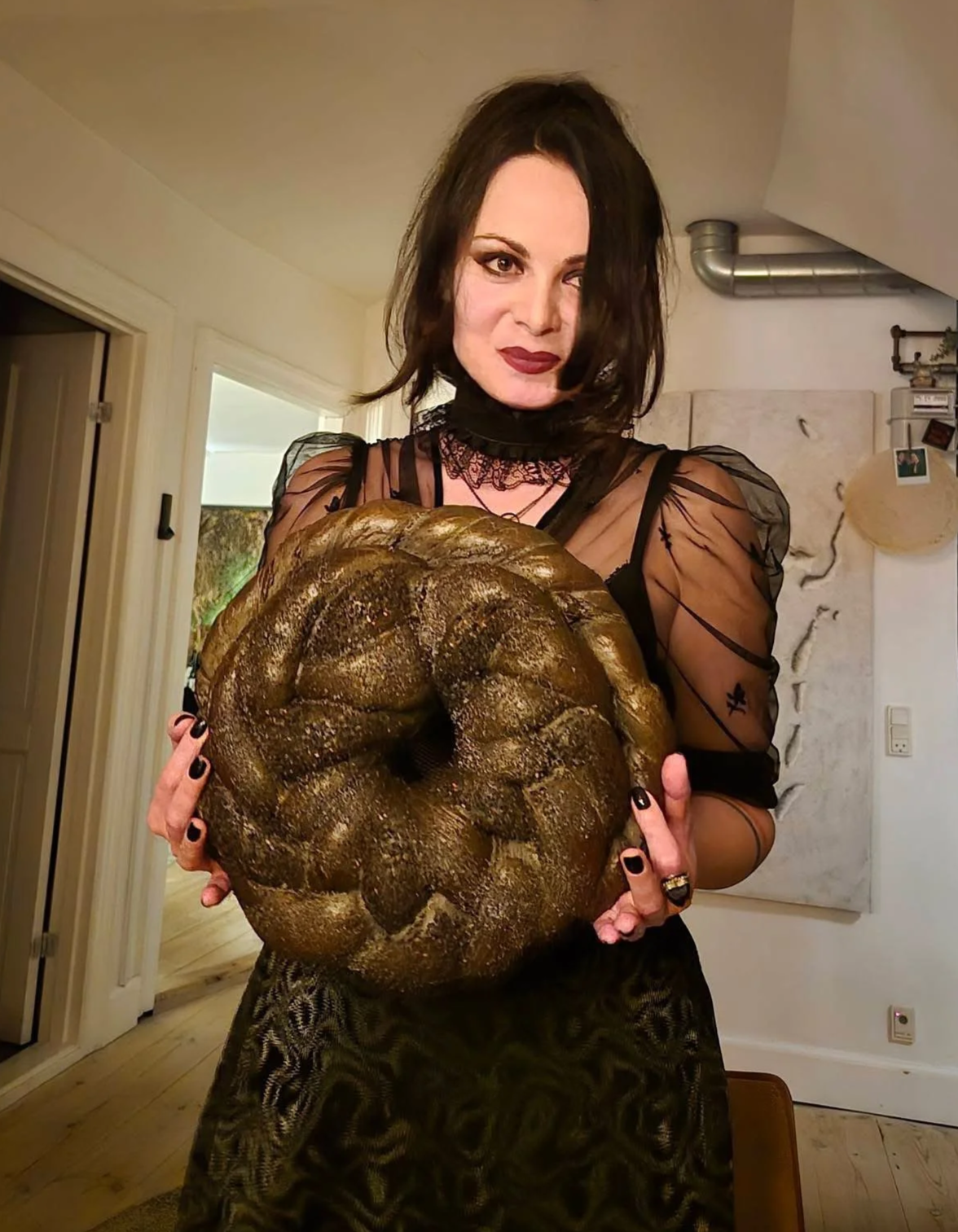
We ate colac, braided ceremonial bread—an ancient presence in Romanian rituals and celebrations. For this night, it was baked black using activated charcoal (from burnt coconut shells)—not traditional, but conceptually exact: a bread that looked like the new moon, 0% illumination, edible darkness.
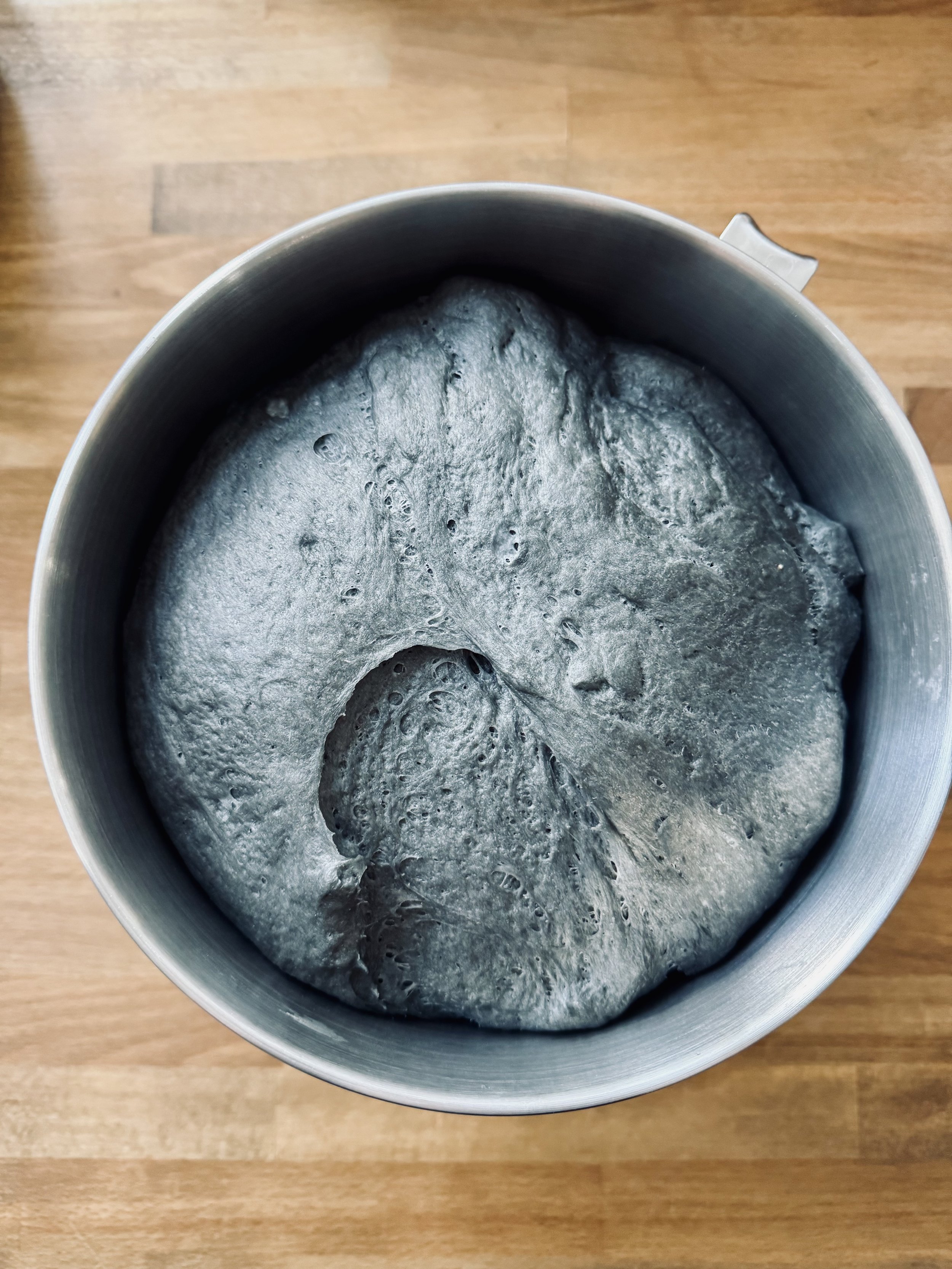
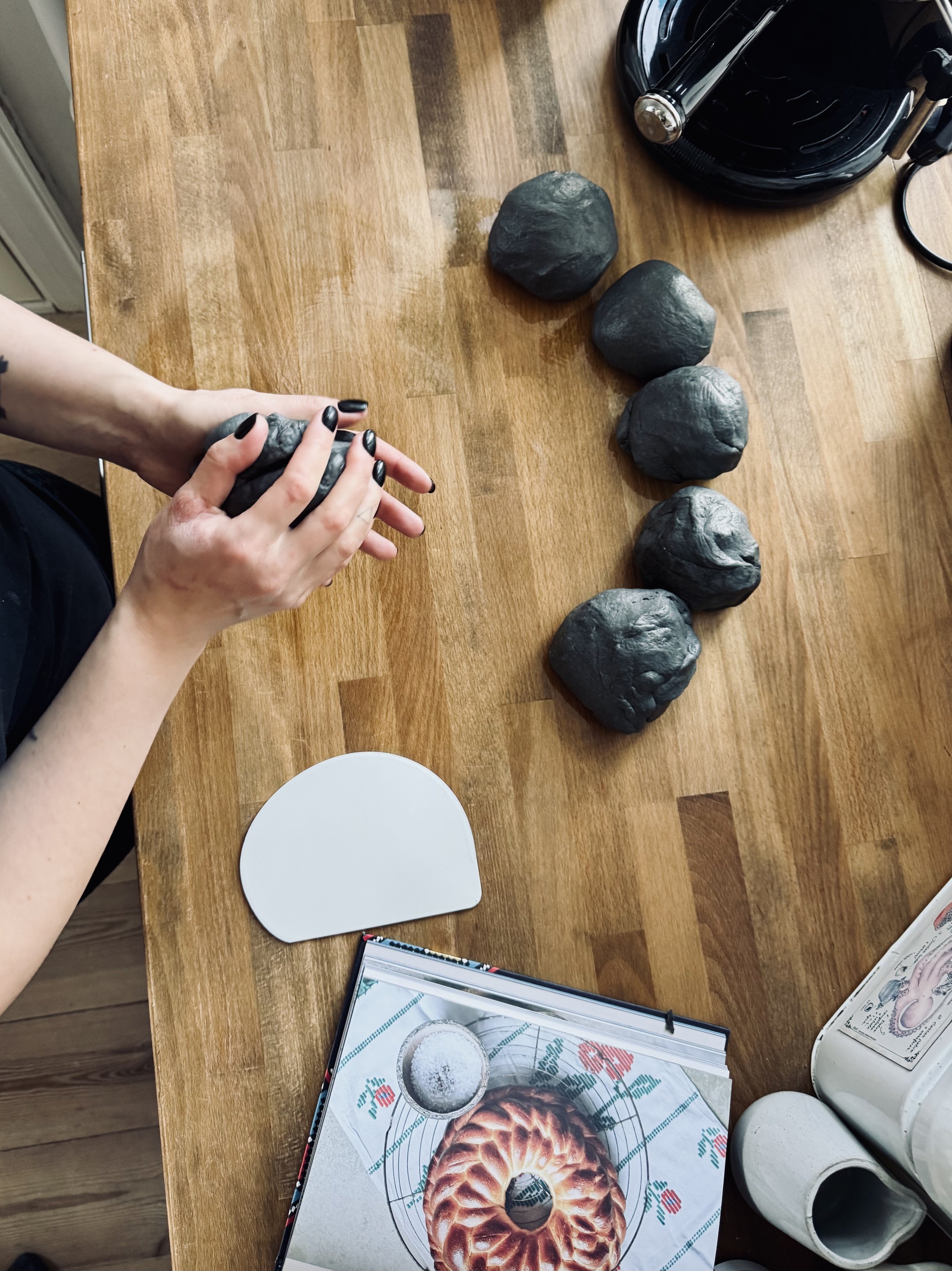
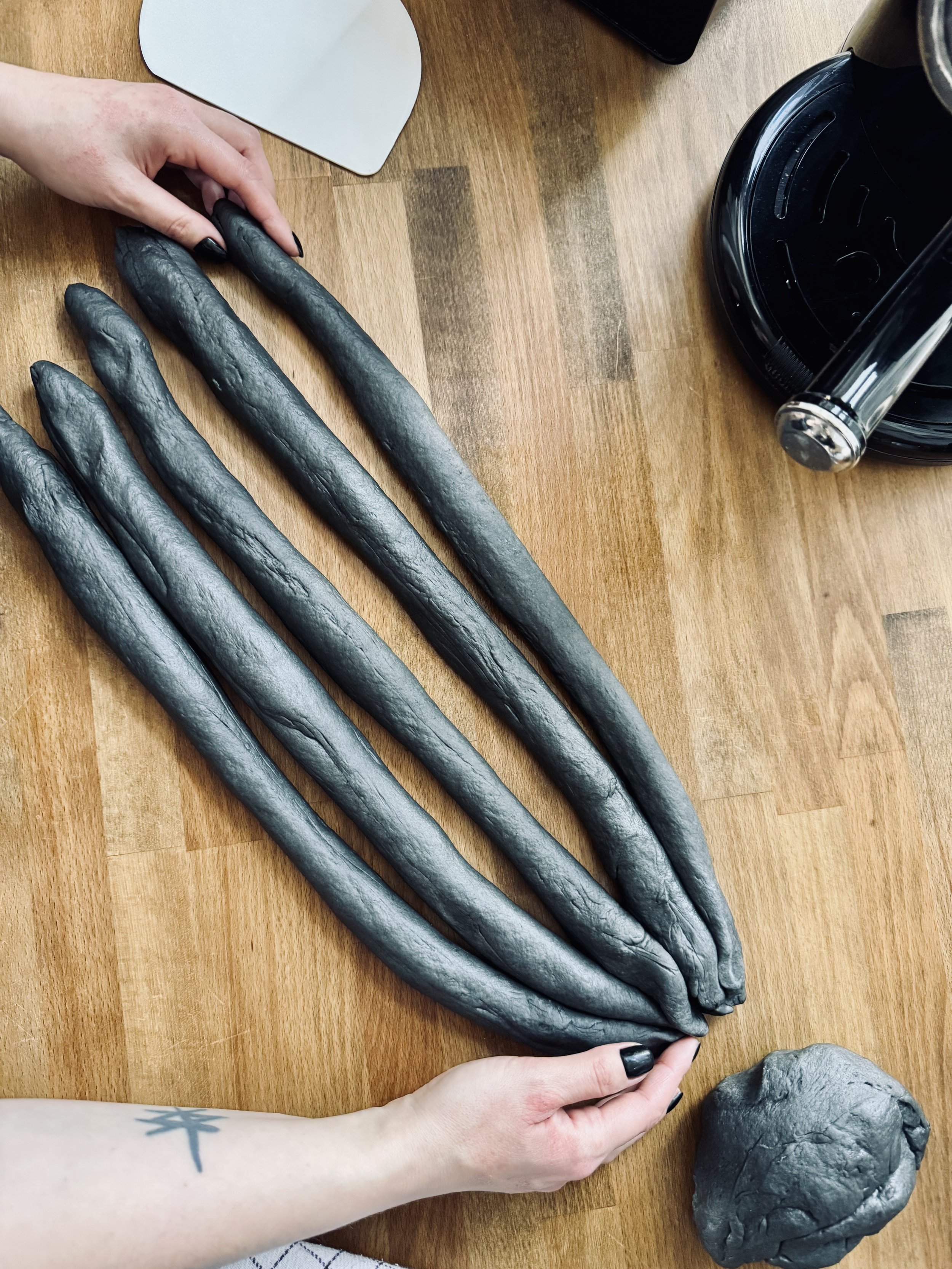
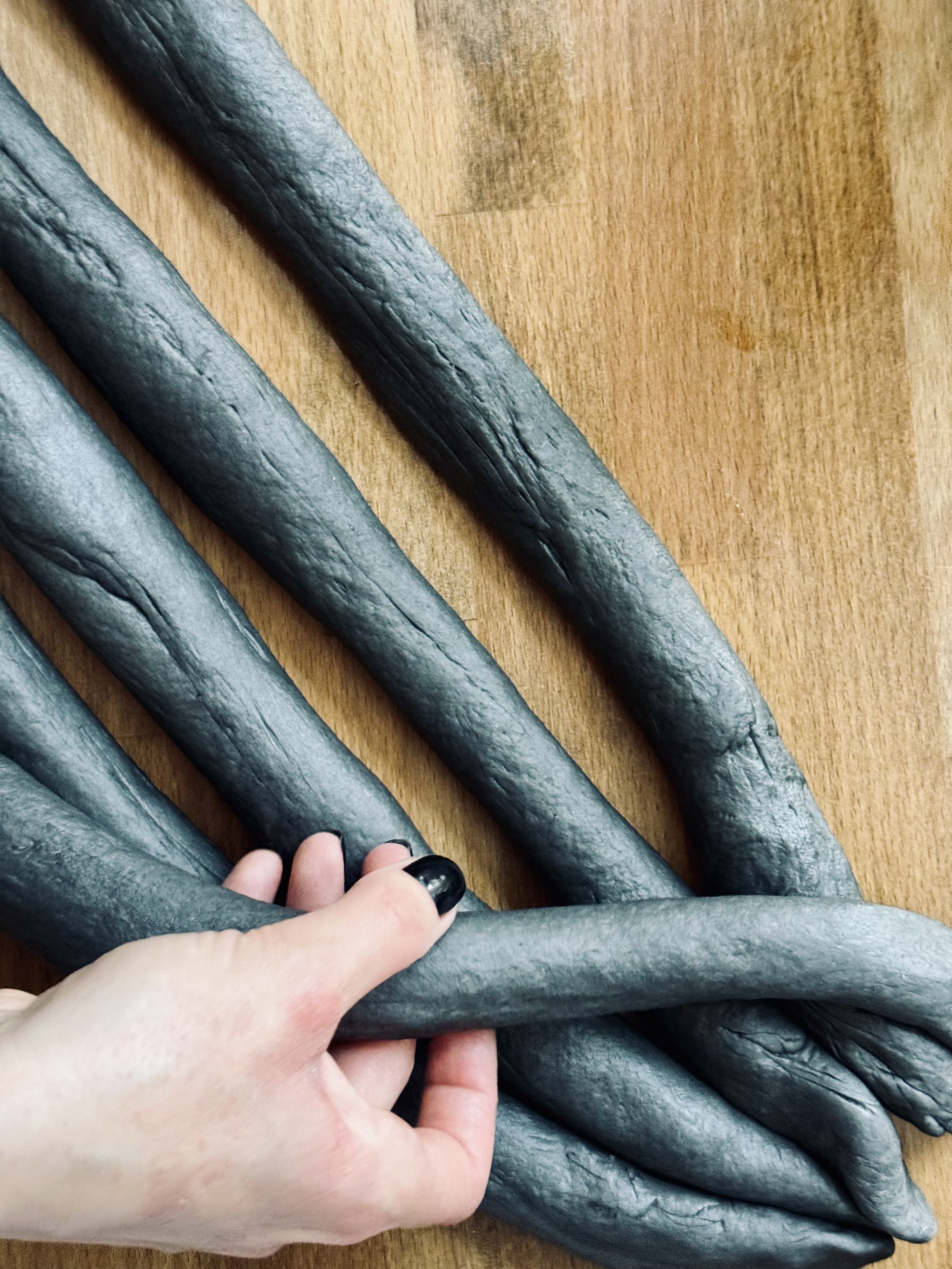
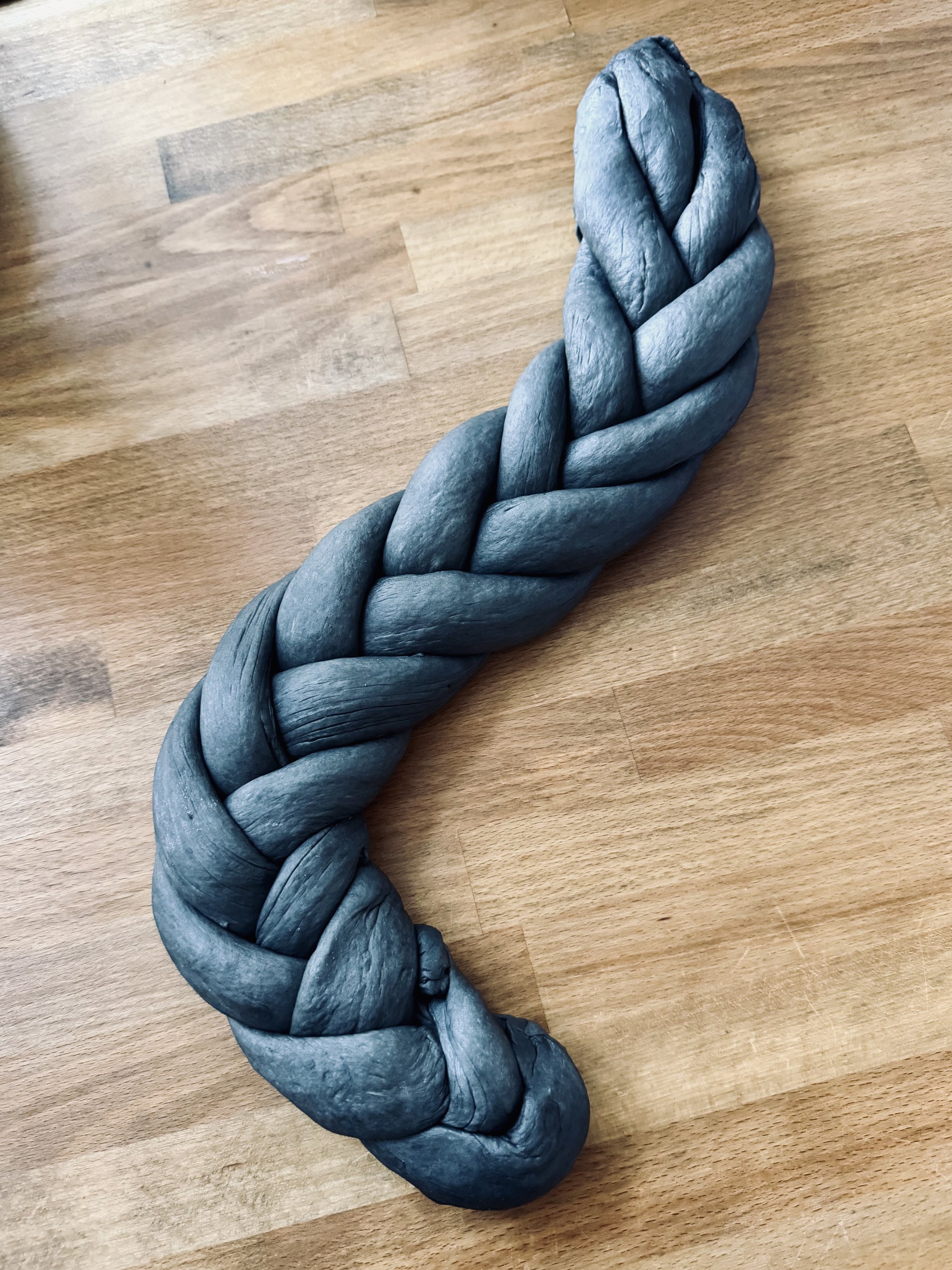
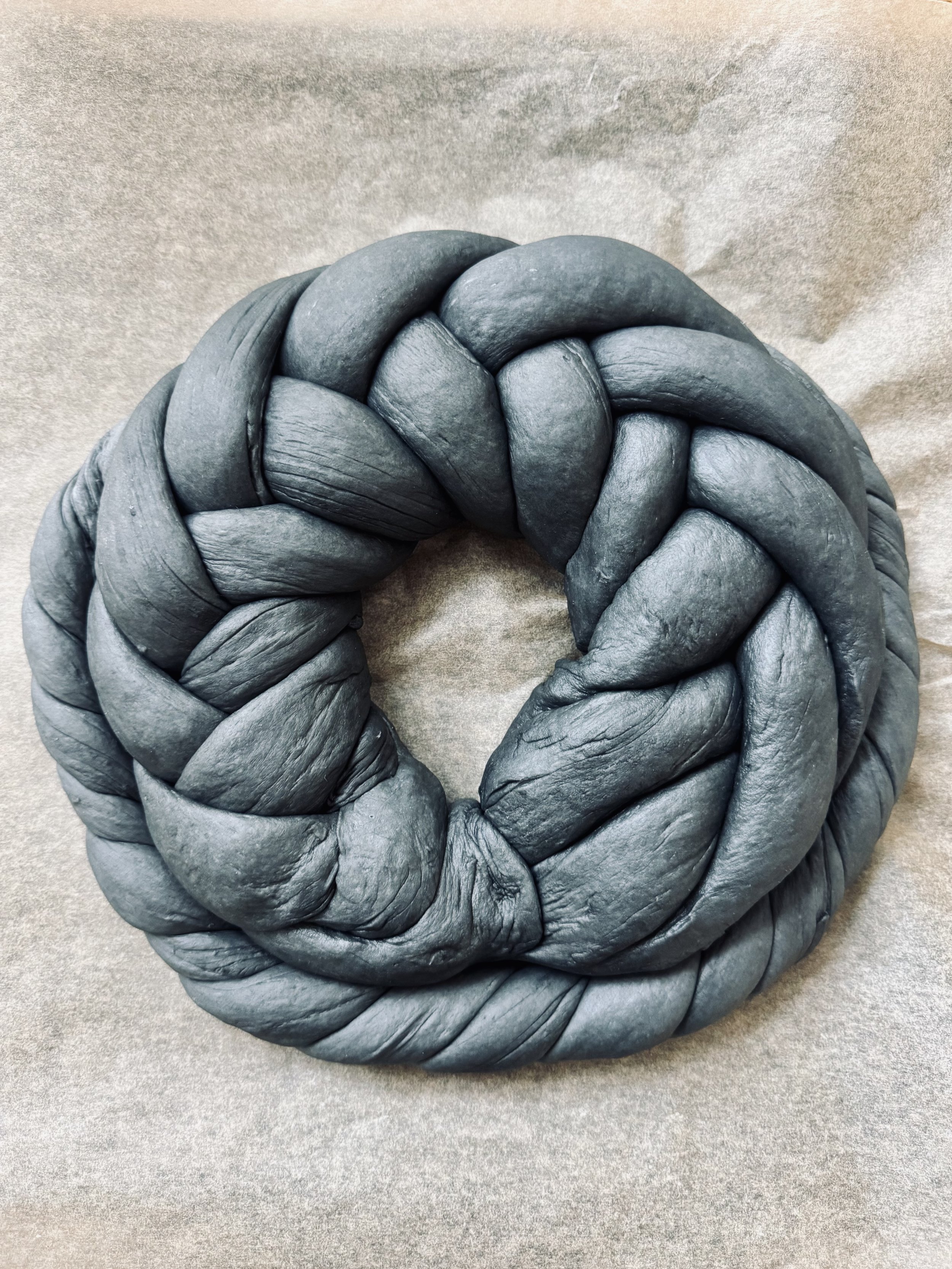
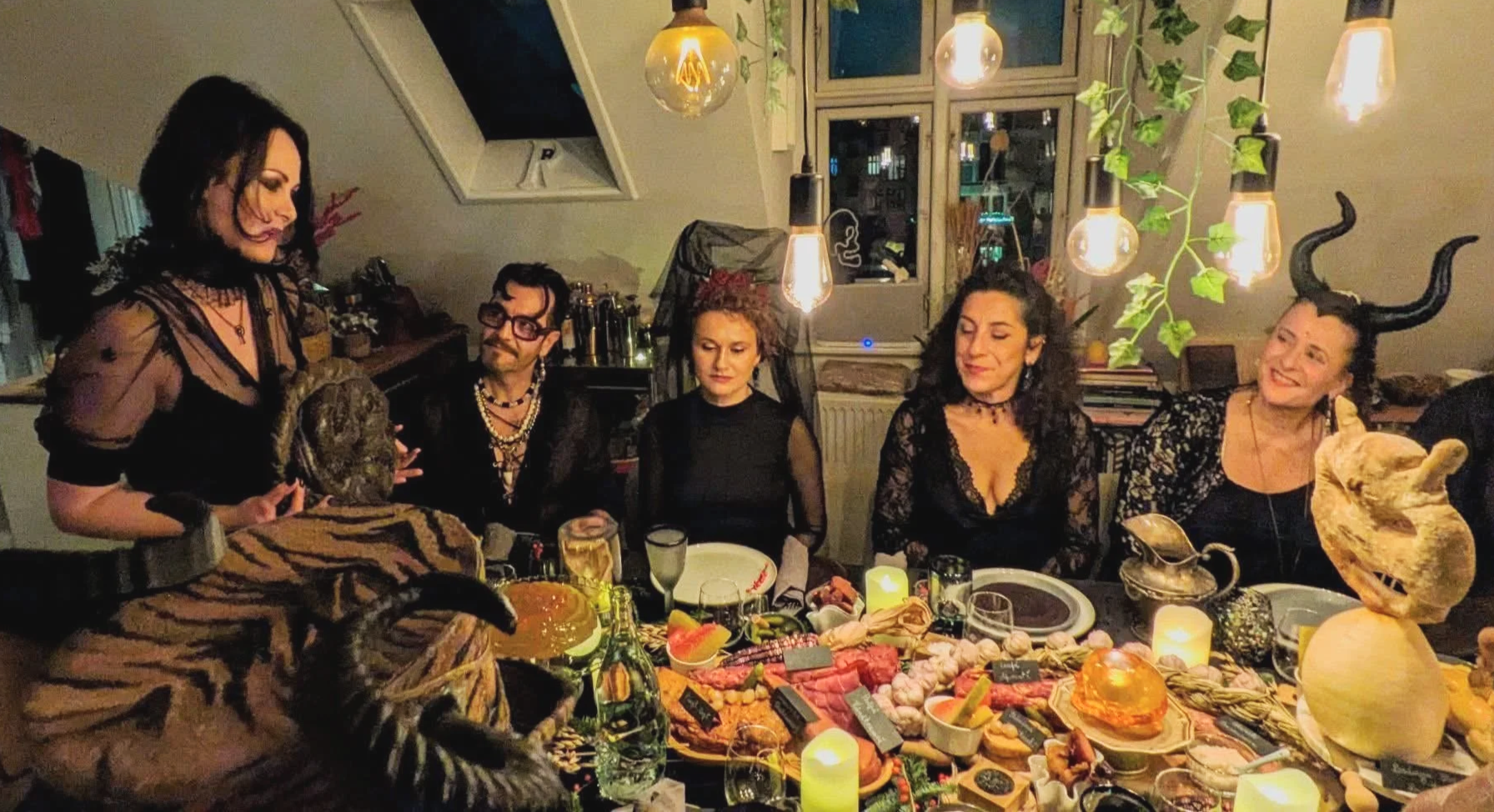
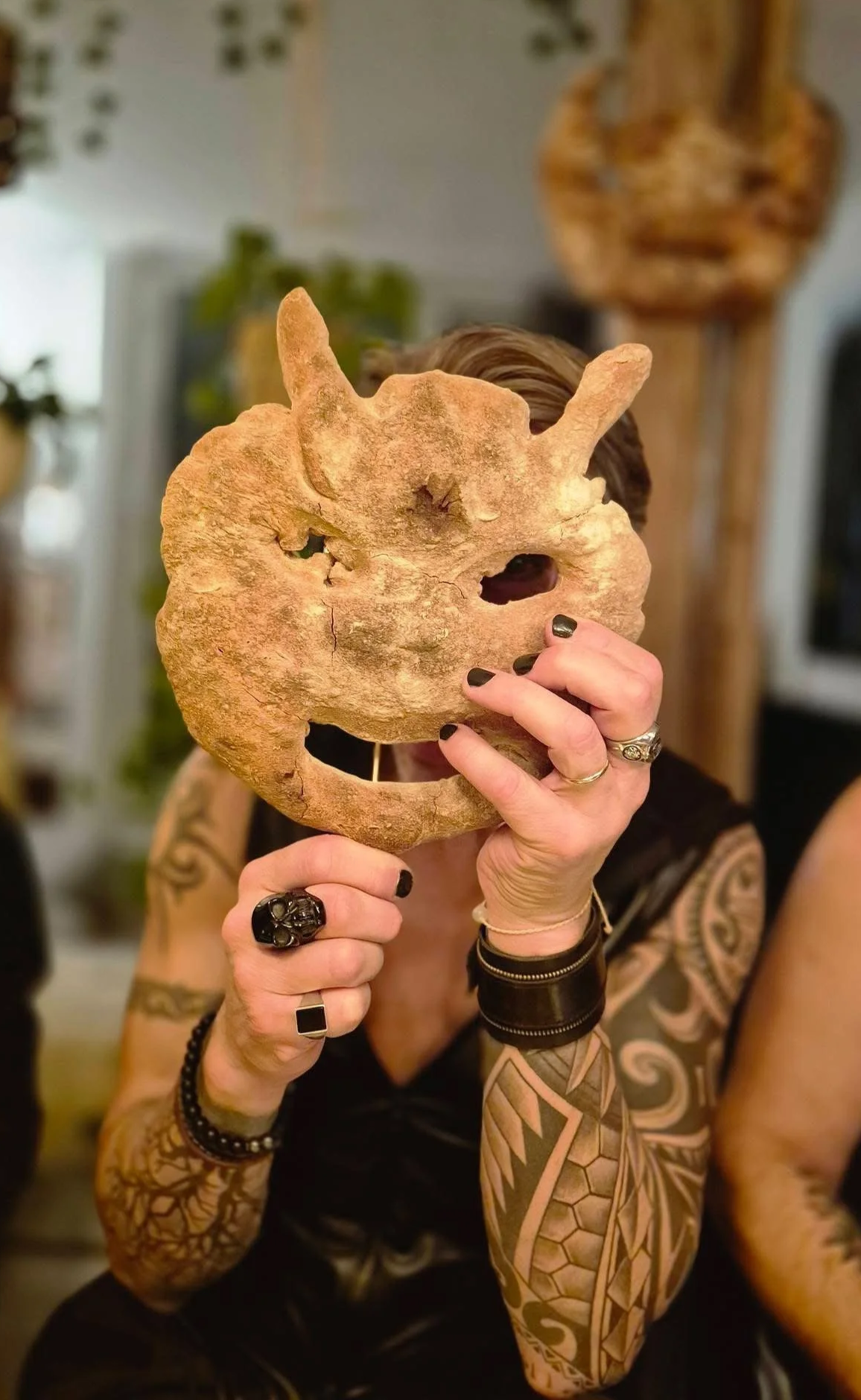
And Mario baked breads shaped like masks, a nod to Romanian winter folklore—those grotesque, sometimes demon-faced disguises that turn the village into theatre: humans becoming creatures, creatures becoming humans, in noisy processions and ritual dances meant to frighten away evil spirits, cleanse the threshold between years, and invite light, life, and fertility back in.
II. Warm & Hot
“Food meant to hold you together”
Then came warmth: the part of the meal that smells like Christmas. My Christmas.
Pomana porcului—the pig’s “alms,” the meal served to those who took part in the ritual. In many traditions, it’s an intentional act of gratitude: the animal is honored through a shared meal, not wasted, not treated casually, eaten with awareness.
I served it as a warm, meaty stew made with leg and neck, garlic and red wine—rich, direct, unapologetically winter.
Then: sarmale.
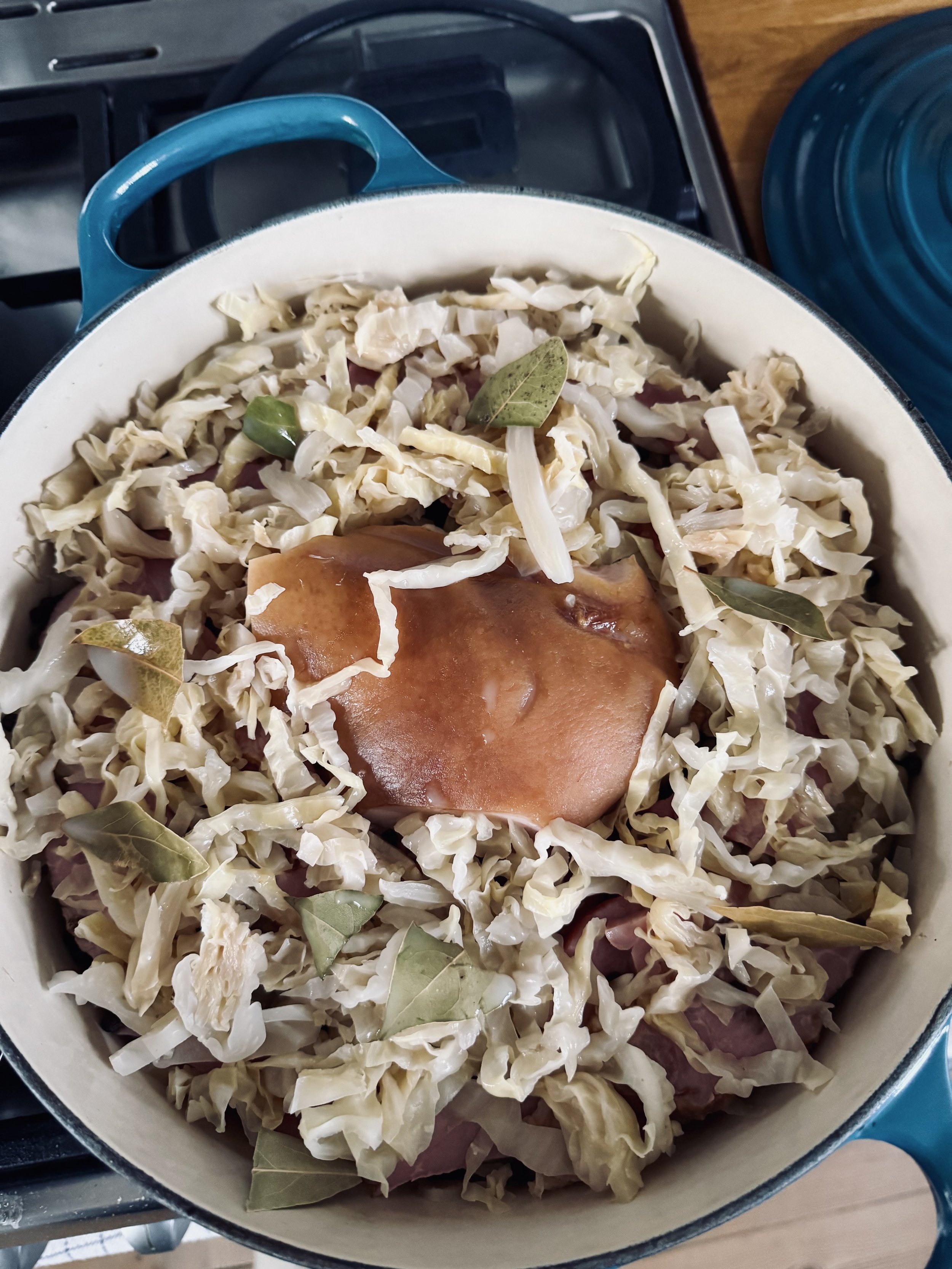
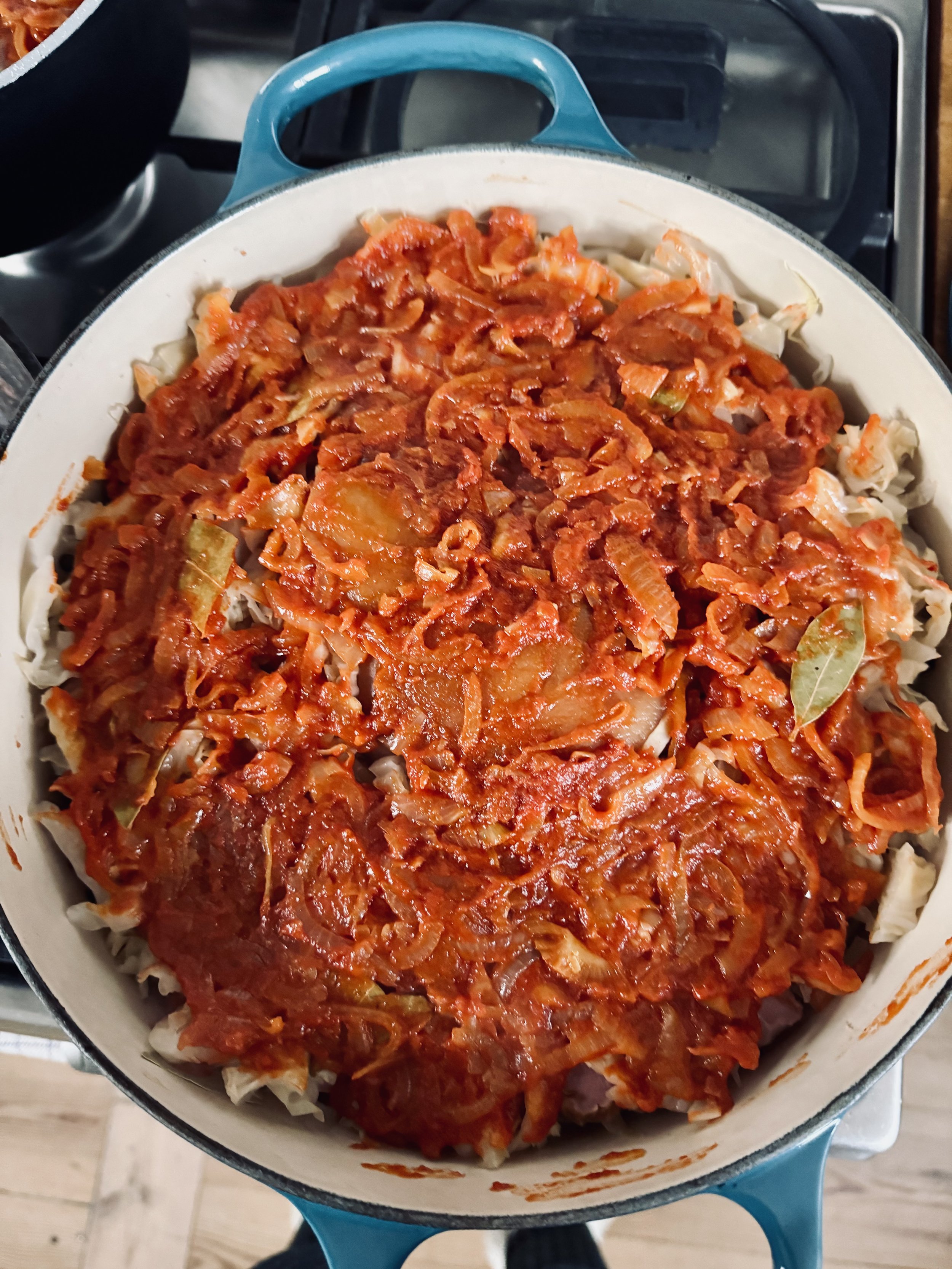
Minced pork mixed with onion, rice, thyme, paprika, parsley, dill, lots of pepper—rolled tightly in fermented cabbage leaves (sauerkraut), tucked into a pot in layers with smoked meat between them, and simmered gently for three hours until everything becomes one thick, soft, sour-smoky spell.
This is one of those dishes where time is an ingredient, and the result is more than flavor: it’s memory.
Served with mămăligă—Romanian polenta. Mămăligă is the golden hinge of the table: humble, comforting, an everyday staple that became ceremonial simply because it was always there. Warm, golden, solar—light made edible. Corn came from Mexico across oceans and centuries, from a place where the sun is sacred, and it ended up here in Romania as a daily ritual: a small, steaming sun on the plate.
Corn: A Mexican Plant That Became Romanian staple
On the table, as decoration and as story: dried corn I brought from Mexico, braided garlic, the visual language of staple—the things you keep around not because they’re (only) pretty, but because they keep you alive.
Corn is a traveler. It crossed oceans and centuries and ended up rooting itself deep into Romanian kitchens, where it became mămăligă: cheap, filling, reliable—sometimes “food of the poor,” sometimes the golden center of the table, depending on who you ask and what year it is. And on this night, in Denmark, it mattered that it arrived warm and golden. In the season of darkness, mămăligă is edible light: steam rising like a small sun, bright on the plate next to pork and pickles, holding the whole meal together the way it always has.
Maybe that’s why I wanted the Mexican corn there too—because in Mexico the sun isn’t just weather, it’s a presence, almost sacred. And here, on the longest night, I liked the idea that we could invite a little of that solar force into the room—Mexico on the table, Romania in the pot, Denmark outside the window, and a soft yellow glow you could eat.
III. Sweet & Strong
“The Sacrifice”
Dessert was where I decided to stop being polite.
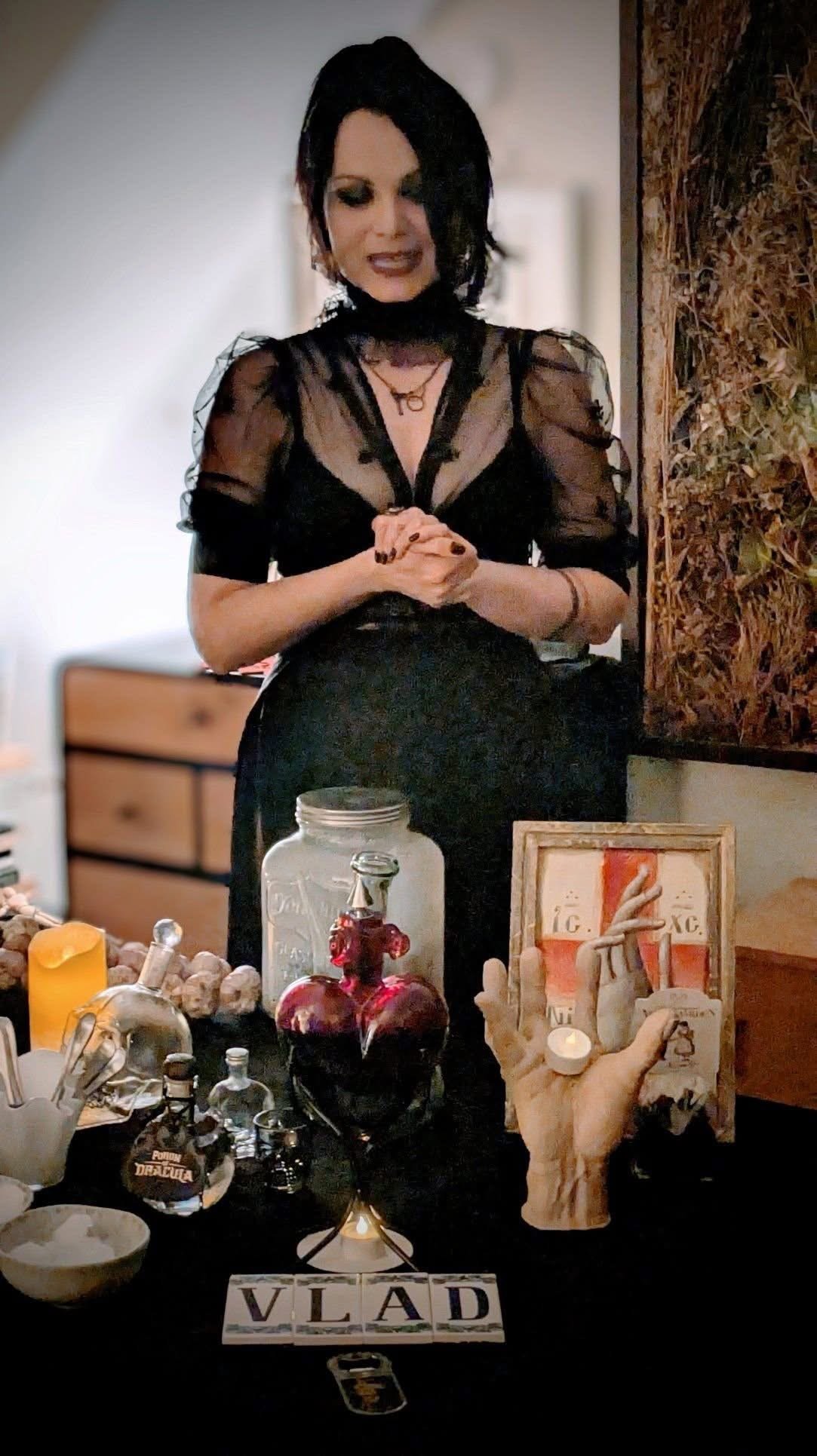
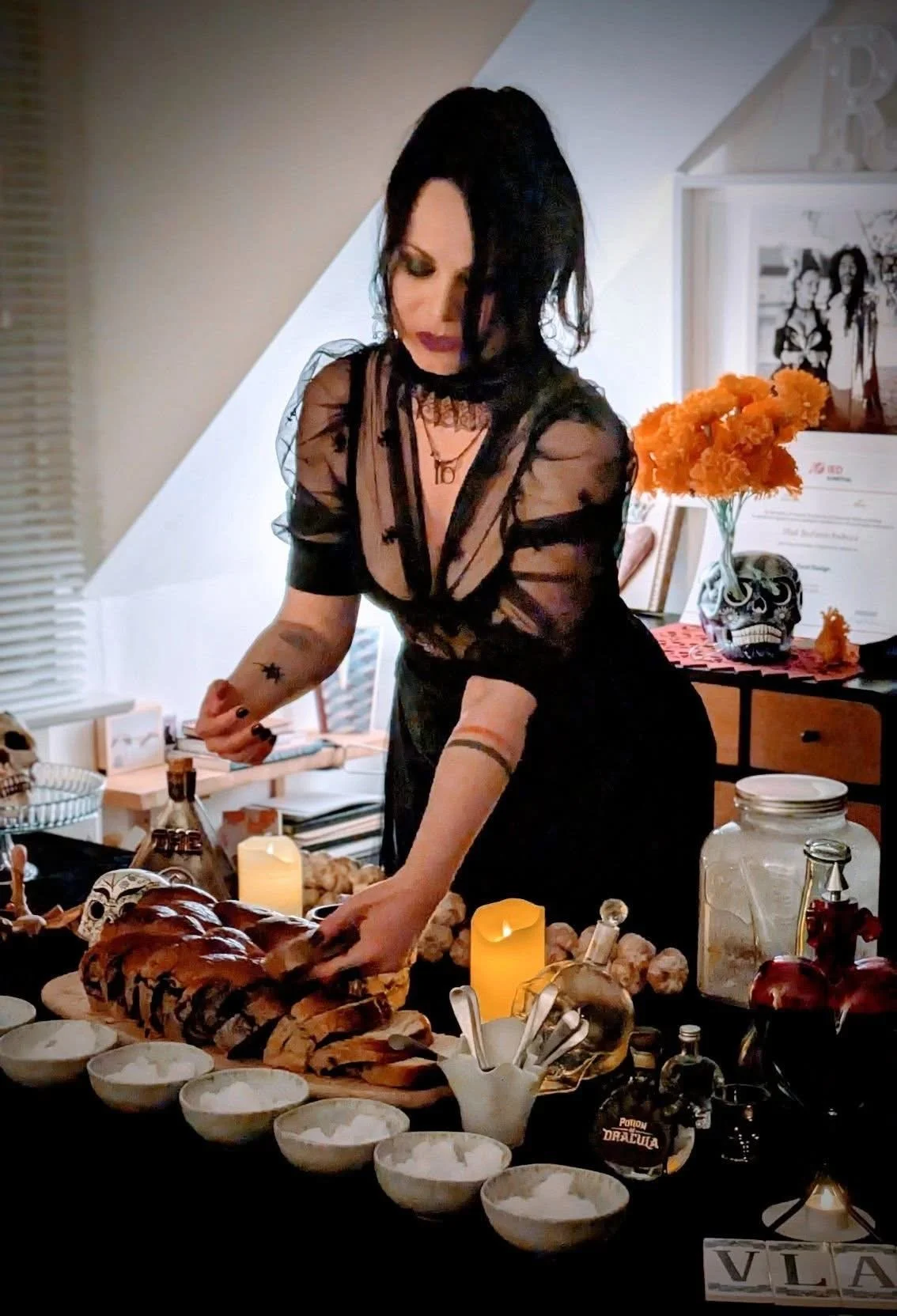
It was inspired by an image burned into my memory from childhood: winter slaughter, snow on the ground, and the warm blood staining white. A violent painting. A truth you can’t unsee.
As a child (and honestly still), killing to eat feels cruel. That discomfort matters. I didn’t want to erase it. I wanted to metabolize it—through design, through ritual, through taste.
So I made dessert as a three-part gesture:
The Strength
Drops of pălincă, sharp and bright, the same spirit we used to open the night. In Romania, on Ignat day, that first warmth isn’t just celebration — it’s practical. People are outside for hours in the cold, moving between fire, snow, steam, carving, carrying, preparing. You drink a little at the beginning to stay warm, to steady your hands, to gather courage for what has to be done. So I brought that gesture back at the end: strength returns, not as a shot this time, but as an essence — because you need it for the sacrifice, too.The Snow
Real ice, blended into fine snow.
3. The Warm Blood
A warm syrup of Romanian sour cherry jam blended into a coulis, deepened with red wine, gently simmered until it became dark and glossy. It represents the Pig’s blood, of course. Poured over the snow, it melted and stained the white into red — blood on winter — before we ate it cold, with that warm dark core still pulsing underneath.
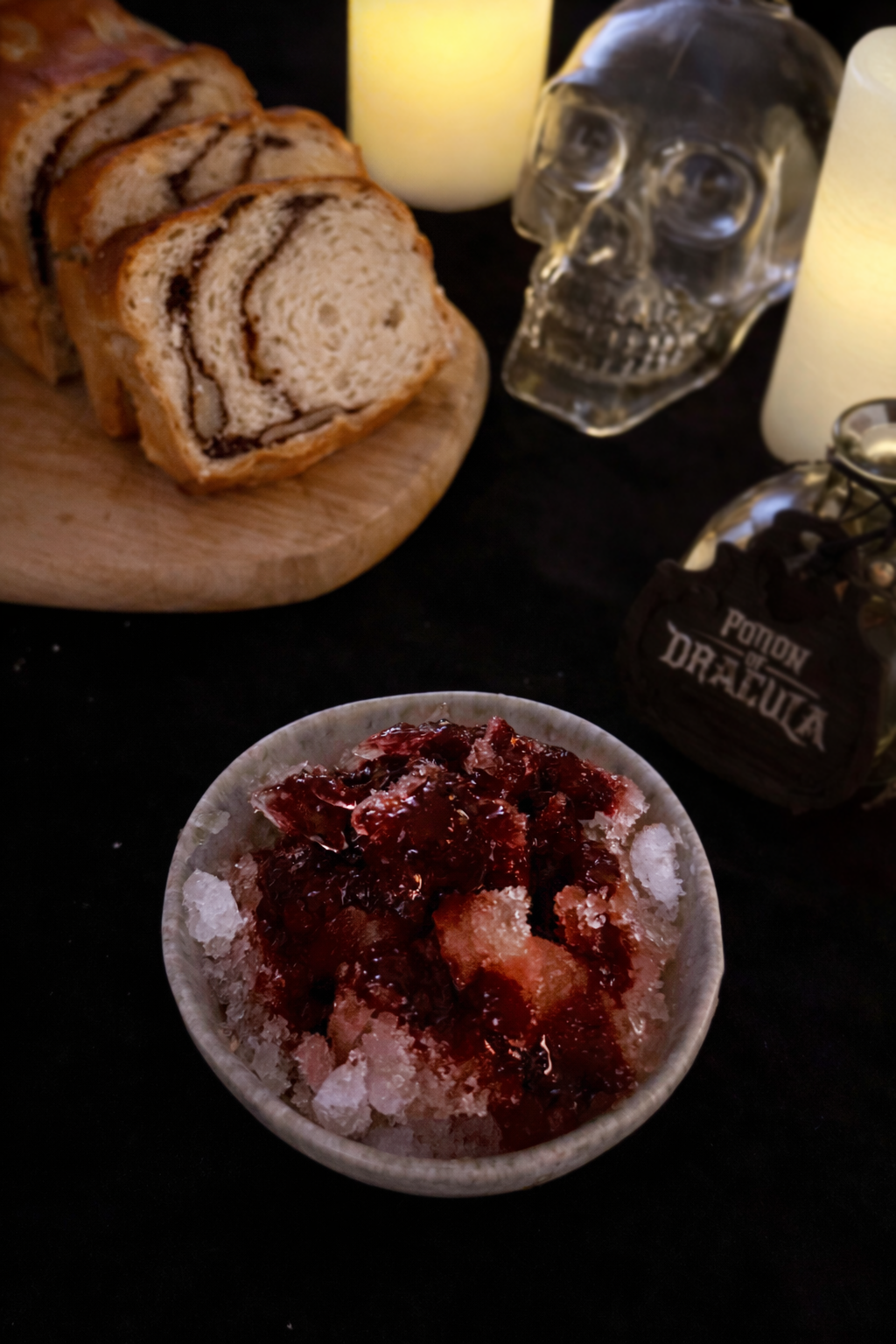
And beside it: a warm slice of cozonac, the braided Romanian Christmas sweet bread—because after all the darkness, I wanted to end with something unmistakably “home.”
The Wall at the End of the Table: Self DefenseAt the end of the table hung a large drawing: Self Defense (2018), a self-portrait with my face partially covered—eyes visible, mouth and nose hidden—standing in a winter landscape beside a pig carcass, with the Danish flag raised.
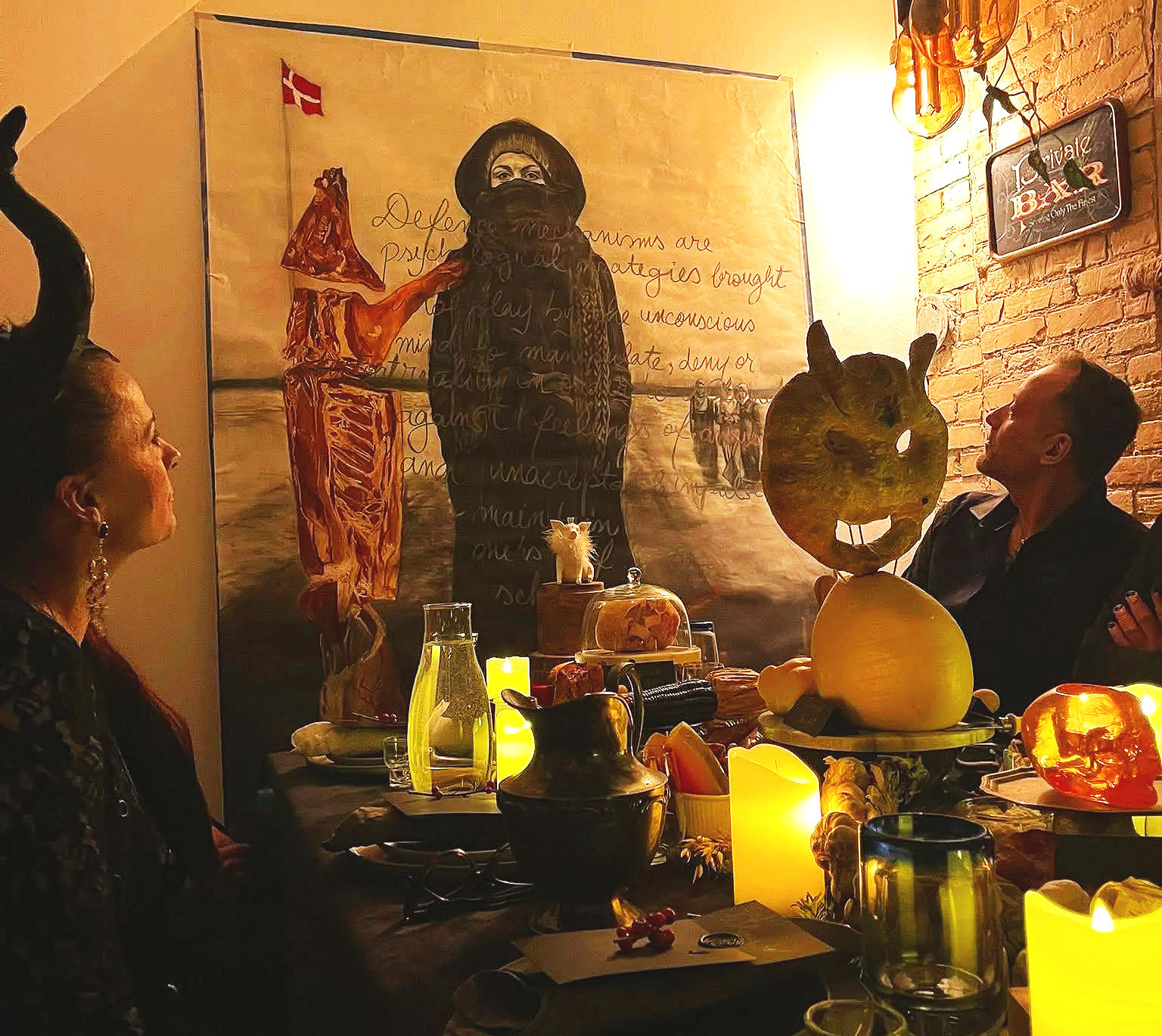
I didn’t originally make this drawing for Ignat. It was born from another kind of winter: questions of visibility, belonging, identity, and the uncomfortable ways a society decides what kinds of bodies are “acceptable” and under what conditions. It was a drawing about self-defense—psychological and cultural.
And yet it found its place here like it had been waiting.
Because this dinner was also about self-defense:
ritual as a way humans survive fear, scarcity, and the unbearable facts of life
tradition as a container for anxiety and gratitude
the carcass as refusal of sanitization
Denmark as the landscape in which my Romanian ritual is reenacted
my own masked face as a threshold being: between cultures, between past and present, between what I hide and what I reveal
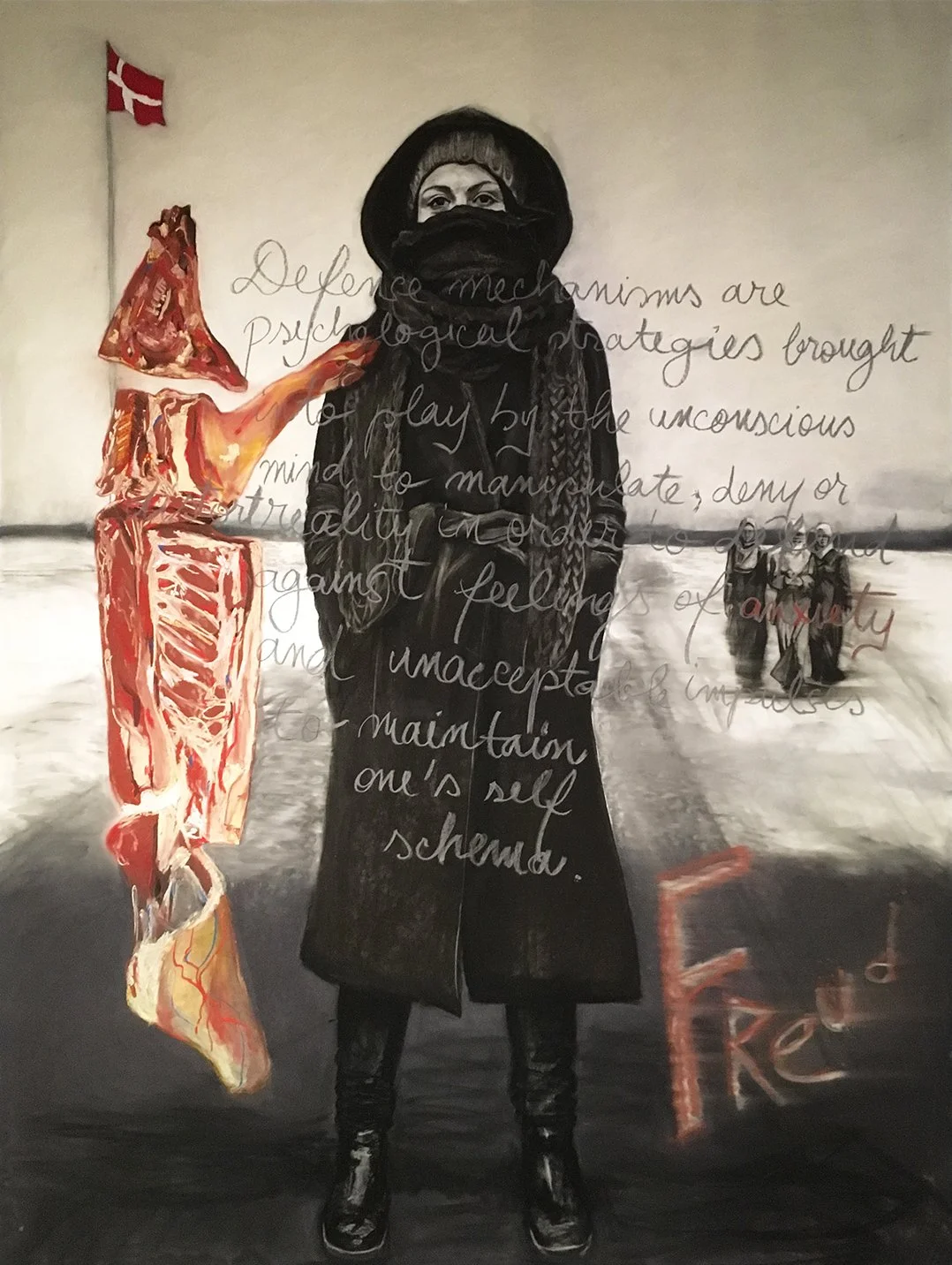
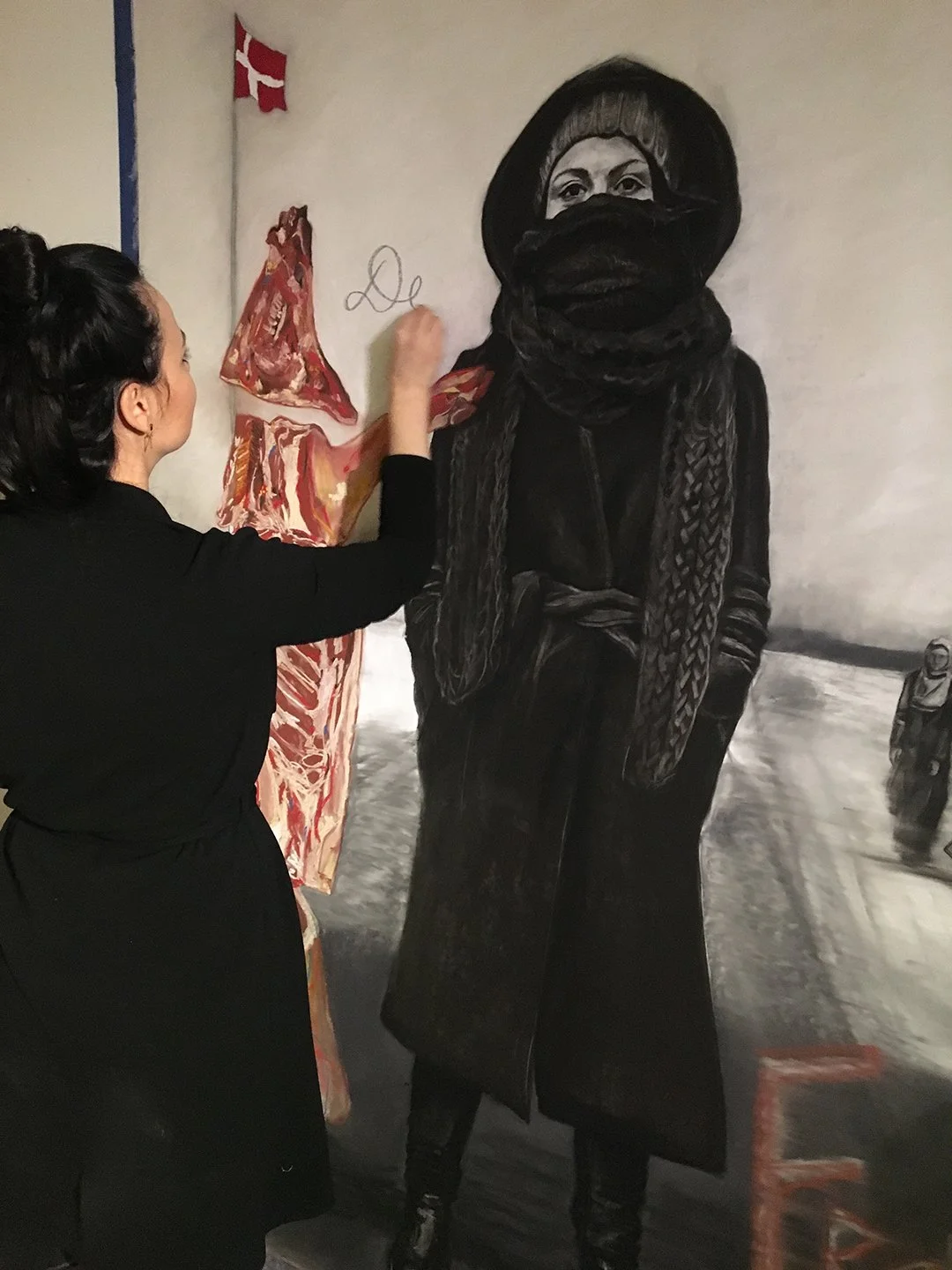
If the thermochromic menu was the night’s first spell, the drawing was the night’s silent thesis.
Outcome & Reflection: From Darkness, Toward LightThe Longest Darkest Night Dinner was not only a Romanian dinner in Denmark. It was a page from my own book, translated into food, firelight, design, folklore, and collective presence.
It was also a reminder of something simple and ancient: when light abandons us, humans gather. We preserve. We tell stories. We make offerings. We warm each other. We become clever. We become theatrical. We become grateful.
And if we are going to eat meat, we should at least be brave enough to understand what that means.
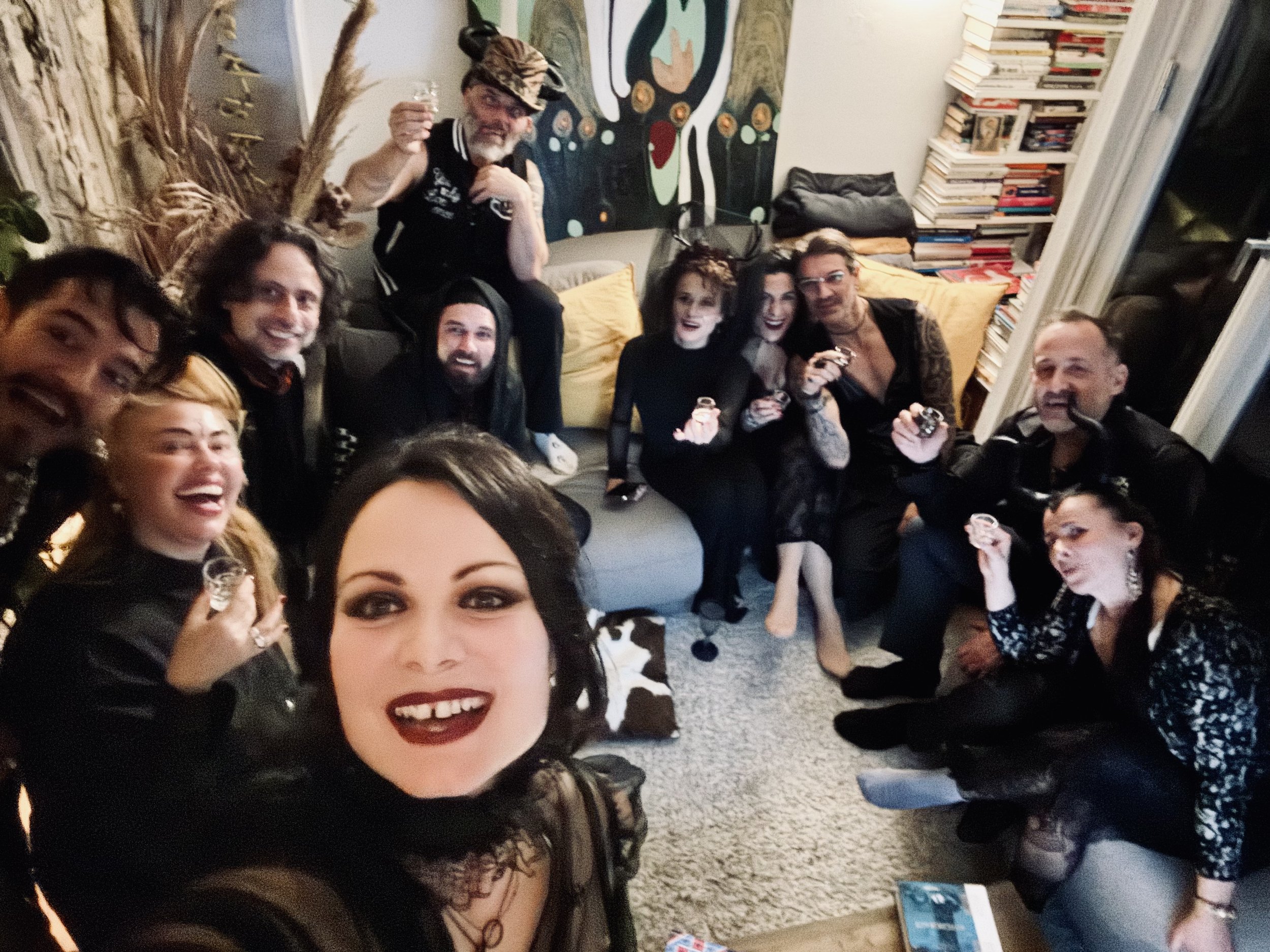
Thank you for stepping into the darkness with me. You made it beautiful.